The current balance of power in open models
Mapping the Open Model Power Balance: From Weights to APIs The open model landscape has shifted. The open model power balance is no longer defined solely
Mapping the Open Model Power Balance: From Weights to APIs
The open model landscape has shifted. The open model power balance is no longer defined solely by who releases the biggest checkpoint. It is defined by who controls inference access, pricing, fine-tuning rights, distribution, and trust. In practice, the center of gravity has moved from raw weight releases to API-driven distribution. An open model API can now determine which models reach production, which labs gain feedback loops, and which providers capture enterprise budgets. This deep-dive maps that shift across forces, contenders, economics, adoption patterns, governance, and future scenarios.
What “Open Model Power Balance” Means Today

Operationally, the open model power balance describes who controls five levers: model releases, inference access, pricing, fine-tuning rights, and enterprise adoption. A lab may publish weights, but if most teams consume it through a managed endpoint, the provider hosting that endpoint gains leverage over latency, reliability, and cost. Likewise, a permissive license may allow commercial use, yet the practical ability to fine-tune depends on tooling, compute, and data quality.
It helps to separate three terms. Open weights means downloadable parameters with a license that defines usage rights. Open source is stricter: it usually implies access to code, training details, and freedoms to modify and redistribute, as advocated by the Open Source Initiative. Open model API access is a distribution model: you call a hosted endpoint, often via an OpenAI-compatible interface, without managing GPUs. The power balance changes because API access can be gated, metered, versioned, and deprecated in ways that static weights cannot.
The Four Forces Reshaping Open Source LLM API Competition
:max_bytes(150000):strip_icc()/porter_final-b4b8e5b2014544dbaa1884017efbc164.png)
Four forces reshape competition across the open source LLM API ecosystem.
Compute availability determines who can serve models cheaply and reliably. Labs with reserved GPU clusters or favorable cloud partnerships can subsidize inference and attract developers. Data and feedback loops matter because API traffic generates usage patterns, failure modes, and fine-tuning signals. A popular API becomes a sensor network for improvement. Distribution channels decide which models appear in marketplaces, SDKs, and enterprise procurement lists. Governance and regulation add another layer: data residency, export controls, and AI safety rules can favor regional providers or slow global ones.
Each force shifts leverage. A lab with great weights but no distribution may lose to a provider with weaker weights but better latency and billing. A hyperscaler with distribution may become a kingmaker even if it did not train the model.
Why API Access Is Now as Strategic as Model Weights

Many teams prefer an open model API over self-hosting because the operational burden is real. Self-hosting requires GPU capacity planning, CUDA driver management, autoscaling, KV cache tuning, and 24/7 incident response. A managed route converts those concerns into a per-token bill. For startups and mid-sized teams, the trade-off often favors speed to market.
Mydeepseekapi is an example of a managed route for DeepSeek v3 & r1 with blazing-fast response times, transparent pricing, and zero setup hassle. The strategic point is not that self-hosting is obsolete. It is that API access can match or exceed the practical value of weights for many production workloads. When a team can integrate a reasoning model in an afternoon, the model creator’s influence travels through the API layer.
The Major Contenders and Their Strategic Positions
DeepSeek Open Model API: Reasoning, Cost, and Open-Weight Momentum
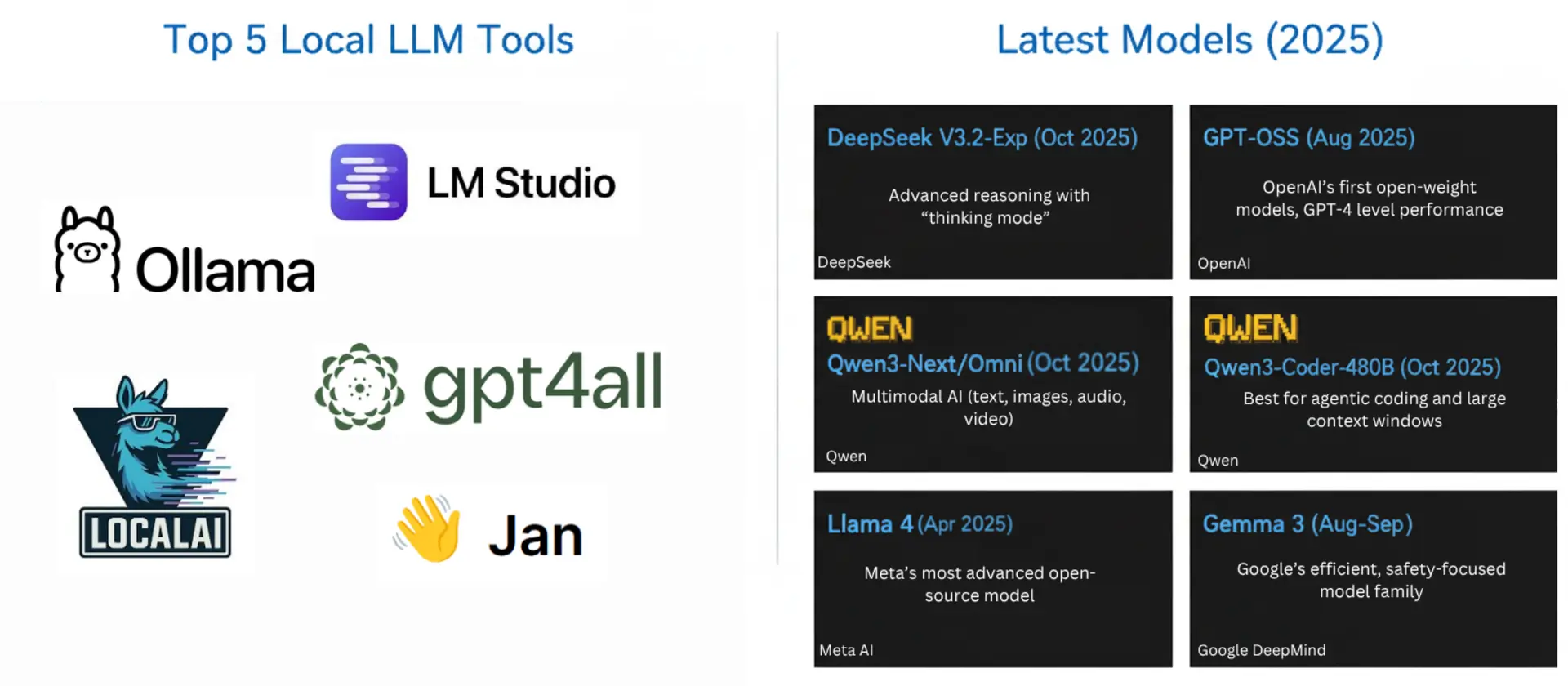
DeepSeek has positioned itself around reasoning-focused models, cost efficiency, API availability, and developer traction. Its releases have changed buyer expectations: teams now ask why a reasoning-capable model should cost as much as a general-purpose frontier model. The DeepSeek open model API route gives developers access without needing to replicate the serving stack. That shifts the conversation from “Can we download the weights?” to “Can we get reliable reasoning at a predictable cost?”
The momentum is not only about benchmark scores. DeepSeek’s open-weight posture creates competitive pressure on closed labs and on other open model providers. When a strong reasoning model is available through an API, procurement teams gain a credible alternative to expensive incumbents.
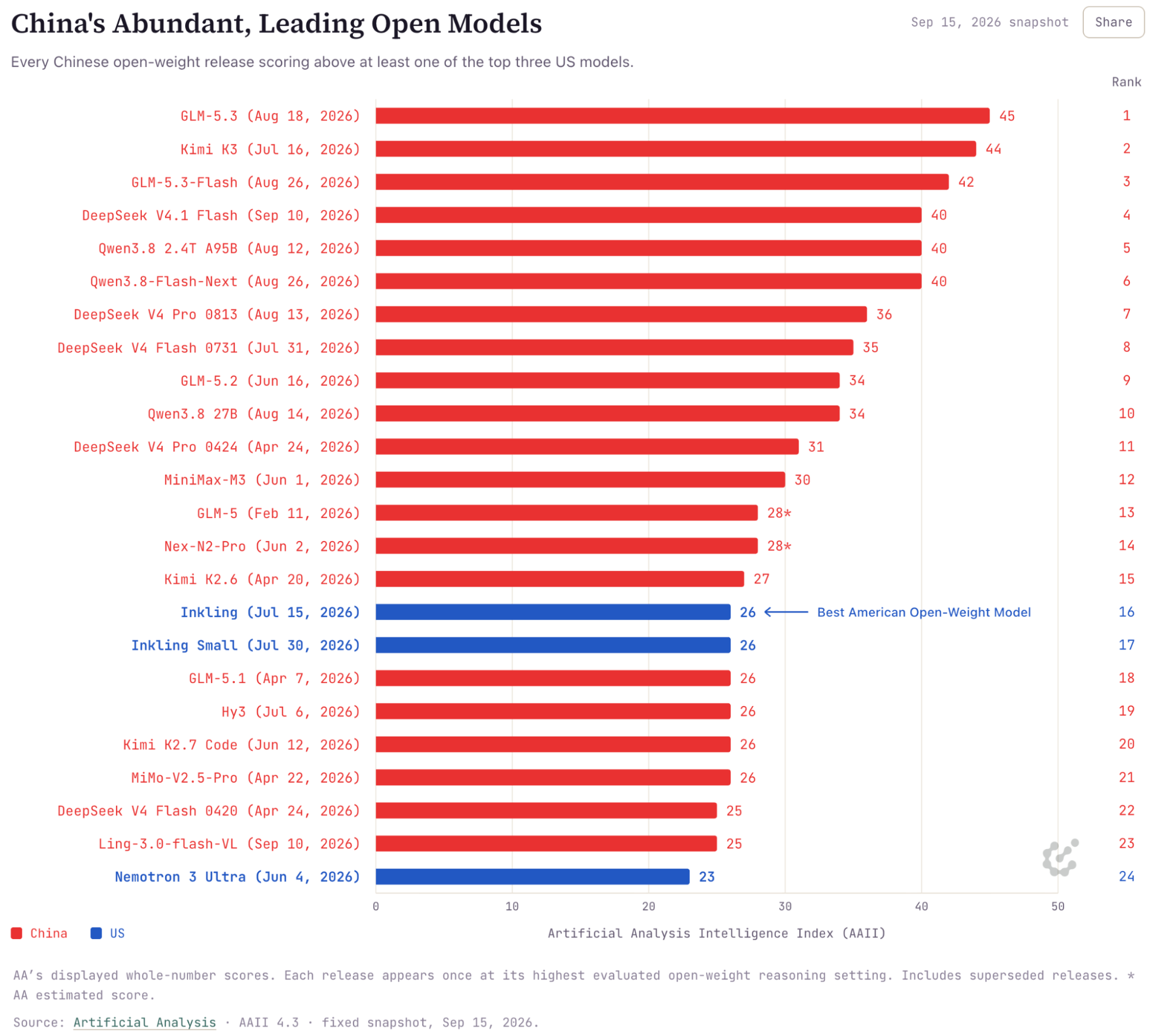
Meta Llama, Mistral, Qwen, and Other DeepSeek Alternative Open Models
The market for DeepSeek alternative open models is diverse. Llama models are widely supported by cloud vendors and community tooling. Mistral offers a mix of open-weight and commercial options with strong European positioning. Qwen has gained traction in multilingual and agentic workloads, especially across Asian markets. Licensing, size, fine-tuning flexibility, and enterprise readiness vary significantly.
| Model family | Typical licensing posture | Common strengths | Enterprise considerations |
|---|---|---|---|
| Llama | Community license with commercial conditions | Broad ecosystem, tooling, cloud support | Review acceptable use and scale thresholds |
| Mistral | Apache 2.0 for some, custom for others | Efficient models, EU focus | Check per-model license |
| Qwen | Mix of permissive and custom | Multilingual, coding, agentic use | Verify commercial terms |
| DeepSeek | Open weights with API access | Reasoning, cost efficiency | Evaluate provider reliability and data handling |
No single family wins everywhere. The right choice depends on task, latency budget, license risk, and the provider’s operating maturity.
Cloud Hyperscalers as Kingmakers in Open Model API Distribution
AWS, Azure, Google Cloud, and specialized inference providers shape which open models reach production. Managed endpoints, marketplace distribution, and regional compliance turn a model release into an enterprise-ready service. A model may be technically excellent but commercially invisible if it is not available in the buyer’s preferred cloud region with the right audit logs and SLA.
Hyperscalers act as kingmakers because they control procurement pathways. They can bundle inference with existing cloud commitments, offer private networking, and simplify billing. Specialized inference providers compete on latency, price, and model breadth. The power balance therefore depends on distribution as much as on training compute.
Fine-Tuned Derivatives and Community Models: The Long Tail of Power
LoRA adapters, merges, domain-specific models, and community forks form a long tail that can shift influence away from original creators. A base model may be mediocre for legal or medical work, but a fine-tuned derivative can dominate a niche. If the derivative ecosystem standardizes on one base architecture, that base gains gravity even if its raw benchmark scores are not the highest.
Community models also create licensing complexity. A permissive base can produce derivatives with mixed terms. Enterprises must trace provenance, especially when fine-tuning data or adapter weights carry restrictions.
How Open Model APIs Reshape Adoption and Competition
How Open Model API Routing and Inference Actually Work
A production open model API is not a thin wrapper around a model file. It involves batching, KV caching, quantization, mixture-of-experts routing, and latency/throughput trade-offs. Batching increases GPU utilization but can raise time to first token. KV caching avoids recomputing attention states for repeated prefixes, which is critical for chat and RAG. Quantization reduces memory and cost but may affect reasoning quality. MoE routing sends tokens to specialized experts, improving capacity without activating every parameter.
A request path might look like this in an OpenAI-compatible client:
import os
from openai import OpenAI

client = OpenAI(
    api_key=os.environ["API_KEY"],
    base_url=os.environ["BASE_URL"],
)

stream = client.chat.completions.create(
    model="deepseek-chat",
    messages=[{"role": "user", "content": "Explain KV caching."}],
    stream=True,
)

for chunk in stream:
    print(chunk.choices[0].delta.content or "", end="")
The abstraction is simple, but the provider must balance concurrency, cold starts, and regional capacity. That is where managed APIs earn their keep.
From Self-Hosting to Managed Open Model API: Trade-offs
| Factor | Self-hosting | Managed open model API |
|---|---|---|
| Control | Full control over stack and data path | Limited to provider configuration |
| Cost predictability | High fixed cost, variable utilization | Pay-per-token, easier to forecast |
| Data privacy | Data stays in your VPC | Requires trust in provider |
| Customization | Unlimited fine-tuning and kernels | Constrained by provider features |
| Ops burden | High: GPUs, scaling, monitoring | Low: provider handles infrastructure |
Self-hosting still makes sense for regulated data that cannot leave a private environment, for extremely high steady-state utilization, or for research requiring custom kernels. For many teams, however, a managed open model API removes months of platform work.
Pricing, Latency, and Throughput Benchmarks That Matter
Public leaderboards rarely capture production metrics. The metrics that matter are time to first token, tokens per second, cost per million tokens, concurrency limits, and cold starts. A model with high throughput but slow first token feels sluggish in chat. A cheap model with frequent rate limits creates retry storms. Mydeepseekapi’s transparent pricing and fast response times are a market example of how providers compete on these operational metrics, not just raw intelligence.
Enterprise Procurement: Security, Compliance, and Vendor Lock-In
Enterprises need SLAs, data residency, audit logs, SOC 2, HIPAA/GDPR considerations, and exit strategies. Hidden lock-in often appears through prompt/eval tooling. If your evaluation harness, prompt templates, and logging format are provider-specific, switching models becomes expensive even if the API is OpenAI-compatible. The best procurement questions probe versioning, deprecation notice, data retention, and whether you can export traces and evaluations.
Developer Experience: SDKs, Documentation, and Zero-Setup Workflows
Developer experience is a competitive weapon. Onboarding friction, API compatibility, streaming, function calling, and SDK quality determine how quickly a model reaches production. Teams increasingly expect OpenAI-compatible endpoints, typed SDKs, and clear error messages. For teams that want a managed DeepSeek open model API with zero setup hassle, Mydeepseekapi is worth evaluating alongside other providers.
DeepSeek Open Model API vs Alternatives: Capability and Ecosystem Comparison
Reasoning, Coding, and Multilingual Performance
DeepSeek models are often strong in math, code generation, and debugging, but benchmark contamination and prompt sensitivity complicate comparisons. Llama and Qwen may lead in multilingual tasks depending on the language pair. Mistral can be competitive for efficient European deployments. The practical lesson: test on your own prompts, not just public leaderboards.
Context Length, Tool Use, and Agentic Workflows
Long-context claims often differ from production reality. A model may accept 128k tokens but degrade in retrieval accuracy after 32k. Function calling and structured outputs are equally important for agentic workflows. DeepSeek and its alternatives vary in how reliably they emit valid JSON, handle multi-step tool calls, and recover from errors. Context length is a ceiling, not a guarantee.
Licensing and Commercial Use in Open Source LLM API Stacks
Licenses range from permissive (Apache 2.0, MIT) to copyleft, research-only, and custom terms. In an open source LLM API stack, licensing affects whether you can host, fine-tune, redistribute, or offer the model as a service. A model with permissive weights is easier to commercialize, but the API provider’s terms may add restrictions. Always review both the model license and the provider’s acceptable use policy.
Benchmark Caveats: What Public Leaderboards Miss
Public leaderboards miss prompt sensitivity, evaluation leakage, latency variance, cost per successful task, and domain-specific testing. A model that wins a reasoning benchmark may fail in a noisy customer support workflow. The only benchmark that matters is your workload, measured with success criteria, latency budgets, and cost per task.
The Economics of Open Model Power Balance
Compute Subsidies and Inference Cost Curves
Subsidized inference, spot compute, and hardware advances change the balance among providers. Cheap tokens can be strategic: a provider may lose money on inference to gain developers, data, and enterprise contracts. As hardware improves and serving stacks mature, the cost curve bends downward, but not uniformly across regions or model sizes.
Hidden Costs of Open Weights: Ops, Evaluation, Safety
Open weights are not free at production scale. Total cost of ownership includes GPU operations, monitoring, evals, red teaming, compliance, and incident response. A self-hosted model requires a platform team, not just a data scientist. These hidden costs explain why many teams choose a managed API even when weights are available.
Transparent Pricing as a Competitive Weapon
Transparent pricing builds trust and reduces procurement friction. When providers publish per-token rates, latency targets, and rate limits, buyers can compare total cost of ownership without endless sales cycles. Mydeepseekapi is a plain-text example of transparent pricing in a managed DeepSeek open model API offering. Transparency also pressures competitors to justify premiums with reliability, support, or compliance.
The Race to Commoditize Intelligence Without Commoditizing Trust
Model intelligence is commoditizing. Reasoning quality is rising across open and closed models. But trust, reliability, support, safety, and enterprise governance remain differentiators. The race is not only to make intelligence cheap; it is to make trust scalable. Providers that invest in SLAs, auditability, and incident response can charge for confidence even as token prices fall.
Practical Playbook: Choosing and Integrating an Open Model API
Decision Framework: When to Use DeepSeek, Llama, Mistral, or Qwen
| Workload | Likely fit | When not to use |
|---|---|---|
| Reasoning and math | DeepSeek r1-style models | If latency is ultra-low |
| Coding and debugging | DeepSeek, Qwen | If license forbids commercial use |
| Multilingual | Qwen, Llama | If language pair is low-resource |
| Low-latency chat | Smaller Mistral, Llama | If deep reasoning is required |
| Long-context RAG | Llama, Qwen, DeepSeek | If context costs exceed budget |
| Regulated workloads | Provider with compliance | If data cannot leave region |
Real-World Implementation Patterns and Lessons from Production
In production, RAG pipelines need chunking strategies, reranking, and fallback routing. Batch summarization benefits from queued requests and idempotency keys. Agentic workflows require strict tool schemas and retry limits. Streaming chat needs backpressure handling. A common lesson: evaluate before migration. Run A/B tests with real prompts, measure cost per successful task, and keep a fallback model for outages.
Common Pitfalls to Avoid with Open Model APIs
Pitfalls include ignoring rate limits, underestimating context costs, poor retry logic, prompt drift, vendor-specific formats, and missing observability. Rate limits can turn a demo into an outage. Context costs can explode with long RAG prompts. Poor retries can amplify failures. Prompt drift breaks evals. Vendor-specific formats create lock-in. Missing observability means you cannot debug why quality dropped.
Scaling from Prototype to Production with Zero Setup Hassle
Managed providers reduce time to value. Mydeepseekapi can integrate DeepSeek v3 & r1 into workflows with zero setup hassle and fast response times. The prototype-to-production path becomes a matter of evaluation, monitoring, and cost controls rather than GPU procurement.
Governance, Safety, and Trust in Open Model Ecosystems
Licensing Wars: Permissive, Copyleft, and Custom Terms
License changes can shift power overnight. A model that was permissive may adopt commercial restrictions, attribution requirements, or derivative distribution rules. Enterprises should track license versions and keep legal review in the procurement loop.
Safety Alignment in Open Weights and API Guardrails
Open weights put alignment responsibility on the deployer. Managed APIs can add moderation layers, jailbreak resistance, and API-level guardrails. The trade-off is control versus convenience. Regulated industries often prefer managed guardrails with audit logs.
Transparency Reports and Reproducibility
Model cards, eval methodology, versioning, deprecation policies, and reproducibility are authority signals. Providers that publish these details make it easier for enterprises to trust them. According to official documentation from leading AI standards efforts, transparency is a prerequisite for responsible deployment.
What the Experts Say: Standards Bodies and Research Labs
Standards bodies, academic labs, and industry reports converge on a few themes: evaluation must be task-specific, safety must be continuous, and governance must be auditable. No single benchmark or license solves trust. The open model power balance will favor ecosystems that make trust reproducible.
Future Scenarios: How the Open Model Power Balance May Shift
Scenario 1: DeepSeek-Led Cost Collapse and Broader Access
Aggressive pricing and strong reasoning models could expand open model API adoption across startups and enterprises. If DeepSeek-style cost efficiency becomes the norm, token prices fall and more teams embed reasoning into everyday workflows.
Scenario 2: Fragmented Regulatory Regions and Sovereign LLMs
Regional AI rules, data sovereignty, and government-backed open models could fragment the market. Sovereign LLMs may weaken global open model leaders by favoring local providers with compliance advantages.
Scenario 3: Consolidation Around a Few Open Source LLM API Gateways
Developers may consolidate around a few trusted gateways offering multiple open models, unified billing, and portability. This would shift power from individual labs to gateway providers that control the developer relationship.
Indicators to Watch: Release Cadence, Pricing Moves, Adoption Metrics
Watch new model releases, price cuts, API usage growth, fine-tuning adoption, enterprise case studies, and licensing changes. These signals reveal whether power is concentrating or diffusing.
Evaluating Providers Without Getting Locked In
Multi-Provider Abstraction and Portability
Use abstraction layers, OpenAI-compatible APIs, prompt versioning, and fallback routing across open model API providers. Portability is not just about API shape; it is about exporting evaluations, traces, and prompts.
Benchmarking Your Own Workloads
Build internal evals with real prompts, success criteria, latency budgets, and cost per task. Avoid relying only on public leaderboards. Your workload is the only benchmark that predicts production success.
Procurement Questions for Long-Term Viability
Ask about SLAs, data retention, residency, audit logs, model versioning, deprecation notice, fine-tuning rights, and exit strategies. The goal is not to avoid all lock-in but to make switching feasible.
Conclusion
The open model power balance has moved from weights to APIs. Model quality still matters, but compute access, distribution, pricing, licensing, and trust now determine who wins. DeepSeek, Llama, Mistral, Qwen, hyperscalers, and managed providers like Mydeepseekapi all compete in a layered ecosystem. For developers and enterprises, the practical path is to evaluate open model APIs on your own workloads, design for portability, and treat transparency and reliability as first-class requirements. The balance will keep shifting, but the teams that benchmark continuously and avoid hidden lock-in will be best positioned to adapt.