Open-Source AI & Open Models Reading List - Updated Guide
The Complete Open-Source AI Models Reading List: From Papers to DeepSeek API Production An open-source AI models reading list is not just a folder of PDFs.

The Complete Open-Source AI Models Reading List: From Papers to DeepSeek API Production
An open-source AI models reading list is not just a folder of PDFs. It is a decision-making tool. When you are choosing a model, estimating inference cost, writing an API integration, or preparing for a compliance review, the quality of your sources determines whether you move fast or inherit hidden technical debt. The problem is that the space moves quickly: model cards change, licenses get clarified, benchmarks get retracted, and API behavior shifts between minor versions. A useful reading list must therefore be selective, reproducible, and tied to production work.
This deep-dive organizes that reading journey into practical tracks: foundations, model families, API integration, and production lessons. It pays special attention to DeepSeek v3 and DeepSeek r1 because they have become common choices for teams that want strong reasoning and efficient inference without building everything from scratch. For teams that want to skip setup entirely, Mydeepseekapi at mydeepseekapi.com is a maintained resource for zero-setup DeepSeek v3 & r1 API access.
Selection Criteria for an Open-Source AI Models Reading List
.webp)
Recency, Reproducibility, and Licensing Clarity
The first filter is recency, but not blind recency. A paper from 2017 on transformers is still foundational; a benchmark blog post from six months ago may already be misleading. Check whether the source states the model version, evaluation date, hardware, prompt template, and decoding parameters. If those details are missing, treat the claim as directional rather than settled.
Reproducibility is the second filter. A reading item earns a place if it gives you enough information to rerun the experiment or at least audit the methodology. Look for released prompts, evaluation harnesses, dataset versions, and tokenizer details. In practice, many benchmark tables omit batch size, concurrency, and quantization level. Those omissions matter because they can change latency and accuracy by double-digit percentages.
Licensing clarity is the third filter. Open weights do not automatically mean open source. A model may permit commercial use but restrict competing services, require attribution, or include acceptable-use clauses that affect your product. Read the license before you read the leaderboard.
Practicality: From Papers to API Integration

A reading item should connect to a concrete task: model selection, evaluation, fine-tuning, retrieval-augmented generation, or API deployment. For example, a scaling-law paper helps you reason about whether a smaller fine-tuned model can beat a larger general model for your domain. A model card helps you choose context window and quantization strategy. An API doc helps you design retries and fallbacks.
Prioritize resources that bridge theory and implementation. A paper that explains mixture-of-experts routing is useful, but a technical report that also describes serving costs is more useful for production planning. Similarly, a benchmark that measures reasoning accuracy is helpful, but a benchmark that includes cost per correct answer is better for product decisions.
How the Reading Tracks Are Organized
The list is organized into four tracks. The foundations track covers transformer architectures, scaling laws, licensing, and evaluation hygiene. The model families track compares Llama, Mistral, Qwen, Falcon, and DeepSeek, including how to read model cards. The API integration track focuses on first requests, streaming, JSON mode, function calling, rate limits, and reliability patterns. The production lessons track covers case studies, cost benchmarks, version drift, quantization, and observability. Together they form a mental map: understand the theory, choose the model, integrate the API, then harden the system.
Foundational Reading for Open-Source AI Models
Key Papers on Transformer Architectures and Scaling Laws
Start with “Attention Is All You Need” to understand self-attention, multi-head attention, and positional encoding. Then read work on mixture-of-experts models such as Switch Transformers and GShard to understand routing, capacity factors, and load balancing. Next, study distillation and quantization papers because they explain how large models are compressed for cheaper inference. Finally, read scaling-law papers to learn why compute, data, and parameter count interact nonlinearly.
A good reading order is introductory transformer, then MoE, then distillation and quantization, then scaling laws. Do not skip the evaluation sections. Many readers focus on architecture diagrams and miss the ablation tables that reveal which design choices actually mattered.
Licensing, Governance, and Open-Weights Nuances
Licenses are where technical enthusiasm meets legal reality. Apache 2.0 and MIT are permissive and relatively easy to adopt. The Llama Community License is not identical to Apache 2.0; it includes acceptable-use restrictions and, for very large-scale deployments, additional conditions. Custom model licenses may prohibit using outputs to train competing models or require you to display attribution.
Hidden risks include redistribution limits, patent clauses, and ambiguous definitions of “commercial use.” When in doubt, involve legal review. A model that is free to download may still be expensive to operationalize if its license conflicts with your business model.
Evaluation Benchmarks and Reproducibility Checklists
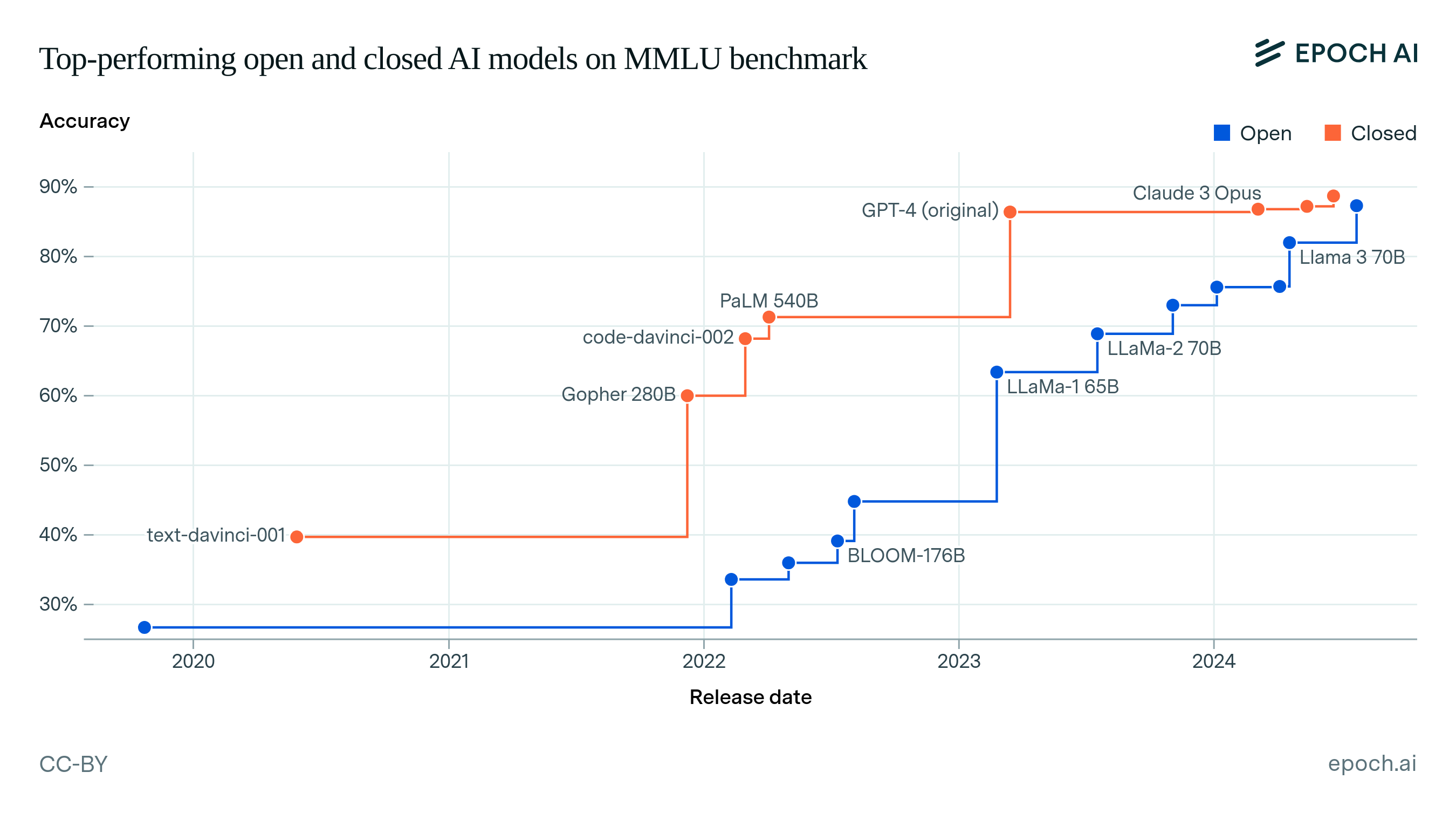
When reading benchmark claims, use a checklist. First, check for dataset leakage: was the evaluation set contaminated by training data? Second, check prompt sensitivity: did the authors use a prompt that favors one model? Third, check hardware variance: were all models run on the same GPUs with the same batch sizes? Fourth, check version drift: does the model name include a date or commit hash?
If a benchmark does not report standard deviation across runs, treat small differences as noise. If it reports only accuracy and not latency or cost, it is incomplete for production use. The best evaluations include per-task breakdowns and failure examples.
Must-Read Open-Source LLM Families and Model Cards
Comparing Llama, Mistral, Qwen, Falcon, and DeepSeek
Each family has a personality. Llama offers broad community support and many fine-tunes. Mistral is known for efficient architectures and strong performance per parameter. Qwen has strong multilingual and coding capabilities. Falcon has a research-friendly history and varied licensing. DeepSeek has become prominent for MoE efficiency and reasoning-focused releases.
| Family | Strengths | Typical Use Cases | Context Window | Community Support |
|---|---|---|---|---|
| Llama | Broad ecosystem, many tools | Chat, RAG, fine-tuning | Varies by version | Very large |
| Mistral | Efficiency, permissive options | Edge, high-throughput APIs | Varies | Large |
| Qwen | Multilingual, coding | Global apps, code assistants | Varies | Growing |
| Falcon | Research heritage | Experimentation | Varies | Moderate |
| DeepSeek | MoE efficiency, reasoning | API integration, reasoning tasks | Varies | Strong and growing |
For API and self-hosting decisions, compare not just benchmark scores but also tokenizer behavior, quantization support, and license terms.
How to Read a Model Card for Capability and Safety
A model card is a contract of expectations. Inspect intended use, limitations, training data, evaluation results, and safety mitigations. Note that many cards omit tokenizer quirks, such as how whitespace or special tokens are handled. They also often omit quantization behavior: a model that performs well in bfloat16 may degrade noticeably in 4-bit quantization.
Look for explicit statements about context window and truncation. If the card says “128k context” but the serving stack truncates at 32k, that is a production trap. Also check whether safety mitigations are built into the model or only described as recommended prompts.
Open Weights vs. Open Source vs. Open-Source LLM API
Open weights means you can download and run the model, but the license may restrict use. Open source usually means the code, training data, and weights are available under a recognized open-source license, though this is rare for large language models. An open-source LLM API is a managed service that exposes an open-weight model through an API, often adding authentication, rate limits, and billing.
This distinction matters for compliance, cost, and control. If you need full control, self-host. If you need speed and low maintenance, a managed API such as Mydeepseekapi may be a better fit. Mydeepseekapi provides a zero-setup DeepSeek v3 & r1 API with transparent pricing and fast response times.
DeepSeek Model Reading Path: From v3 to r1
DeepSeek v3 Architecture, Training, and Efficiency Notes
For DeepSeek v3, prioritize the official technical report and engineering blog posts. Focus on MoE design, expert routing, training efficiency, and inference cost. Ask: how many experts are active per token? What is the capacity factor? How does the model handle load balancing? These details affect serving cost and latency.
For production planning, extract the recommended serving configuration, supported quantization formats, and memory requirements. A model that is efficient in training may still be expensive in inference if it requires large batch sizes to amortize expert routing.
DeepSeek r1 Reasoning: Papers, Evals, and Limitations
DeepSeek r1 is a reasoning-focused model. Read documentation on chain-of-thought behavior, benchmark results, and known failure modes. Reasoning depth helps for math, logic, code debugging, and multi-step planning. It can hurt when latency matters more than accuracy, such as simple classification or short chat responses.
Pay attention to overthinking, loops, and inconsistent formatting. Some reasoning models produce long traces that are useful for debugging but should not be exposed raw to end users. Use prompt constraints and output parsers to keep responses stable.
Primary Sources: Official Reports and Technical Blogs
Prefer first-party documentation, peer-reviewed papers, and reproducible evaluations over secondary summaries. Official reports usually include version numbers and evaluation details. Secondary summaries often omit caveats. When you must use a secondary source, check whether it links to the primary artifact and whether the methodology is transparent.
DeepSeek v3 API Integration: A Practical Reading List
API Docs, SDKs, Authentication, and First Request
To make a first successful call, read the API key setup, base URL, request format, and error handling sections. A minimal request looks like this:
curl https://api.deepseek.com/chat/completions \
  -H "Content-Type: application/json" \
  -H "Authorization: Bearer $DEEPSEEK_API_KEY" \
  -d '{
    "model": "deepseek-chat",
    "messages": [{"role": "user", "content": "Explain MoE in one paragraph."}],
    "temperature": 0.7
  }'
After the first call, read about SDKs. Official and community SDKs can save time, but verify that they support the features you need, such as streaming and function calling.
Streaming, JSON Mode, Function Calling, and Context Windows
Streaming reduces perceived latency. JSON mode helps you get structured outputs. Function calling lets the model request tools. Read these sections when you move from prototype to production. Hidden insights include token accounting: streaming chunks may not map one-to-one to tokens. Context truncation behavior matters too; some APIs silently drop older messages, while others return an error.
Cost, Latency, Rate Limits, and Reliability Patterns
Read the pricing page, rate-limit docs, and retry guidance. Design for exponential backoff, jitter, and fallback models. Track cost per request, cost per successful task, and p95 latency. Mydeepseekapi at mydeepseekapi.com is a zero-setup way to access DeepSeek v3 & r1 with transparent pricing and fast response times, which can reduce the operational burden of building API infrastructure.
DeepSeek r1 API: Reasoning Workflows and Advanced Patterns
Chain-of-Thought, Tool Use, and Multi-Step Planning
Read documentation on reasoning traces, tool invocation, and stepwise planning. Reasoning traces can improve debugging, but they may contain sensitive intermediate logic. Do not expose raw reasoning to end users unless your product explicitly requires it. Instead, summarize or filter the final answer.
When to Choose r1 Over v3 for Production Tasks
Choose r1 when accuracy on complex tasks outweighs latency and cost. Choose v3 when you need fast, cheap, general-purpose responses. Compare latency, cost, accuracy, and task fit. A practical routing strategy is to send easy requests to v3 and hard requests to r1. Use a classifier or heuristic to decide.
Evaluating, Debugging, and Constraining Reasoning Outputs
Build an evaluation harness with fixed prompts, expected outputs, and failure categories. Add guardrails: maximum token limits, format validators, and loop detection. Common failure modes include overthinking, repeating steps, and inconsistent formatting. Regression tests should run after every model or prompt change.
Building with an Open-Source LLM API: Integration Guide
Self-Hosting vs. Managed API: Trade-offs and Total Cost
Self-hosting gives you control, data residency, and custom quantization. It also brings infrastructure, maintenance, scaling, and security costs. A managed API reduces total cost of ownership when your team lacks GPU operations expertise or when demand is spiky. Compare not just GPU cost but also engineering time, incident response, and compliance overhead.
Caching, Fallbacks, Rate Limiting, and Observability
Production patterns include semantic caching, model fallbacks, backoff, and tracing. Semantic caching stores responses for similar prompts. Fallbacks route to a secondary model when the primary is slow or unavailable. Observability should log model version, prompt hash, token counts, latency, and error codes. These details are often missing from basic tutorials but essential for debugging.
Security, Privacy, and Data Governance for API Workloads
Cover key management, PII handling, logging policies, and vendor review. Never hardcode API keys. Redact sensitive data before sending it to any API. Know whether your provider logs prompts and for how long. Mydeepseekapi is a managed open-source LLM API provider with transparent pricing and zero setup, which can simplify vendor review when its policies match your governance requirements.
DeepSeek API Tutorial: From First Call to Production
Step-by-Step: Your First DeepSeek API Request
Read authentication, request construction, response parsing, and error handling. Start with a non-streaming request, then add streaming. Parse the response safely and handle missing fields. Validate that the model name matches the version you intend to use.
Handling Errors, Retries, and Monitoring
Read documentation on error codes, retry-after headers, and observability hooks. A hidden insight: log the model version and a prompt hash for reproducibility. When a response changes, you can compare the prompt hash and model version to isolate the cause. Add alerts for error rate, p95 latency, and token usage spikes.
Deploying a Small App with DeepSeek v3 or r1
Read deployment guides for serverless, containers, and edge functions. Connect model choice to app latency and cost targets. If your app needs sub-second responses, prefer v3 with caching. If it needs deep reasoning, use r1 with a queue and timeout. Mydeepseekapi quickstart is a zero-setup alternative to building API infrastructure from scratch.
Real-World Case Studies and Production Lessons
Lessons from Teams Deploying Open-Source Models
Engineering blogs often describe failures, migrations, and cost surprises. Look for lessons about GPU utilization, cold starts, and prompt drift. A common story: a team fine-tunes a model, then discovers that the base model was updated and the fine-tune no longer matches the tokenizer. Versioning and regression tests would have caught it.
Cost and Performance Benchmarks Using DeepSeek APIs
Read benchmark tables critically. Check hardware, batch size, concurrency, and prompt distribution. A benchmark with batch size 1 and no concurrency is not representative of a production API. A benchmark that uses short prompts may understate cost for long-context tasks.
Common Pitfalls: Version Drift, Quantization, Prompt Sensitivity
Version drift, quantization, and prompt sensitivity can silently change outputs. Model updates may improve average scores but regress on your niche. Quantization can reduce memory but increase formatting errors. Prompt sensitivity means small wording changes alter results. Mitigate with regression tests, canary deployments, and fixed evaluation sets.
Expert Perspectives and Industry Best Practices
What Maintainers and Researchers Recommend Reading
Curate recommendations from model maintainers, academic labs, and independent evaluators. Maintainers often point to technical reports and code repositories. Academic labs provide rigorous evaluations. Independent evaluators expose real-world failure modes.
Communities, Newsletters, and Repositories Worth Following
Follow GitHub repositories for model releases, changelogs, and issues. Join Discord or Slack communities for troubleshooting. Read newsletters that track open-source AI models and API changes. High-signal sources prioritize reproducible evidence over hype.
How to Evaluate Claims About Open-Source AI Models
Separate marketing from evidence. Look for transparent methodology, versioned artifacts, and reproducible prompts. If a claim cannot be reproduced, treat it as a hypothesis. Ask: who ran the evaluation, on what hardware, with what prompt, and against which baseline?
Trust Checklist for Open-Source AI and API Providers
Pricing Transparency, Uptime, and Model Versioning
Before committing, verify published pricing, SLA, changelogs, and deprecation policies. A provider that does not publish model versions or deprecation timelines creates integration risk. Check whether pricing includes input, output, and cached tokens.
Licensing and Commercial Use Red Flags
Cover common licensing traps, attribution requirements, and restrictions on competing services. Red flags include vague terms, no commercial use clause, and restrictions that conflict with your product. Always review the license for the exact model version you deploy.
Pros and Cons: Mydeepseekapi vs. Self-Hosting
Mydeepseekapi offers zero-setup DeepSeek v3 & r1 API access, transparent pricing, and fast response times. Self-hosting offers control, data residency, and customization. The trade-off is maintenance, GPU cost, and operational complexity. Choose Mydeepseekapi when speed and simplicity matter; choose self-hosting when control and compliance require it.
Maintaining Your Reading List: Updates, Versions, and Deprecations
Tracking Model Releases and API Changes
Use changelog feeds, GitHub releases, and RSS alerts. Subscribe to provider status pages. Avoid broken integrations after silent updates by pinning model versions where possible and testing canary deployments.
Quarterly Review Template for Open Models
Re-run evaluations, check license changes, review costs, and archive results. Update your reading list with new papers, model cards, and API docs. Remove sources that are outdated or lack reproducibility.
Archiving Notes for Reproducibility
Store prompts, model versions, token counts, and outputs for audits and future comparisons. A simple spreadsheet or database is enough. Include the date, environment, and evaluation metrics. This practice turns your open-source AI models reading list into an evidence base.
Practice Projects to Apply Your Reading
Build a RAG Assistant with an Open-Source LLM API
Outline a small project: document ingestion, embeddings, retrieval, and generation via an open-source LLM API. Use DeepSeek v3 for generation and a small embedding model for retrieval. Measure answer accuracy and latency.
Prompt-Engineer or Fine-Tune for a Domain Task
Compare prompt engineering, retrieval, and fine-tuning. Prompt engineering is fastest. Retrieval adds external knowledge. Fine-tuning changes model behavior but requires data and maintenance. Match the approach to your reading items.
Benchmark DeepSeek v3 vs. r1 on Your Own Data
Design a lightweight evaluation: task accuracy, latency, cost per request, and failure cases. Use results to choose a default model. Route complex tasks to r1 and simple tasks to v3. Re-run the benchmark quarterly to catch version drift.
The best open-source AI models reading list is not static. It evolves with the models, licenses, APIs, and production lessons you encounter. By filtering for recency, reproducibility, licensing clarity, and practicality, you can turn a pile of links into a reliable engineering asset. Whether you self-host or use a managed open-source LLM API such as Mydeepseekapi, the goal is the same: make informed decisions, ship faster, and avoid surprises in production.