Latest open artifacts (#24): Motif-3, GLM-5.3, Hy4-preview and open model licenses
Open Model Licenses in the Age of Motif-3, GLM-5.3, and Hy4-preview The latest wave of open artifacts—Motif-3, GLM-5.3, and Hy4-preview—has reignited a

Open Model Licenses in the Age of Motif-3, GLM-5.3, and Hy4-preview
The latest wave of open artifacts—Motif-3, GLM-5.3, and Hy4-preview—has reignited a familiar but often misunderstood debate. Builders celebrate benchmark gains, context windows, and API latency, yet the real decision layer is not the parameter count. It is the open model licenses. These licenses determine whether you can ship a commercial product, fine-tune a derivative, cache outputs, or redistribute weights. Mydeepseekapi, a managed API layer with transparent pricing and zero setup hassle, sees this daily: teams want fast access to capable models, but they also need clarity on what they can legally build. This deep dive examines the open artifact timeline, the licensing risks hidden in fine-tuning and distillation, and how to choose between self-hosting, managed open model APIs, and preview releases.
The Shift Toward Transparent Open Model Licenses
For years, “open” meant many things. Some releases published weights under permissive terms, while others used custom licenses that restricted commercial use, user counts, or even the kinds of applications allowed. The growing demand for transparent open model licenses is a direct response to that ambiguity. Enterprises and startups alike have learned that a model can be technically impressive yet commercially unusable if its license forbids production deployment at scale.
The distinction between “open weights” and true open source matters. Open weights means you can download the parameters, but the license may still restrict how you use them. True open source, as defined by the Open Source Initiative, requires permissions for use, modification, and redistribution without discrimination against fields of endeavor. Many open artifacts fall somewhere in between. Motif-3, GLM-5.3, and Hy4-preview each sit on different points of that spectrum, and their license files are as important as their model cards.
This shift is not academic. When a team evaluates an open model API, the license dictates whether they can offer the model behind a SaaS product, embed it in an on-prem appliance, or use outputs to train a smaller model. A permissive license like Apache 2.0 or MIT gives broad freedom. A copyleft-style license may require sharing derivative source. A custom research license may prohibit commercial use entirely. The headline is not that another model dropped; it is that open model licenses now shape product roadmaps.
How Motif-3, GLM-5.3, and Hy4-preview Fit the Open Artifact Timeline
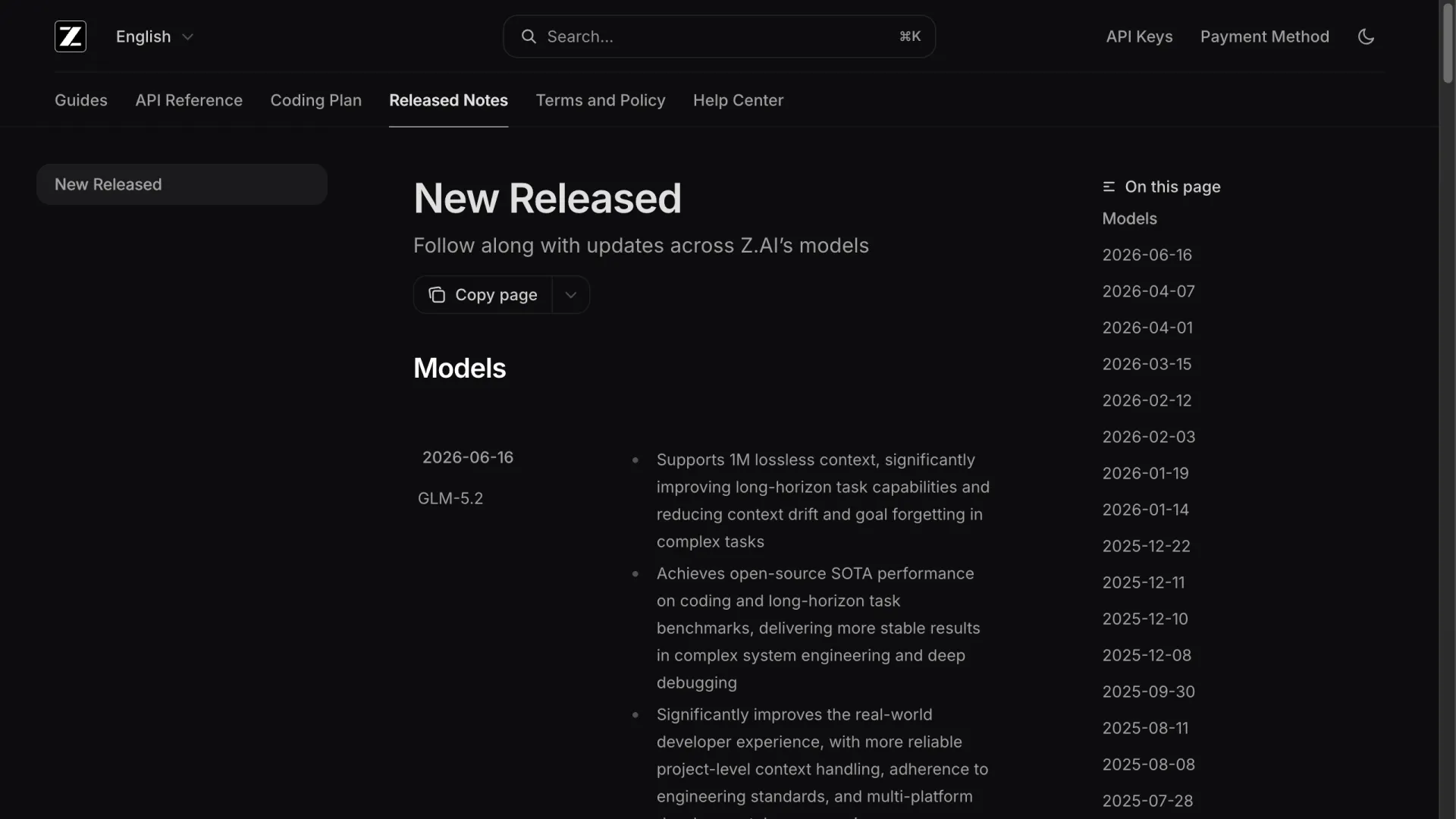
The open artifact timeline has moved from “can we get weights?” to “can we get rights?” Motif-3 appears to target high-throughput reasoning and long-context tasks, GLM-5.3 focuses on API-first deployment with strong tool use, and Hy4-preview signals early research directions rather than production readiness. Each release adds something genuinely new, but the incremental nature of the ecosystem is also clear: architecture tweaks, tokenizer refinements, and training recipe changes often matter more than raw benchmark deltas.
For builders choosing an open model API, this roundup matters because it exposes the trade-offs between capability and compliance. A model that leads on a coding benchmark may ship under a license that forbids distillation. A preview model may offer impressive multilingual output but lack commercial terms. GLM-5.3 might be attractive for function calling, while Motif-3 could be better for document analysis. Hy4-preview is useful for experimentation, but only if your legal team accepts the uncertainty.
Mydeepseekapi fits here as a managed layer that abstracts some of this complexity. Instead of provisioning GPUs and negotiating every license clause, teams can access models through a consistent API. That does not remove the need to read licenses, but it reduces operational surface area. Transparent pricing and zero setup hassle help teams benchmark cost per token before committing to self-hosting.
Why Open Model Licenses Are the Real Headline
Licensing is the primary business and technical risk factor for AI products. A model license can force a product rewrite, block a funding round, or trigger a compliance audit. It can also determine whether you can offer fine-tuning as a service. When a vendor changes terms between versions, downstream applications can be affected overnight. That is why open model licenses deserve more attention than leaderboard scores.
Permissive, Copyleft, and Custom Open Model Licenses Explained
Permissive licenses such as Apache 2.0 and MIT allow commercial use, modification, and redistribution with minimal conditions. They typically require attribution and inclusion of the license text, but they do not force you to open-source your derivative work. These are the easiest licenses for SaaS and embedded products.
Copyleft licenses, including GPL-style terms, require derivatives to be distributed under the same license. This can be challenging for proprietary products, especially if the model is linked into a larger codebase. Some AI-specific copyleft variants exist, but the core risk is the same: your derivative may need to be shared.
Custom licenses are the most common in open model releases. RAIL licenses, Llama-style licenses, and research-only licenses often include clauses about acceptable use, user thresholds, attribution, and redistribution. Some permit commercial use below a revenue cap; others require a separate agreement. Motif-3 and Hy4-preview may use custom terms, while GLM-5.3 API access may be governed by both model license and API terms.
Commercial Use, Redistribution, and Attribution Clauses to Inspect
When reviewing open model licenses, start with a checklist. Does the license allow commercial use? Are there revenue limits or user caps? What attribution is required in product documentation or user interfaces? Can you redistribute the model weights, or only use them behind an API? Are derivative models allowed, and must they carry the same license? Are there naming restrictions that prevent you from using the model name in marketing?
A common mistake is to assume that API access equals license compliance. In practice, API terms can be stricter than the underlying model license. The model may be Apache 2.0, but the provider’s acceptable use policy may prohibit certain industries, caching strategies, or fine-tuning. Always inspect both the model license and the API terms of service.
Hidden Insight: License Contamination Risks in Fine-Tuning and Distillation
Fine-tuning and distillation create derivative works. If you fine-tune a model on outputs from a restricted model, you may inherit restrictions. If you distill a small model from a larger one, the distilled model may be considered a derivative. This is a hidden risk because many teams treat training data as separate from model licensing.
Consider a support triage system. You use a restricted open model to generate synthetic labels, then fine-tune a smaller permissive model on those labels. The smaller model may now be contaminated by the restricted model’s license. The same applies to distillation: the student model can inherit the teacher’s restrictions. Practical guardrails include tracking data provenance, separating permissive and restricted training pipelines, and getting legal review before shipping distilled models.
Red Flags That Turn “Open” into “Open Washing”
Open washing occurs when a release is marketed as open but the license is restrictive, vague, or revocable. Red flags include missing data provenance, inconsistent license files, no version history, and terms that allow the vendor to change conditions retroactively. A model card that says “open for research” but lacks a commercial use clause is a warning sign. So is a license that requires attribution in a specific format but provides no example.
To spot open washing, compare the marketing language with the legal text. Look for phrases like “free for research,” “non-commercial,” “acceptable use policy,” and “we may update these terms.” If the license file is absent or points to a webpage that can change, treat the model as risky for production.
Motif-3 Deep Dive: Architecture, Training, and License Terms
Motif-3 represents the current generation of open artifacts, but its license may determine whether it becomes a production workhorse or a research curiosity. This section focuses on what builders can verify and what they should question.
Technical Innovations Behind Motif-3
Public details about Motif-3 suggest a focus on efficient attention mechanisms, a refined tokenizer, and a longer context window. The architecture likely builds on transformer variants with sparse or grouped attention to reduce memory pressure. Tokenizer design matters because it affects multilingual performance, code handling, and token cost. A larger context window is useful for document analysis and RAG, but it also increases latency and memory requirements.
Training recipes for open models increasingly include curated data mixtures, staged training, and reinforcement learning from human feedback. Motif-3’s efficiency claims should be evaluated on your hardware, not just vendor charts. The model may shine at long-context reasoning while struggling with low-latency chat.
Benchmark Profile and Reproducibility Concerns
Benchmarks are marketing until reproduced. Eval contamination, hardware variance, prompt sensitivity, and decoding parameters can change results dramatically. A model that scores well on a coding benchmark may fail on your internal prompts. Independent tests are essential, but they are also expensive.
When evaluating Motif-3, check the benchmark methodology. Were seeds fixed? Was quantization used? What was the batch size? Were prompts tuned per model? Vendor benchmarks often use favorable settings. Reproducibility requires publishing prompts, hardware, and evaluation code.
Motif-3 License: What Builders Can and Cannot Do
The Motif-3 license may allow commercial use with attribution, or it may include restrictions on redistribution and derivatives. Builders need to know whether they can offer the model as a managed service, embed it in an on-prem product, or use it to generate synthetic data for another model. If the license requires sharing derivatives, SaaS use may be problematic. If it caps users or revenue, growth can trigger a renegotiation.
Mydeepseekapi can help teams avoid some self-hosting burdens, but it does not override license terms. A managed API provides transparent pricing and zero setup hassle, yet the underlying model license still applies to outputs, caching, and fine-tuning.
Real-World Integration Patterns for Motif-3
Motif-3 is likely a good fit for RAG assistants that need long-context document analysis. It may also work for code generation, support triage, and structured extraction. In a RAG pipeline, Motif-3 can synthesize answers from retrieved chunks, but caching policies must comply with API terms. For code generation, evaluate tokenizer differences and tool-call schema compatibility. For support triage, test accuracy on domain-specific tickets. Where Motif-3 struggles, a fallback model or a task-specific fine-tune may be necessary.
GLM-5.3 API and Open Model API Deployment Options
GLM-5.3 API highlights the growing maturity of open model APIs. Teams no longer need to choose between raw weights and closed APIs; they can use managed access to open artifacts.
GLM-5.3 API Capabilities and Latency Considerations
GLM-5.3 API likely supports long context, streaming, function calling, and structured output. Latency depends on context length, output length, and provider infrastructure. Time to first token (TTFT) matters for chat, while tokens per second matters for batch generation. Workloads with strict real-time requirements may prefer a smaller model or a provider with regional endpoints. Agentic workflows benefit from reliable function calling and low variance.
Self-Hosting vs. Managed Open Model API Access
Self-hosting offers control, data residency, and potentially lower marginal cost at high volume. Managed open model API access offers faster setup, predictable scaling, and less operational burden. Hidden costs of self-hosting include GPU provisioning, autoscaling, monitoring, security patching, and redundancy. Managed APIs hide those costs but introduce rate limits and vendor dependency.
The decision depends on utilization. If you run a few million tokens per month, managed access is often cheaper. If you saturate GPUs continuously, self-hosting may win. Mydeepseekapi positions itself as a managed DeepSeek v3 API and DeepSeek r1 API provider with blazing-fast response times, which can be a practical middle ground.
Cost, Throughput, and Scaling Checklist
When estimating TCO, include GPU type, batching efficiency, KV cache, egress, rate limits, and concurrency. Quantization reduces memory but may hurt accuracy. Caching reduces cost but may violate API terms. Rate limits affect user experience. Concurrency determines peak throughput.
A simple checklist: What is the cost per million tokens? What is the peak concurrency? What is the cold-start time? How does pricing change with context length? Are there egress fees? Can you cache responses? Does the provider support fine-tuning? These factors matter more than headline price.
Lessons from Production: Avoiding API Lock-In
API lock-in happens when prompt formats, tool-call schemas, and evaluation harnesses become vendor-specific. To avoid it, abstract model calls behind an internal interface, keep prompts portable, and store evaluation datasets separately. Use feature flags for provider-specific capabilities. Monitor latency and cost per model so you can switch.
Mydeepseekapi is an option for teams that want managed access without heavy setup. Even then, keep a fallback provider and test migrations regularly.
Hy4-preview: Early Signals, Strengths, and Licensing Uncertainty
Hy4-preview is an early-stage release. It signals direction rather than production readiness. Treat claims as conditional.
What Hy4-preview Improves Over Prior Hy Models
Preview releases often improve reasoning, multilingual support, efficiency, or instruction following. Hy4-preview may show gains in one or two areas while regressing in others. Without independent tests, the improvements are hypotheses. Builders should pilot on non-critical tasks and measure against their own baselines.
Benchmark Signals and Known Limitations
Vendor benchmarks for Hy4-preview should be separated from independent evaluations. Missing evaluations, failure modes, and reproducibility gaps are common in previews. The model may struggle with long context, tool use, or safety alignment. Document failure modes before considering production.
License and Governance Questions to Watch
Key questions: Are preview weights commercially usable? Is the license final or subject to change? What data provenance is provided? How often will weights update? Can you redistribute derivatives? If the license is missing or vague, treat Hy4-preview as research-only.
When to Pilot Hy4-preview vs. Wait for Stable Release
Pilot Hy4-preview if you have low risk tolerance for errors, a dedicated evaluation team, and a non-production use case. Wait for a stable release if you need compliance sign-off, long-term support, or commercial redistribution. Experimentation is safe when data is synthetic or public. It is not safe when customer data or regulated workflows are involved.
Comparing Open Model APIs: DeepSeek v3 API, DeepSeek r1 API, and GLM-5.3 API
This comparison focuses on practical deployment choices for open model APIs.
Feature-by-Feature Comparison Table Outline
| Model | License | Context Window | Latency | Price | Tool Use | Fine-Tuning | Deployment |
|---|---|---|---|---|---|---|---|
| DeepSeek v3 API | Check provider | Long | Moderate | Tiered | Yes | Provider-dependent | Managed |
| DeepSeek r1 API | Check provider | Long | Moderate to high | Tiered | Yes | Provider-dependent | Managed |
| GLM-5.3 API | Check provider | Long | Low to moderate | Tiered | Yes | Limited | Managed/self-host |
| Motif-3 | Custom | Long | Varies | Compute cost | Yes | Check license | Self-host/managed |
Latency, Cost, and Context Window Trade-offs
Real-time chat needs low TTFT and stable throughput. Batch summarization tolerates higher latency but needs low cost per token. Agentic workflows need reliable tool calls and moderate latency. Context window is not free: longer contexts increase memory and cost. Choose the smallest model that meets accuracy targets.
DeepSeek v3 API and DeepSeek r1 API vs. GLM-5.3 API: Capability Grid
DeepSeek v3 API and DeepSeek r1 API through Mydeepseekapi are strong for reasoning, coding, and structured output. GLM-5.3 API may excel at function calling and multilingual tasks. There is no universal winner. Map strengths to workloads: reasoning-heavy agents, code assistants, document extraction, and multilingual support.
Which API Fits Which Workload?
Agents: prefer models with reliable function calling and low variance. RAG: prefer long context and strong summarization. Batch summarization: prefer low cost per token. Real-time chat: prefer low TTFT. Code assistants: prefer coding benchmarks and tokenizer compatibility. Document extraction: prefer structured output and multilingual support. Anti-patterns include using a long-context model for simple classification or a preview model for regulated data.
Hidden Insight: Tokenizer and Prompt Format Compatibility
Switching APIs can silently break pipelines. Tokenizer differences change token counts, truncation, and cost. Prompt formats differ in system message handling and tool-call schemas. Evaluation harnesses may need updates. Budget for migration testing when changing providers.
Open Model Licenses in Production: Compliance and Risk Management
Compliance is a continuous process, not a one-time checkbox.
License Auditing Workflow for AI Teams
Steps: inventory models, classify licenses, review clauses, approve usage, and monitor changes. Legal reviews commercial terms; engineering tracks dependencies; product defines use cases. Assign an owner for each model and review licenses quarterly.
Model Cards, Data Provenance, and Usage Restrictions
Require model cards with training data provenance, evaluation results, and known limitations. Missing provenance is a hidden risk for regulated industries. Usage restrictions may prohibit medical, legal, or financial advice. Document restrictions in your own compliance register.
Common Pitfalls to Avoid When Shipping Open Models
Missing attribution, commercial-use violations, ambiguous derivatives, and ignored API terms are common. Another pitfall is assuming that open weights mean open data. They do not. Also, do not rely on vendor marketing pages; keep a copy of the license version you approved.
Trust Checklist: What Legal, Engineering, and Product Need to Sign Off
Legal: license version, commercial rights, attribution, redistribution, derivatives. Engineering: tokenizer, prompt format, tool-call schema, caching compliance. Product: user caps, revenue limits, prohibited use cases, audit trails. All three should sign off before launch.
Benchmarks and Performance: Separating Marketing Claims from Reality
Benchmarks are useful when reproducible.
What to Measure: Throughput, TTFT, Accuracy, and Cost per Token
Measure time to first token, tokens per second, accuracy on domain tasks, and blended cost per token. Include retries and failures. Track p50 and p95 latency. Accuracy should be task-specific, not just leaderboard scores.
Reproducing Results for Motif-3, GLM-5.3, and Hy4-preview
Use fixed seeds, published prompts, consistent hardware, and documented quantization. Test with batch size 1 and batch size N. Compare the same context lengths. Repeat runs to measure variance. Publish your protocol internally.
Performance Benchmarks and Hardware Dependencies
GPU type, quantization, context length, and concurrency affect results. A benchmark on H100s may not translate to A100s or consumer GPUs. Warn against comparing numbers from different setups.
Lessons from Production Deployments
Use caching, fallback models, observability, and canary releases. Production traffic differs from benchmark prompts. Monitor drift and cost. Mydeepseekapi’s transparent pricing supports cost benchmarking across models.
When to Use (and When Not to Use) Each Open Artifact
Use Motif-3 when long-context reasoning and self-hosting control matter. Avoid it if the license restricts your business model. Use GLM-5.3 API for tool use and managed deployment. Avoid it if you need full weight redistribution. Use Hy4-preview for experimentation only. Avoid it for regulated production. Use DeepSeek v3 API and DeepSeek r1 API through Mydeepseekapi when you want managed access with transparent pricing and zero setup hassle.
Conclusion
Open model licenses are the real headline in the latest open artifact wave. Motif-3, GLM-5.3, and Hy4-preview each bring technical progress, but their licenses determine whether that progress is usable. Builders should treat license review as a first-class engineering task, audit fine-tuning and distillation pipelines, and benchmark models on their own workloads. Managed open model APIs like Mydeepseekapi can reduce operational burden, but they do not replace legal diligence. The teams that win will be those that combine performance testing with license clarity.