Import AI 476: Creativity and RSI; worse-than-China open weight models; AI goes to space
The Open Weight Models API Landscape: Why Accessibility Now Defines AI Power For most of the last decade, frontier AI capability was hidden behind closed

The Open Weight Models API Landscape: Why Accessibility Now Defines AI Power
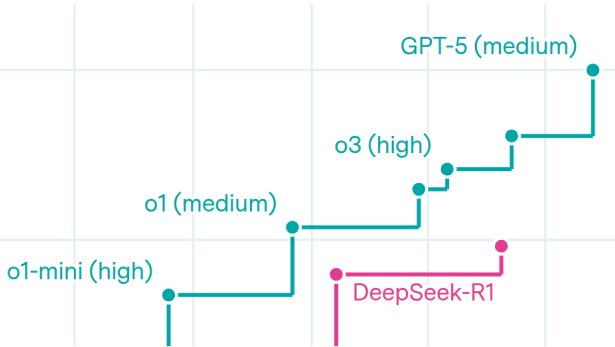
For most of the last decade, frontier AI capability was hidden behind closed endpoints. You paid per token, accepted opaque rate limits, and hoped the provider's roadmap matched your product. That era is ending. The open weight models API has moved from a niche playground for researchers into a core competitive layer for startups, enterprises, and even public-sector infrastructure teams. The shift is driven by three forces: accessibility, cost pressure, and the rapid maturation of Chinese open-weight ecosystems, especially DeepSeek. Today, a small team can call a reasoning model through a managed endpoint, self-host a distilled variant on a single GPU, or route between both depending on latency and cost. Services like Mydeepseekapi have made that transition even more practical by offering DeepSeek v3 & r1 API access without infrastructure overhead.
From Closed Endpoints to Open Source LLM API Integration
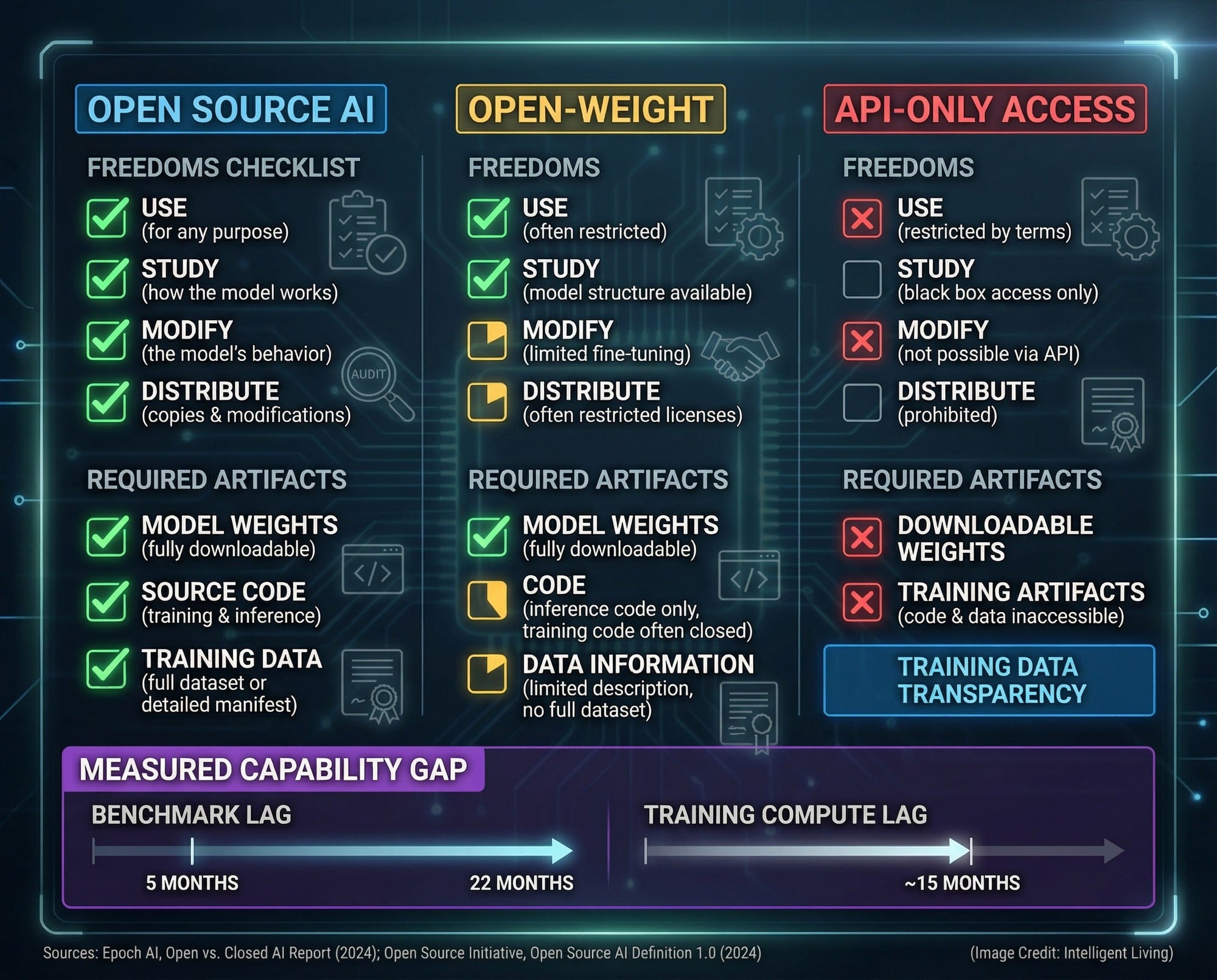
The first wave of LLM adoption was defined by convenience. Closed APIs gave developers a simple HTTP interface, predictable SDKs, and no GPU procurement. But convenience came with lock-in. You could not inspect weights, fine-tune deeply, or move your workload without rewriting prompts and evaluation harnesses. As models became business-critical, those constraints became strategic risks.
Open source LLM API integration changed the calculus. Instead of treating the model as a black-box service, teams began treating it as a replaceable component in a larger system. Portability became a design goal: the same prompt template, evaluation suite, and guardrail layer should work across a self-hosted Qwen, a managed Llama endpoint, or a DeepSeek deployment. Transparency also mattered. When latency spiked or outputs degraded, engineers could inspect quantisation settings, context limits, and batching behavior rather than filing a support ticket.
Cost control was the third trigger. Closed APIs charge per token, which is simple until your agent loops, your context window grows, or your retry logic doubles traffic. Open-weight models allow hybrid strategies: use a managed API for burst capacity, self-host for steady-state traffic, and distill a smaller model for edge cases. That flexibility is now a baseline expectation for production AI teams.
DeepSeek v3 API Access and DeepSeek r1 API as Disruptors

DeepSeek accelerated this shift. DeepSeek v3 API access brought a mixture-of-experts architecture to a broad audience, with strong general performance at a fraction of the active parameter cost of dense models. DeepSeek r1 API pushed reasoning into the open-weight conversation, showing that long chain-of-thought behavior, math, and code reasoning did not have to be exclusive to closed frontier labs.
The disruption was not only about benchmark scores. It was about expectations. Developers began asking why a closed model should cost ten times more when an open-weight alternative could handle summarisation, retrieval-augmented generation, and structured extraction. They also began measuring reasoning capability per dollar, not just raw accuracy. When a model can expose its reasoning traces, teams can build better evals, catch failure modes earlier, and design fallback logic that routes simple queries to cheap models and complex queries to reasoning models.
Latency and throughput became part of the story too. DeepSeek's MoE design activates only a subset of parameters per token, which can improve serving efficiency when implemented well. In practice, though, latency depends heavily on the provider's batching, KV-cache management, and network path. That is why managed gateways matter: they hide the infrastructure complexity while preserving access to the underlying open weights.
Brand Integration: Mydeepseekapi’s Zero-Setup Role in API Adoption

For teams that want the benefits of open-weight models without standing up inference clusters, Mydeepseekapi offers a pragmatic layer. It provides DeepSeek v3 & r1 API access with zero setup hassle, so developers can prototype in minutes instead of waiting on GPU quotas. The emphasis is on blazing-fast response times, transparent pricing, and a straightforward API surface that fits existing OpenAI-compatible tooling.
This matters because adoption rarely fails at the model layer. It fails at integration. A team may have a promising RAG pipeline, but if the endpoint is slow, expensive, or difficult to monitor, the project stalls. A managed service like Mydeepseekapi reduces that friction by letting engineers focus on prompts, evaluation, and product logic rather than driver versions and autoscaling policies.
Creativity, Recursive Self-Improvement, and the RSI Bottleneck
While open-weight APIs expand access, they also expose a deeper limitation: recursive self-improvement. The idea that AI systems can improve themselves is often framed as a compute problem. In reality, it is a creativity problem. A system that can only optimize a known objective will plateau. A system that can generate novel, useful hypotheses has a chance to keep climbing.
What RSI Means for Modern AI Systems
Recursive self-improvement, or RSI, means a model or agent improves its own architecture, training methods, data pipeline, or research process. In practical terms, this could look like an agent that proposes new attention variants, writes training code, runs ablation studies, and selects the best configuration. It could also look like a model that rewrites its own prompts, tools, and evaluation harnesses.
Most current systems can do fragments of this. They can generate code, summarize papers, and suggest hyperparameters. But they struggle with the full loop: forming a hypothesis, designing a discriminating experiment, interpreting noisy results, and knowing when to abandon a direction.
Why Creativity Is the Hidden Constraint on Recursive Self-Improvement
RSI requires creative search, not just compute scaling. Scaling gives you more samples, but if those samples cluster around the same ideas, you get diminishing returns. Creativity is what expands the search space. It is the ability to propose a representation, a data augmentation, or an evaluation metric that did not exist before.
This is why some systems plateau even as model size grows. They become better at interpolation and worse at genuine novelty. Benchmarks reward familiar patterns, so models learn to produce plausible research summaries rather than falsifiable hypotheses. In production, this shows up as repetitive outputs, shallow ablations, and overfitting to public leaderboards.
Real-World Examples: Automated Research Agents and Idea Generation
Current automated research agents can propose experiments, generate code, and draft paper sections. Some can even run small-scale sweeps. But they still fall short in three areas. First, they often lack taste: they cannot reliably distinguish an elegant hypothesis from a verbose one. Second, they struggle with causal reasoning: they see correlations in results but miss confounders. Third, they are weak at negative results: they rarely document what did not work, which is essential for cumulative research.
Lessons from Production: Where AI Creativity Still Fails
In production, the failure modes are consistent. Repetitive outputs appear when the model is asked to brainstorm without diversity constraints. Weak novelty appears when the prompt rewards length over insight. Shallow evaluation appears when teams use a single benchmark as a proxy for capability. Overfitting to benchmarks appears when the model is fine-tuned on public test sets.
The lesson is not that AI creativity is useless. It is that creativity needs scaffolding: diverse prompts, adversarial review, human-in-the-loop evaluation, and a culture that values falsification. Open-weight APIs help here because they let teams experiment with decoding strategies, temperature schedules, and model routing without asking a vendor for permission.
Worse-Than-China Open Weight Models: The Geopolitical Quality Gap
The phrase “worse than China’s” has become a shorthand in open-weight discussions. It is partly geopolitical, partly technical. The real question is not national superiority. It is whether Western open-weight releases are keeping pace on performance per dollar, reasoning ability, multilingual strength, and ecosystem momentum.
What “Worse-Than-China” Means for Open Weight Model Releases
When developers say a Western open-weight model is worse than a Chinese one, they usually mean one of four things. It may cost more to serve, reason less reliably, handle fewer languages well, or arrive with a more restrictive license. Release cadence matters too. Chinese labs have been shipping frequent updates, often with permissive licenses and detailed model cards. That cadence creates momentum: more fine-tunes, more tooling, more community evals.
Benchmarking DeepSeek Open Weights API Against Western Alternatives
A fair comparison looks beyond headline benchmarks. DeepSeek open weights API models are often evaluated on reasoning-heavy tasks like AIME, MATH, GPQA, and LiveCodeBench. Western alternatives such as Llama, Mistral, and Gemma have their own strengths, especially in tool use, safety tuning, and enterprise support. The table below summarizes the trade-offs at a high level.
| Dimension | DeepSeek open weights API | Western open-weight alternatives |
|---|---|---|
| Reasoning | Strong on math, code, chain-of-thought | Improving, varies by family |
| Inference efficiency | MoE can lower active compute | Dense and MoE options |
| Context handling | Competitive, provider-dependent | Often strong in long-context variants |
| Licensing | Varies; some releases permissive | Varies; some community licenses |
| Ecosystem momentum | Rapid release cadence | Strong tooling, slower cadence in some cases |
The key takeaway is that the gap is not absolute. It is a moving target. Teams should benchmark on their own tasks, not on leaderboards alone.
The Role of Open Source LLM API Integration in Closing the Gap
Open source LLM API integration helps smaller labs and enterprises adopt competitive models without rebuilding infrastructure. A team can start with a managed endpoint, evaluate multiple open-weight models behind a common interface, and only later invest in self-hosting. This lowers the cost of experimentation and reduces vendor lock-in.
Trust Factors: Licensing, Safety, and Transparency in Open Weight Models API
Enterprises need more than benchmarks. They need licensing clarity, safety evaluations, model cards, and reproducible builds. A permissive license is not enough if the model card omits training data provenance or if the safety evaluation is a single paragraph. Trust signals include versioned weights, checksums, documented evaluation methodology, and clear acceptable-use policies. Open-weight models can be more transparent than closed APIs, but only if the release includes the artifacts needed for real due diligence.
AI Goes to Space: Orbital Inference and the Future of Open Weight Models API
AI in space is moving from science fiction to infrastructure planning. Earth observation, satellite communications, and autonomous navigation all generate data faster than downlink budgets can handle. Running inference on orbit reduces latency and bandwidth pressure. This is where open-weight models become attractive: you can compress, quantize, and cache them for disconnected environments.
Why Space Deployment Changes Latency, Power, and Connectivity
Orbital environments change every assumption. Power budgets are tight, thermal dissipation is limited, and radiation can flip bits. Connectivity is intermittent, so models must operate offline and synchronize when a ground station is visible. Latency is not just network latency; it is the time to downlink, process, and uplink a decision. For some missions, a five-minute delay is unacceptable.
Running DeepSeek r1 API-Style Models in Disconnected Environments
Reasoning-focused models like DeepSeek r1 API could support autonomous satellite operations, earth observation, and anomaly detection. Imagine a satellite that detects an unusual thermal signature. Instead of sending raw imagery, it runs a distilled reasoning model to classify the event, explain its confidence, and decide whether to prioritize the next downlink window. The model does not need the full cloud API. It needs a cached, quantized variant with a narrow toolset.
Case Study: Satellite Edge AI and Open Weight Models API Constraints
Consider a constellation operator with six satellites and two ground stations. Each satellite runs a 7B-parameter distilled model for image triage. The model is updated monthly from a larger DeepSeek-style teacher model. During a pass, the satellite uploads compressed embeddings and telemetry, not raw video. The ground station runs a full open weight models API endpoint for hard cases and retraining.
The constraints are real. The onboard model must fit in limited memory, tolerate radiation-induced errors, and produce calibrated confidence scores. The operator must plan for fallback modes: if the model fails, the satellite reverts to simple thresholding and full downlink. This hybrid architecture is more realistic than running a frontier model in orbit today.
When to Use (and When Not To) Space-Based AI Inference
Use space-based inference when latency, bandwidth, or data sovereignty make ground processing impractical. Do not use it when the model is too large, the mission is safety-critical without human review, or the cost of radiation-hardened compute exceeds the value of faster decisions. Fallback options are mandatory.
Technical Deep Dive: How DeepSeek v3 API Access and DeepSeek r1 API Work Under the Hood
To use open-weight models well, you need a mental model of the serving pipeline. DeepSeek v3 API access and DeepSeek r1 API are not magic endpoints. They are gateways in front of complex inference systems.
Architecture, Tokenization, and Request Routing for DeepSeek Models
DeepSeek v3 uses a mixture-of-experts architecture with multi-head latent attention and multi-token prediction. In practice, that means only a subset of experts activates per token, which can reduce compute per token while preserving capacity. DeepSeek r1 adds reinforcement-learning-driven reasoning, often producing longer internal reasoning traces.
Tokenization is usually byte-level BPE, but the vocabulary and special tokens differ from other families. That matters for prompt compression, caching, and cost estimation. A gateway routes requests across replicas, batches them, manages KV cache, and applies rate limits. Good gateways also handle model versioning, so a deepseek-r1 alias does not silently change under your application.
Performance Benchmarks: Throughput, Latency, and Cost of Open Weight Models API
Benchmarks should be workload-specific. Throughput matters for batch summarisation. Time to first token matters for chat. Cost per successful task matters for agents. The table below gives a practical framework.
| Workload | Primary metric | Optimization |
|---|---|---|
| Chat | Time to first token | Streaming, prompt caching |
| Batch summarisation | Tokens per second | Batching, quantization |
| Agents | Cost per completed task | Retries, fallback routing |
| Reasoning | Accuracy per dollar | Model routing, budget limits |
Self-hosting can be cheaper at steady state, but managed access usually wins during exploration. The break-even point depends on utilization, model size, and engineering time.
Best Practices for Open Source LLM API Integration
Robust integration starts with retries and idempotency. Use exponential backoff, jitter, and request IDs. Cache deterministic prompts and embeddings. Stream responses to improve perceived latency. Compress prompts by removing redundant context and using structured summaries. Add observability: log latency, token counts, error rates, and model versions. Finally, configure fallback models. If the reasoning endpoint times out, route to a faster general model and flag the response.
import os
from openai import OpenAI

client = OpenAI(
    base_url=os.environ["OPENAI_COMPATIBLE_BASE_URL"],
    api_key=os.environ["OPENAI_COMPATIBLE_API_KEY"],
)

resp = client.chat.completions.create(
    model=os.environ.get("MODEL_ID", "deepseek-r1"),
    messages=[{"role": "user", "content": "Summarize this telemetry anomaly."}],
    stream=True,
)

for chunk in resp:
    print(chunk.choices[0].delta.content or "", end="")
Mydeepseekapi: Blazing-Fast Response Times and Transparent Pricing
For teams that do not want to manage the serving stack, Mydeepseekapi provides a managed option for DeepSeek v3 & r1 models. It emphasizes blazing-fast response times, transparent pricing, and zero setup hassle. That combination is useful when you need to validate an idea quickly or add a reasoning endpoint to an existing product without hiring an inference team.
Industry Best Practices and Expert Perspectives on Open Weight Models API
What the Experts Say About Open Weight Models API Adoption
Across industry panels and engineering blogs, the same themes recur. First, avoid single-vendor dependency. Second, evaluate rigorously on your own data. Third, run security reviews before sending sensitive data to any endpoint. Fourth, treat open-weight momentum as a strategic asset, not a temporary trend.
According to Official Documentation: Security, Rate Limits, and Model Cards
Official documentation for API providers typically covers authentication, rate limits, acceptable use, and model cards. Model cards describe training data, intended use, limitations, and evaluation results. Read them before deployment. Rate limits determine your retry strategy. Security guidance determines how you handle API keys, PII, and audit logs.
Pros and Cons of DeepSeek Open Weights API vs. Closed APIs
| Factor | DeepSeek open weights API | Closed APIs |
|---|---|---|
| Cost | Often lower per token | Predictable but premium |
| Control | High; can self-host | Low |
| Transparency | Weights and cards available | Limited |
| Support | Community + vendors | Enterprise SLAs |
| Compliance | Depends on deployment | Vendor-managed |
Closed APIs still win on managed compliance and support. Open weights win on flexibility and long-term cost control.
Lessons from Production: Scaling Open Source LLM API Integration
In production, scaling is less about the model and more about the system. Load balancing across replicas, monitoring tail latency, and managing model version drift are critical. When a new model version ships, run shadow traffic before switching. Keep a rollback path. Version your prompts and evals alongside the model.
Common Pitfalls in Open Weight Models API and DeepSeek API Strategies
Overlooking Licensing and Compliance in Open Weight Models API Usage
License terms vary. Some models are MIT, some use community licenses, and some restrict commercial use. Attribution requirements may apply. Always review the license and model card with legal counsel if you operate in a regulated industry.
Underestimating Inference Costs in DeepSeek v3 API Access
Token pricing is only one input. Context length, retries, caching strategy, and reasoning trace length determine true cost. A reasoning model that generates thousands of hidden tokens can be expensive if you do not cap budgets. Use max token limits, prompt compression, and fallback routing.
Ignoring Creativity and RSI Risks in Automated Pipelines
Automating research or code generation without human evaluation is risky. Models can produce repetitive, plausible-sounding ideas that fail under scrutiny. As RSI claims grow, teams should add novelty checks, adversarial review, and clear kill switches.
Failing to Plan for Disconnected Deployments When AI Goes to Space
Space-based AI needs local inference, model compression, and robust synchronization. If you assume continuous connectivity, your mission will fail during a downlink gap. Design for degraded modes from day one.
Future Outlook: Creativity, RSI, and the Next Wave of DeepSeek r1 API
How Recursive Self-Improvement Could Accelerate Open Weight Model Releases
If models can reliably propose, test, and document improvements, release cycles could compress. Better models would speed up evaluation, data curation, and architecture search. The bottleneck will remain creativity: the ability to generate novel hypotheses and recognize when a result is genuinely new.
The Next Frontier for Open Source LLM API Integration
Expect more managed open-weight APIs, multi-model routing, and specialized reasoning endpoints. Developers will route simple queries to cheap models and complex queries to reasoning models, all behind one interface.
Space-Based AI and Sovereign Open Weight Models API
Nations and companies may use open-weight models for sovereign orbital compute and secure inference. Open weights allow local control, which matters when data cannot leave a jurisdiction or a satellite.
Preparing Your Workflow with Mydeepseekapi
The practical path is to start small. Pick a high-value task, integrate a managed endpoint, measure latency and cost, and then expand. Teams can learn more about Mydeepseekapi to integrate DeepSeek v3 & r1 models, benefit from blazing-fast responses, transparent pricing, and zero setup hassle, and keep their architecture open to self-hosting later. The open weight models API era is not about choosing one model forever. It is about building a workflow that can adapt as models, costs, and missions change.