Claude Opus 5.5, GPT-6 Sol, GPT-6 Luna, and a new price war
The AI API Price War: Claude Opus 5.5, GPT-6 Sol/Luna, and DeepSeek V3 Pricing Compared The AI API price war has entered a new, more complicated phase.

The AI API Price War: Claude Opus 5.5, GPT-6 Sol/Luna, and DeepSeek V3 Pricing Compared
The AI API price war has entered a new, more complicated phase. With Claude Opus 5.5, GPT-6 Sol, GPT-6 Luna, and aggressive low-cost providers like DeepSeek v3 and r1, buyers now compare price, latency, quality, and lock-in together. Headline token prices are no longer enough—teams need to model cost per completed task, retry overhead, and migration risk. This deep-dive unpacks the economics, benchmarks, and routing strategies behind the current AI API price war so you can choose the right model without overpaying or sacrificing reliability. Along the way, we'll see how Mydeepseekapi offers transparent DeepSeek API pricing for cost-sensitive teams that want fast access without setup hassle.
Market Context: Why a New AI API Price War Is Reshaping Model Choice

The current AI API price war is not just about cheaper tokens. It is a structural shift driven by three forces: rapid model releases, token price compression, and the rise of price-per-completed-task thinking. Buyers now evaluate providers on a matrix that includes raw cost, p50/p95 latency, output quality, rate limits, and the engineering effort required to switch. That last factor—switching cost—is often underestimated, and it is exactly where vendors try to build lock-in.
The launch cadence behind Claude Opus 5.5, GPT-6 Sol, and GPT-6 Luna

Staggered model releases create tier confusion. Claude Opus 5.5 arrived as a premium reasoning and long-context model. GPT-6 Sol followed as a high-capability option with strong tool use, while GPT-6 Luna targeted budget-conscious workloads with lower per-token rates and tighter rate limits. Because each release lands weeks or months apart, teams rarely have a clean apples-to-apples comparison. A model that looks expensive today may be repriced or superseded tomorrow. In practice, this cadence forces platform teams to re-evaluate their AI API stacks every quarter rather than annually.
From premium tiers to commodity pricing: what changed in the AI API price war

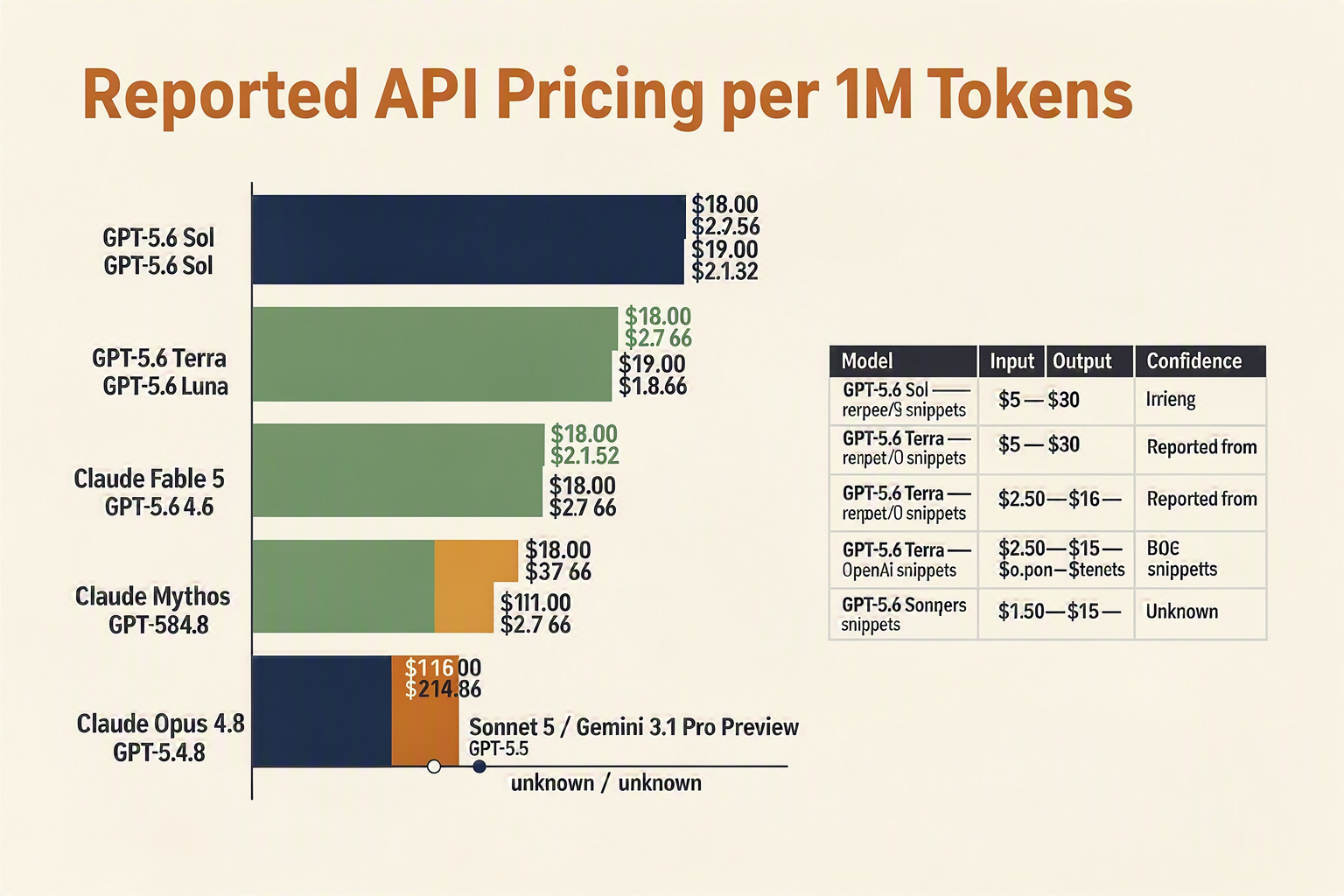
Three pricing mechanisms accelerated the shift. First, batch discounts—often 40–50% off list price—made asynchronous workloads dramatically cheaper. Second, cached input pricing reduced the cost of repeated prompts, which matters for agents and retrieval-augmented generation. Third, competitive pressure from DeepSeek v3 and similar models pushed input token prices down by an order of magnitude compared to early GPT-4-class models. The result: price-per-completed-task, not price-per-token, is now the metric that matters. A cheaper model that fails more often can cost more in retries and human review.
Buyer personas: startups, scale-ups, enterprises, and solo builders
Each segment weighs trade-offs differently. Startups and solo builders prioritize low fixed costs and fast onboarding—they often default to the cheapest capable model and accept occasional quality variance. Scale-ups care about throughput, predictable latency, and the ability to route between models without rewriting code. Enterprises add compliance, data residency, audit logs, and vendor support to the equation. For enterprises, a 20% token discount is meaningless if the provider cannot sign a DPA or guarantee uptime. Mydeepseekapi targets the first two groups with transparent pricing and zero setup hassle, while enterprises may still need premium tiers for regulated workflows.
What to watch beyond headline token prices
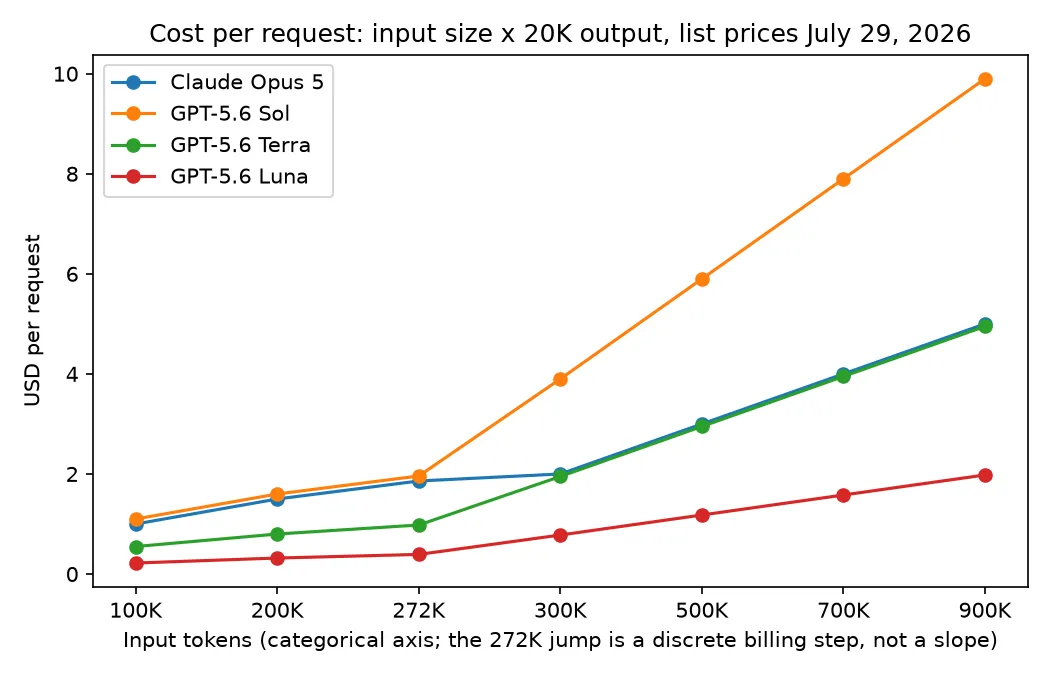
Hidden cost drivers include retries, rate-limit overages, context window overages, observability add-ons, and data egress. A model with a 128k context window may charge for every token in the window, even if the prompt only uses 8k. Rate limits can force you to pay for higher tiers or implement complex queuing. Observability platforms often charge per million tokens ingested, which can add 10–20% to your bill. And data egress fees—rare but real—can surprise teams that move large volumes between regions.
Claude Opus 5.5 Alternative Assessment: Strengths, Limits, and Cost Trade-Offs
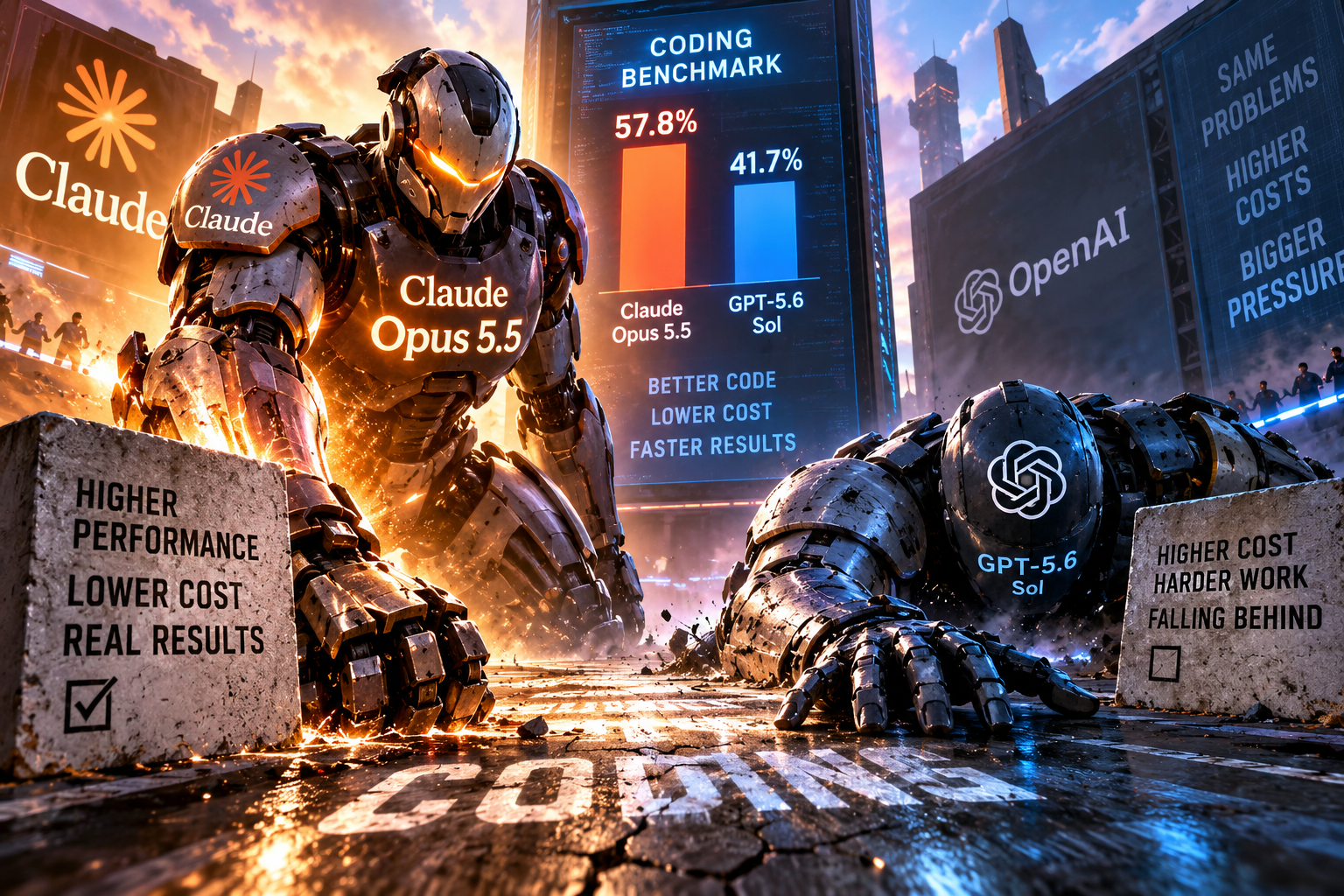
Claude Opus 5.5 remains a premium option, but it is no longer the default choice for every workload. Evaluating it as an alternative requires understanding where it excels and where a lower-cost model can close the gap.
Claude Opus 5.5 core capabilities and ideal workloads
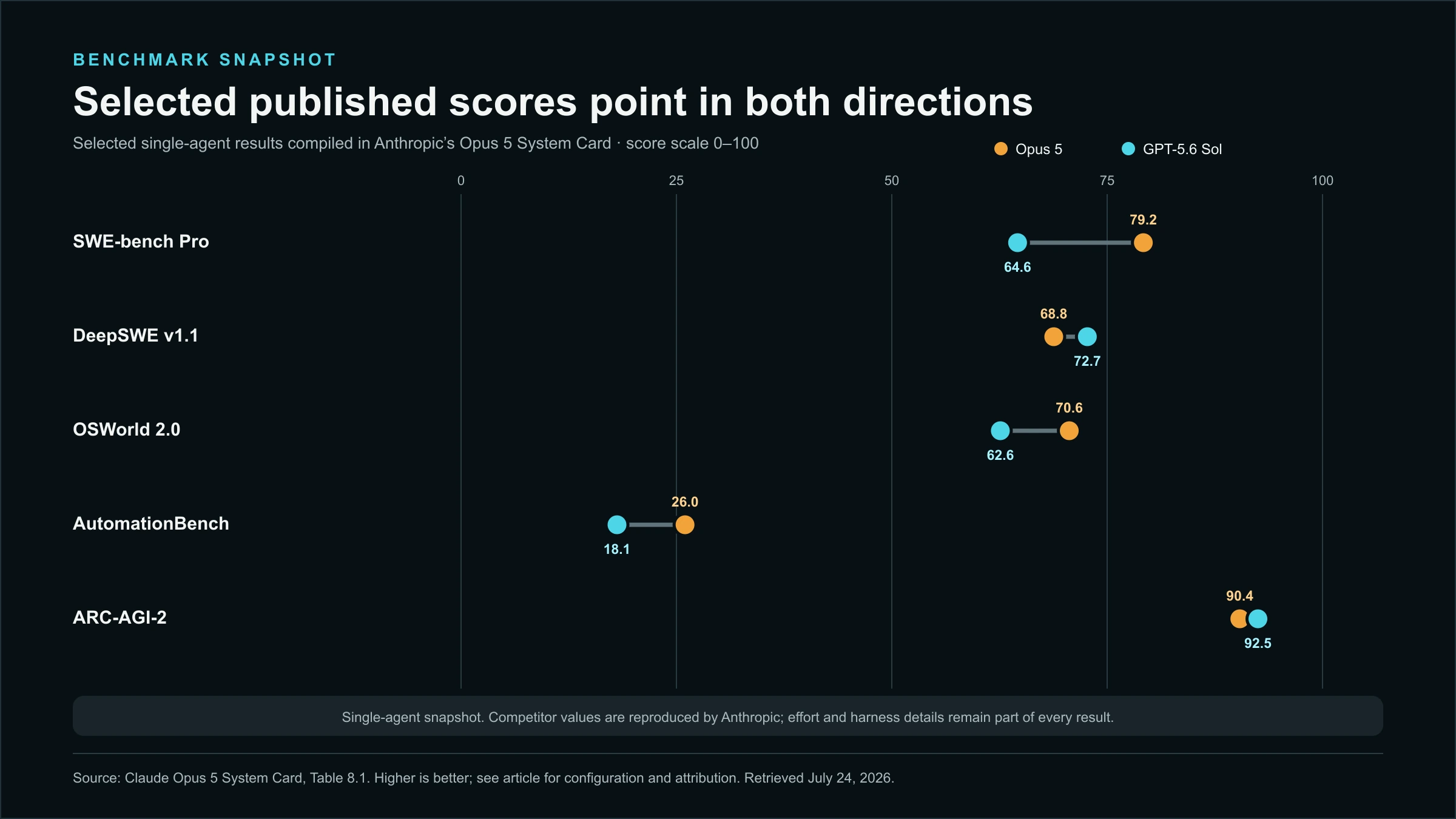
Claude Opus 5.5 shines in long-context reasoning, nuanced writing, complex instruction following, and coding assistance. Its strength is consistency: it follows multi-step instructions with fewer hallucinations than many mid-tier models. Ideal workloads include legal drafting, technical documentation, refactoring large codebases, and agentic tasks that require planning over many steps. If your application cannot tolerate output variance, the premium may be justified.
Direct comparison: Claude Opus 5.5 vs GPT-6 Sol vs GPT-6 Luna
| Feature | Claude Opus 5.5 | GPT-6 Sol | GPT-6 Luna |
|---|---|---|---|
| Relative input cost | High | High | Low |
| Relative output cost | High | Medium-High | Low |
| Context window | Very long | Long | Medium |
| Tool use | Strong | Very strong | Basic |
| Latency (p50) | Medium | Medium-Fast | Fast |
| Best for | Regulated drafting, agents | Complex tool chains | Chat, classification, summarization |
| Rate limits | Generous | Generous | Tight |
Costs are relative because list prices change frequently. Always check current official docs.
When Claude Opus 5.5 is worth the premium
The premium is justified when the cost of a wrong answer exceeds the token savings. Examples: regulated financial advice, medical summarization, high-stakes contract review, and advanced agentic workflows where a single failure cascades. In these cases, a 10x token price difference can be cheaper than one compliance incident. For routine chat or classification, however, the premium is hard to defend.
Evaluating Mydeepseekapi as a Claude Opus 5.5 alternative for cost-sensitive teams
For teams that need strong reasoning without the premium, Mydeepseekapi provides a practical route to DeepSeek v3 and r1 models. It offers blazing-fast response times, transparent pricing, and zero setup hassle—no need to manage your own inference infrastructure. You can explore Mydeepseekapi to compare costs against Claude Opus 5.5 and GPT-6 tiers. The trade-off is that DeepSeek models may not match Opus 5.5 on every long-context edge case, so evaluation is essential.
Migration risks, prompt compatibility, and output quality checks
Switching from Claude Opus 5.5 to a lower-cost model is not a drop-in replacement. Prompts often need rewriting because instruction-following styles differ. You should build an evaluation harness with fixed prompts, expected outputs, and regression tests. A common mistake is to test only happy-path examples. In production, edge cases—ambiguous instructions, long contexts, and tool-calling loops—are where cheaper models break first. Always maintain a fallback model and monitor quality drift after migration.
GPT-6 API Pricing Explained: Sol, Luna, and the New Tier Structure
GPT-6 API pricing follows a two-tier structure: Sol for high-capability workloads and Luna for budget-friendly, high-volume tasks. Understanding the token economics behind each tier helps you forecast costs accurately.
GPT-6 Sol pricing: high-capability use cases and cost drivers
Sol targets complex reasoning, multi-step tool use, and long-form generation. Its input and output token prices are higher, and cached input pricing offers savings for repeated prompts. Cost drivers include output length (Sol tends to generate more tokens), tool-call overhead, and retries when the model fails to follow a schema. For agentic workflows, output tokens often dominate the bill.
GPT-6 Luna pricing: budget-friendly workloads and rate limits
Luna is designed for chat, classification, summarization, and other lightweight tasks. Its per-token price is significantly lower, but rate limits are tighter. If you exceed the requests-per-minute cap, you may face throttling or need to upgrade to a higher tier. Luna is not ideal for long-context reasoning or complex tool chains, but it can handle 80% of routine traffic at a fraction of the cost.
Token economics: input, output, cached tokens, and batch discounts
A practical cost model must account for four token categories: uncached input, cached input, output, and batch output. Cached input typically costs 50–90% less than uncached input, but only if the prompt prefix repeats. Batch discounts apply to asynchronous jobs and can reduce costs by 40–50%. A simple cost formula:
def estimate_cost(requests, avg_input_tokens, avg_output_tokens,
                  input_price, output_price,
                  cache_hit_rate=0.0, cached_input_price=None,
                  batch_discount=0.0):
    if cached_input_price is None:
        cached_input_price = input_price
    uncached_input = avg_input_tokens * (1 - cache_hit_rate)
    cached_input = avg_input_tokens * cache_hit_rate
    input_cost = (uncached_input * input_price + cached_input * cached_input_price) / 1_000_000
    output_cost = (avg_output_tokens * output_price) / 1_000_000
    total = (input_cost + output_cost) * requests
    return total * (1 - batch_discount)
This model ignores retries, which can add 5–30% depending on task complexity.
How to estimate GPT-6 API pricing for real applications
Start with average tokens per request from a sample of production logs. Multiply by daily requests, then apply cache hit rate and batch discount. Add retry overhead: if your schema validation fails 10% of the time, you pay for those tokens twice. Peak traffic matters because rate limits may force you to buffer or upgrade. A spreadsheet with p50 and p95 token counts is more useful than a single average.
Hidden fees that change the true cost per request
Watch for rate-limit overages, concurrency limits, observability add-ons, data transfer, and support tiers. Some providers charge for fine-tuning storage, evaluation runs, or log retention. Others bundle observability at a per-token rate that can double your bill. Always ask for a detailed pricing sheet, not just the headline token price.
DeepSeek V3 Pricing Comparison: Is It the Best Low-Cost AI API Alternative?
DeepSeek v3 has become a reference point in the AI API price war. Its pricing is often an order of magnitude lower than premium models, but raw token price is only part of the story.
DeepSeek V3 vs DeepSeek R1: which model fits which task
DeepSeek v3 is a general-purpose model optimized for speed and cost. It handles coding, summarization, chat, and moderate reasoning well. DeepSeek r1 is a reasoning-focused model that spends more tokens “thinking” before answering. R1 is better for math, logic, and complex planning, but it is slower and more expensive per task. For latency-sensitive applications, v3 is usually the right choice; for hard reasoning, r1 may still be cheaper than a premium model.
DeepSeek V3 pricing comparison against Claude Opus 5.5 and GPT-6
| Model | Relative input cost | Relative output cost | Relative cost per completed task |
|---|---|---|---|
| Claude Opus 5.5 | 10x | 10x | 8–12x |
| GPT-6 Sol | 8x | 6x | 6–10x |
| GPT-6 Luna | 1.5x | 1.5x | 1.5–2x |
| DeepSeek v3 | 1x | 1x | 1x |
| DeepSeek r1 | 2x | 3x | 2–4x |
Normalized to DeepSeek v3 as 1x. Actual prices vary by provider and volume.
Speed, latency, and throughput benchmarks under production load
In practice, DeepSeek v3 delivers competitive p50 latency, often under 500ms for short outputs. p95 latency depends on provider load and concurrency limits. Cold starts can add 1–2 seconds if the provider does not keep models warm. Throughput—tokens per second—is usually high, but rate limits may cap requests per minute. Always benchmark with your own prompts and traffic patterns.
Transparent pricing and zero setup hassle with Mydeepseekapi
Mydeepseekapi removes the friction of integrating DeepSeek v3 and r1 models. You get blazing-fast response times, straightforward pricing, and no infrastructure to manage. For teams comparing AI API costs, integrate DeepSeek v3 & r1 models through a single API and start measuring cost per successful task immediately. This is especially useful for startups that need to validate a product before committing to enterprise contracts.
When a low-cost AI API alternative is not the right fit
Low-cost models are not a universal replacement. If you need strict compliance, specialized fine-tuning, vendor support SLAs, or ultra-low latency guarantees, a premium provider may be necessary. DeepSeek v3 may also struggle with niche domain knowledge or very long contexts. Be honest about these limits before migrating.
The Real Cost of Cheap AI APIs: Benchmarks, Reliability, and Hidden Trade-Offs
Cheap AI APIs can be genuinely cheaper, but only if you measure quality per dollar and account for operational overhead.
Quality-per-dollar benchmarks for reasoning, coding, and chat
A useful benchmark fixes the prompt set, dataset, and evaluation criteria. Measure accuracy, hallucination rate, code correctness, and instruction adherence. Then divide by cost per task. A model that is 20% cheaper but 30% less accurate is more expensive in human review time. For coding, run unit tests against generated code; for chat, use human preference or LLM-as-judge with calibration.
Operational costs: retries, rate limits, observability, and data egress
Retries are the silent budget killer. If a model fails schema validation 15% of the time, you pay for those tokens and add latency. Rate limits force queuing, which can require additional infrastructure. Observability—logging prompts and completions—can cost more than inference if you store everything. Data egress fees apply when moving data across regions. Add all of these to your cost model.
Case study: switching to a low-cost AI API alternative in a live app
A SaaS product migrated its chat and summarization features from a premium model to DeepSeek v3 via Mydeepseekapi. They kept Claude Opus 5.5 as a fallback for complex queries. After two weeks, token costs dropped 78%, but retry rates increased from 2% to 6%. By adding a validation layer and routing only simple queries to the cheap model, they recovered most of the quality while keeping 65% savings. The lesson: routing, not wholesale replacement, is the winning strategy.
Lessons from production: what breaks first when prices drop
Throttling and degraded peak-hour performance are the first symptoms. Next comes prompt drift—prompts tuned for one model produce different outputs on another. Output variance increases, especially for creative or ambiguous tasks. Teams that skip regression testing often discover these issues in production.
Trust signals: SLAs, uptime, privacy, and support
Non-price factors determine whether a provider is enterprise-ready. Look for uptime SLAs, status pages, data processing agreements, model training opt-outs, audit logs, and responsive support. A cheap API with no SLA can cost more in downtime than a premium API with a 99.9% guarantee.
AI API Price War Strategy: Choosing and Routing Models Without Lock-In
The best strategy is not to pick one winner but to build a routing layer that matches models to workloads.
Workload-based decision framework: chat, coding, agents, multimodal
Map task type to latency budget, context needs, and cost sensitivity. Chat and classification: low-cost models like DeepSeek v3 or GPT-6 Luna. Coding: DeepSeek v3 or Claude Opus 5.5 depending on complexity. Agents: GPT-6 Sol or Claude Opus 5.5 for tool use, with cheaper models for sub-tasks. Multimodal: premium models until low-cost alternatives mature.
Multi-model routing: fallback, escalation, and cost-aware orchestration
Route cheap requests to low-cost models and escalate complex tasks to premium models. Implement fallback when the primary model fails or times out. Use cost-aware orchestration: track spend per user or per feature and adjust routing rules dynamically. This approach keeps quality high while capturing savings.
Negotiation tactics for credits, commitments, and volume discounts
Startups can often get credits from providers. Scale-ups can negotiate volume discounts or reserved throughput. Enterprises can negotiate annual commitments with tiered pricing. Always ask for batch pricing, cached input pricing, and overage protections. Do not commit without a pilot.
Migration checklist to avoid vendor lock-in
Use abstraction layers or provider-agnostic SDKs. Version your prompts and store them separately from code. Maintain an evaluation suite that runs against multiple models. Document model-specific quirks. Keep a fallback provider configured and tested. Mydeepseekapi fits this stack as a fast, transparent option for DeepSeek access—see transparent DeepSeek API pricing for details.
Expert and Industry Perspectives on Sustainable AI API Pricing
Official documentation and release notes are the most reliable sources for pricing mechanics. They explain token counting, caching rules, batch windows, and rate limits. Read them carefully before modeling costs.
Analysts and practitioners point to margin pressure and model commoditization. As open-weight models improve, providers differentiate on reliability, tooling, compliance, and ecosystem—not just price. Regulatory signals to monitor include data residency requirements, model training opt-outs, audit logs, and industry-specific rules like HIPAA or GDPR.
To separate marketing claims from reproducible benchmarks, demand fixed prompts, public datasets, consistent hardware, and transparent methodology. If a vendor will not share their evaluation harness, treat their numbers as directional.
Mydeepseekapi in the Price War: Fast, Transparent DeepSeek Access
Mydeepseekapi is built for teams that want DeepSeek performance without operational overhead. You can integrate DeepSeek v3 and r1 models into AI apps, agents, coding assistants, and internal automation through a single API.
Blazing-fast response times and zero setup hassle
Latency matters. Mydeepseekapi optimizes for fast response times and minimal cold starts. You do not need to manage GPUs, autoscaling, or model updates. That reduces infrastructure overhead and lets your team focus on product.
Transparent pricing for teams comparing AI API costs
Transparent pricing means you can model costs against GPT-6 API pricing and Claude Opus 5.5 without guesswork. No hidden fees for observability or data egress. Use the pricing page to estimate cost per successful task.
Use cases: AI apps, agents, coding assistants, and internal tools
Concrete examples: a customer support chatbot using DeepSeek v3 for first-line responses; an agent that uses r1 for planning and v3 for execution; a coding assistant that suggests refactors; and internal tools that summarize documents or extract structured data.
Getting started and measuring ROI
Start with a pilot: define success metrics, run A/B tests against your current model, and measure cost per successful task. Track retry rates, latency, and quality scores. If savings exceed migration costs within one quarter, scale up.
Conclusion
The AI API price war is not a race to zero—it is a race to better cost-per-task economics. Claude Opus 5.5, GPT-6 Sol, and GPT-6 Luna each have a place, but so do low-cost alternatives like DeepSeek v3 and r1. The winning strategy is multi-model routing with strong evaluation, fallbacks, and transparent pricing. Whether you explore Mydeepseekapi or build your own stack, measure quality per dollar, watch hidden costs, and avoid lock-in. The price war rewards teams that treat model choice as an engineering decision, not a headline.