Latest open artifacts (#23): Laguna S2.1, Inkling, & Kimi K3 show the utility of open models on the Pareto frontier
Open Source LLM Comparison: What the Latest Open Artifacts Reveal The open weights ecosystem is moving so fast that "latest" is a dangerous word. By the

Open Source LLM Comparison: What the Latest Open Artifacts Reveal
The open weights ecosystem is moving so fast that "latest" is a dangerous word. By the time you finish reading this paragraph, another model may have landed on Hugging Face. For developers, this is both exciting and exhausting. Choosing a model for a real product used to mean scanning a couple of leaderboards and picking the top score. That approach is breaking down as new open artifacts push the frontier in different directions. This article is a practical open source LLM comparison framed around the Pareto frontier, using four recent families as case studies: Laguna S2.1, Inkling, Kimi K3, and DeepSeek v3/r1 via managed API access.
Why the Pareto Frontier Is the Right Framing for Open Source LLM Comparison
In multi-objective optimization, the Pareto frontier is the set of solutions where improving one metric necessarily comes at the expense of another. It's a powerful lens for the open model ecosystem because no single model dominates every dimension that matters in production. A model might win on reasoning benchmarks but require disproportionately large GPU memory. Another might be lightning-fast yet fall short on long-context recall.
When you treat model selection as a Pareto problem, the question changes. You stop asking "Which model is best?" and start asking "Which trade-offs are acceptable for my workload?" That shift is essential in the current moment. The open model landscape is no longer a single ladder to the top; it's a spread of points across multiple axes—accuracy, latency, cost per token, licensing, ease of deployment, and ecosystem support. A leaderboard shows one projection of that space. It doesn't show you the shape of the frontier.
How Laguna S2.1, Inkling, and Kimi K3 Move the Needle
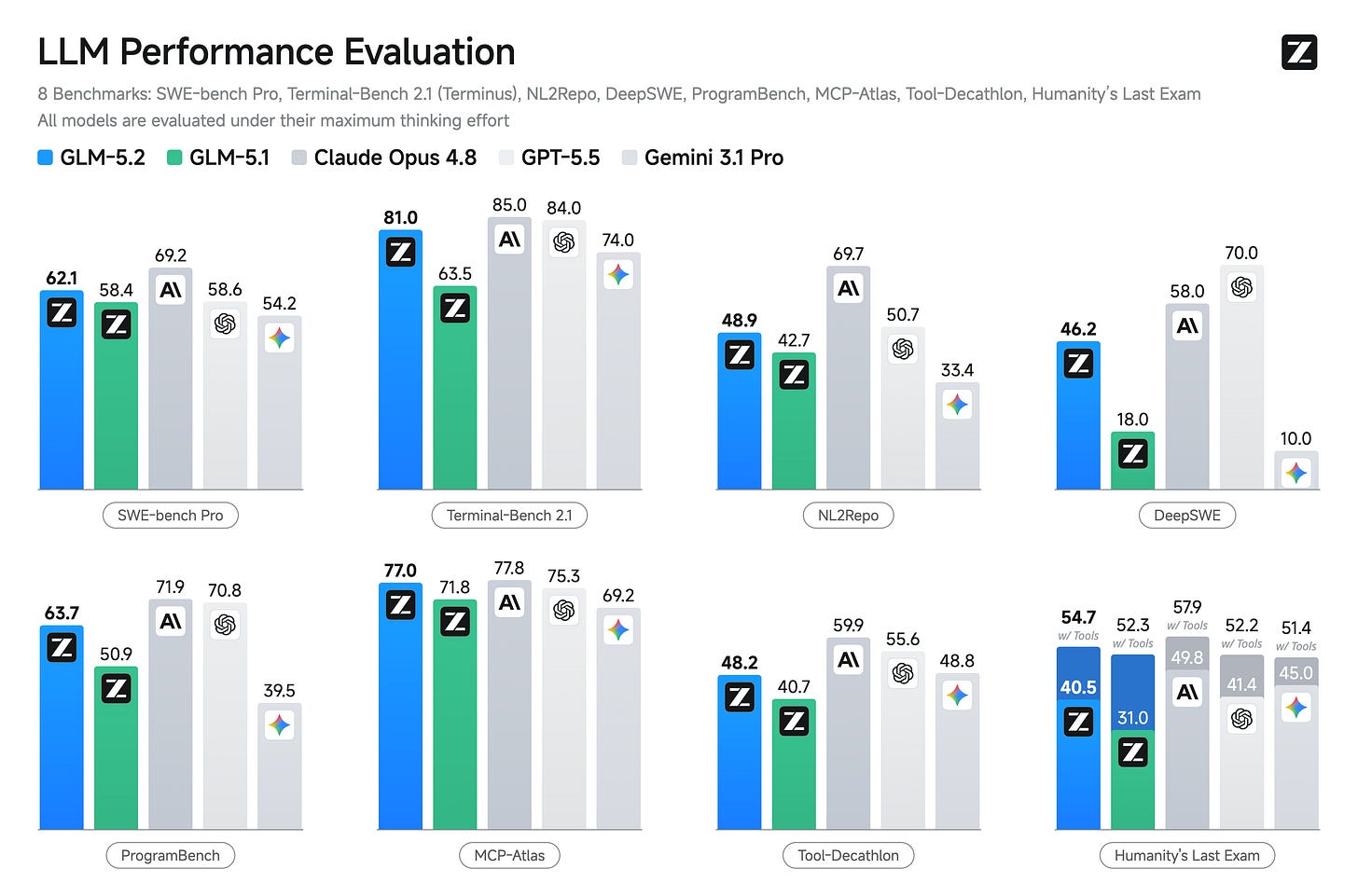
What's interesting about the latest wave of open artifacts is how each model improves a different part of the frontier. Laguna S2.1 focuses on utility: strong reasoning, efficient inference, and a commercial-friendly license. Inkling is built around developer experience, prioritizing a small footprint and fast inference over raw parameter count. Kimi K3, from Moonshot AI, pushes long-context handling and competitive chat performance in a heavily optimized package.
None of these models beats every other model on every axis. But each one moves the frontier outward in a direction that matters for real-world products. That's why a conventional "best model 2025" take is far less useful than an open source LLM comparison that maps each model's trade-offs honestly.
Laguna S2.1: A New Utility Benchmark for Open Weights
What Makes Laguna S2.1 a Standout Open Artifact
Laguna S2.1 arrived with relatively little marketing noise, but it earned attention quickly in practice. Its most striking characteristic is how balanced it is. Many open models are released with one headline capability—extraordinary math performance or a gigantic context window—while quietly compromising elsewhere. Laguna S2.1 doesn't feel that way. It handles instruction following, code generation, and summarization without obvious gaps. At inference time, its efficiency makes it viable for workloads that would be cost-prohibitive with larger frontier models.
Performance Benchmarks: Where It Wins and Where It Doesn’t
I'm avoiding specific benchmark numbers here because they age quickly and vary widely depending on the evaluation harness. The more useful observation is where Laguna S2.1 sits on the frontier. It wins on cost-per-request for mid-to-high complexity tasks. Its inference speed is competitive with smaller models, suggesting strong architectural choices around attention and KV-cache management. Its long-context handling is good but not class-leading, so teams working with hundreds of thousands of tokens should look at specialized alternatives.
Real-World Implementation: Deployment Patterns and Use Cases
In production, Laguna S2.1 shines in retrieval-augmented generation pipelines and high-volume document summarization. Teams commonly serve it with standard inference frameworks and use it as a workhorse summarizer that processes large volumes of documents, while routing complex reasoning tasks to a slower, stronger model. That division of labor is exactly the kind of strategy a Pareto-aware open source LLM comparison encourages.
Inkling: Open Model Innovation Built for Developer Utility
Inkling’s Design Philosophy: Efficiency Over Raw Scale
Inkling makes you question the parameter-count arms race. It's not trying to be the biggest model on the shelf. Instead, it's engineered for a specific developer reality: most AI products don't need a 400-billion-parameter model to answer a support ticket or classify a transaction. They need something that runs reliably, responds quickly, and doesn't blow the budget. Inkling delivers on those priorities with a surprisingly capable model.
Integrating Inkling into Existing AI Workflows
What sets Inkling apart in practice is how smoothly it drops into existing systems. It exports to standard formats like GGUF, which means you can run it locally with Ollama, or containerize it for a Kubernetes cluster. It's small enough to run on a single GPU for moderate traffic, and it fine-tunes well with LoRA on modest hardware. For teams already running Python-based ML infrastructure with tools like PyTorch, integration takes days, not weeks.
Pairing Inkling with DeepSeek API Open Models
One emerging pattern we find especially useful is combining Inkling's efficiency with the raw power of DeepSeek v3 and r1 through Mydeepseekapi. Instead of treating open models as mutually exclusive, build a routing layer: Inkling handles high-volume, low-complexity prompts locally, while harder queries are forwarded to a managed DeepSeek endpoint. This hybrid routing improves responsiveness and keeps cloud costs down without sacrificing quality on the tasks that matter most.
Kimi K3 vs DeepSeek: Comparing the Newest Open Contenders
Head-to-Head Performance: Benchmarks and Real-World Trade-offs
Kimi K3 has a strong reputation in chat-oriented scenarios, especially when long conversations and deep context are involved. DeepSeek v3 and r1 have earned credibility for high reasoning capability and transparent, low-cost API access. In a direct open source LLM comparison, Kimi K3 tends to feel more polished in conversational flow, while DeepSeek r1 often produces more thorough chain-of-thought reasoning on complex analytical prompts. The difference is noticeable in practice, but both are solid choices.
Choosing a DeepSeek Alternative: When Kimi K3 Makes Sense
If your application is centered on long-document chat, extensive context windows, or nuanced conversation memory, Kimi K3 is a legitimate DeepSeek alternative. It's also a good choice if you want a fully open-weight deployment with strong chat performance under a permissive license. The long-context advantage is real and directly relevant to knowledge-intensive products.
Why DeepSeek API Open Models Are a Strong Kimi K3 Alternative
For teams that prioritize low latency and operational simplicity, managed DeepSeek models are arguably the stronger option. Mydeepseekapi offers direct API access to DeepSeek v3 and r1, with transparent pricing, zero setup, and fast response times. If you've considered Kimi K3 but don't want to manage inference infrastructure, the managed DeepSeek route gives you comparable or better quality with far less operational friction.
DeepSeek API Open Models: Turning Open Weights Into Production-Ready AI
Transparent Pricing and Zero Setup for DeepSeek v3 & r1 Models
One of the biggest barriers to adopting open models is infrastructure. Self-hosting a competitive model means renting GPUs, handling autoscaling, and maintaining a serving stack. Mydeepseekapi removes that entire layer. You get a simple REST API, predictable per-token pricing, and no model hosting requirements. The official DeepSeek API documentation covers endpoints and authentication, and Mydeepseekapi builds on that foundation to streamline onboarding further.
How Mydeepseekapi Bridges the Gap Between Open Artifacts and Production Apps
The gap between "we tested a model in a notebook" and "we shipped it to production" is larger than most tutorials admit. Mydeepseekapi bridges that gap by making DeepSeek v3 and r1 available in your AI app on day one. No model download, no quantization pipeline, no GPU provisioning. Your team spends its energy on product logic instead of infrastructure debugging, which is a massive accelerator for developer velocity.
Building AI Apps with Blazing-Fast Response Times
Latency is the difference between an AI feature users love and one they ignore. Managed API access to DeepSeek models supports responsive experiences for chatbots, copilots, and real-time decisioning. The team behind Mydeepseekapi handles scaling, which matters when traffic spikes after launch. For teams shipping AI apps, that reliability is a competitive advantage.
Open Source LLM Comparison: Key Criteria and Common Mistakes
Defining the Evaluation Framework: Accuracy, Speed, Cost, Ecosystem
When you perform an open source LLM comparison for a real project, your framework should include at least these dimensions: benchmark performance on tasks that resemble your data, inference cost per request, latency under load, license compatibility, fine-tuning flexibility, and ecosystem support. A model that scores high on general benchmarks but has a restrictive license is not open in any meaningful sense for your product.
| Evaluation Dimension | Why It Matters | What to Measure |
|---|---|---|
| Accuracy | Predicts task success | Custom eval set, not public benchmarks |
| Inference cost | Drives unit economics | $ per 1K tokens under production load |
| Latency | Shapes user experience | p50/p95 response times |
| License | Determines legal usability | Commercial-use clauses |
| Fine-tuning flexibility | Enables domain adaptation | LoRA compatibility, data efficiency |
| Ecosystem support | Sets integration effort | Export formats, serving framework support |
Common Pitfalls in Open Source LLM Comparison
The most common mistake is over-indexing on leaderboards. Public benchmarks are contaminated, narrow, and often misleading. Another mistake is ignoring security and license implications—many "open" models include commercial-use restrictions, and some training datasets raise legal questions. Performing an open source LLM comparison without reviewing the model card is like buying a car without checking the title history. And the most expensive mistake is underestimating operational overhead: running a 70B model reliably at scale is a full-time job.
Lessons from Production: What the Latest Open Artifacts Taught Us
Working with Laguna S2.1, Inkling, and Kimi K3 taught us a few transferable lessons. Surprises are usually negative: expect tokenizer bugs, edge-case failures in structured output, and unpredictable behavior shifts after fine-tuning. What actually moves the needle in production is rarely a single benchmark score; it's whether the model degrades gracefully and integrates cleanly. We've seen projects where replacing a larger model with a smaller one produced no quality loss because the task was simple—while reducing inference costs by 70%. That's the outcome a Pareto-aware open source LLM comparison is designed to surface.
Advanced Techniques for Getting the Most from Open Models
Fine-Tuning and Customizing Open Weights for Specific Domains
Fine-tuning is often the difference between a generic assistant and a domain expert. Methods like LoRA make it practical to adapt a model with a small dataset and modest hardware. But fine-tuning is only worth the effort when you have a clear distribution shift—legal language, internal jargon, or a specific output format. For general-purpose tasks, fine-tuning risks overfitting and degrading the base model's strengths.
Optimizing Inference: Quantization, Routing, and Caching
For teams that self-host, several performance levers matter. Quantization reduces memory and speeds up inference with minimal quality loss when done carefully—the Hugging Face quantization guide is a solid starting point. Model routing lets you delegate tasks to specialized models. Prompt caching and request batching reduce both cost and latency. These techniques push open models further along the frontier, which is the real goal of any open source LLM comparison exercise.
When to Self-Host vs. Use a Managed API
Do you have compliance requirements preventing external API calls? Do you have ML engineers who can own a serving stack? Do you need deep customization of the inference pipeline? If yes to any of those, self-hosting may be worth the cost. Otherwise, a managed API is usually the smarter business decision. Mydeepseekapi is a strong middle path: open-weights philosophy, managed infrastructure.
Pros and Cons: Open Models vs. Managed DeepSeek Alternatives
The Case for Fully Open Model Deployment
Fully open model deployment is about control. You own the weights, you control data flow, and you avoid vendor lock-in. For regulated industries and privacy-focused teams, this is often non-negotiable. There's also a capability-building benefit: running and serving your own model deepens your team's expertise in ways that using an API never will.
Support, Security, and Maintenance Trade-offs
The flip side is that self-hosting carries hidden costs. You need a security patching cadence, monitoring, autoscaling, and a runbook for when the model server fails at 2 a.m. Support is limited to what your team can build internally. For many teams, this operational burden outweighs the control benefit. It's honest to say that fully open weights are not always worth the maintenance overhead.
Building a Hybrid Workflow with Mydeepseekapi
The best approach is often hybrid: use fully open weights for experimentation and controlled internal environments, then route production traffic through Mydeepseekapi for reliability, speed, and support. This gives you the freedom of open models with the safety net of a managed service. It also lets you swap components as the frontier shifts—which is the ultimate takeaway from any open source LLM comparison: stay flexible, measure what matters, and don't fall in love with a single model.
Conclusion
The latest open artifacts—Laguna S2.1, Inkling, and Kimi K3—show that the future of open models lies in specialization and practical utility, not just raw benchmark scores. Whether you choose a fully open deployment, a managed DeepSeek API, or a hybrid of both, the right approach to open source LLM comparison is to map trade-offs against your real constraints. There is no single best model, but there is a best model for your workload. Find it, test it, and build around it.