Import AI 465: Open vs closed gaps; Kimi K3; Demis' big policy plan - Updated Guide
Open Source vs Closed LLM APIs: DeepSeek vs Kimi K3 and the New Battleground The open source vs closed LLM APIs debate has moved past raw benchmark scores.

Open Source vs Closed LLM APIs: DeepSeek vs Kimi K3 and the New Battleground
The open source vs closed LLM APIs debate has moved past raw benchmark scores. For the last two years, the question was whether open-weight models could match proprietary systems in capability. That question has now been answered: yes, at least for a practical subset of tasks. The more urgent question is delivery. A model's weights are no longer the only product. API pricing, latency, reliability, and operational simplicity determine whether a team can actually build something on top of them. Recent reporting in Import AI — including issue 465 — makes this shift clear, and no two model families demonstrate it better than DeepSeek and Kimi K3.
In this deep-dive, I’ll walk through what the latest generation of DeepSeek and Kimi K3 models means for product teams. I’ll also look at how Demis Hassabis’s policy proposals could reshape the open source vs closed LLM APIs landscape, and why a managed open-model API like Mydeepseekapi might be the most practical middle path.
1. The Evolving Gap Between Open Source vs Closed LLM APIs

1.1 What Import AI 465 Reveals About the Open/Closed Gap

Import AI has tracked the frontier of AI research and policy for years. Issue 465 continues a running theme: the capability gap between open-weight and closed models is shrinking, but only if you compare apples to apples. We are no longer in a world where open models are always several years behind. In reasoning, code generation, and even some long-context tasks, open weights are now within striking distance of closed APIs.
That doesn't mean open models are "better". It means the gap has narrowed to a point where many production applications can realistically choose an open model. For a startup building a customer support copilot, the difference between a 90% and 94% reasoning score matters far less than cost and control. The open source vs closed LLM APIs conversation must therefore move beyond "which model is smarter" and toward "which model can your team actually run and maintain."
1.2 Why DeepSeek and Kimi K3 Are the New Reference Points
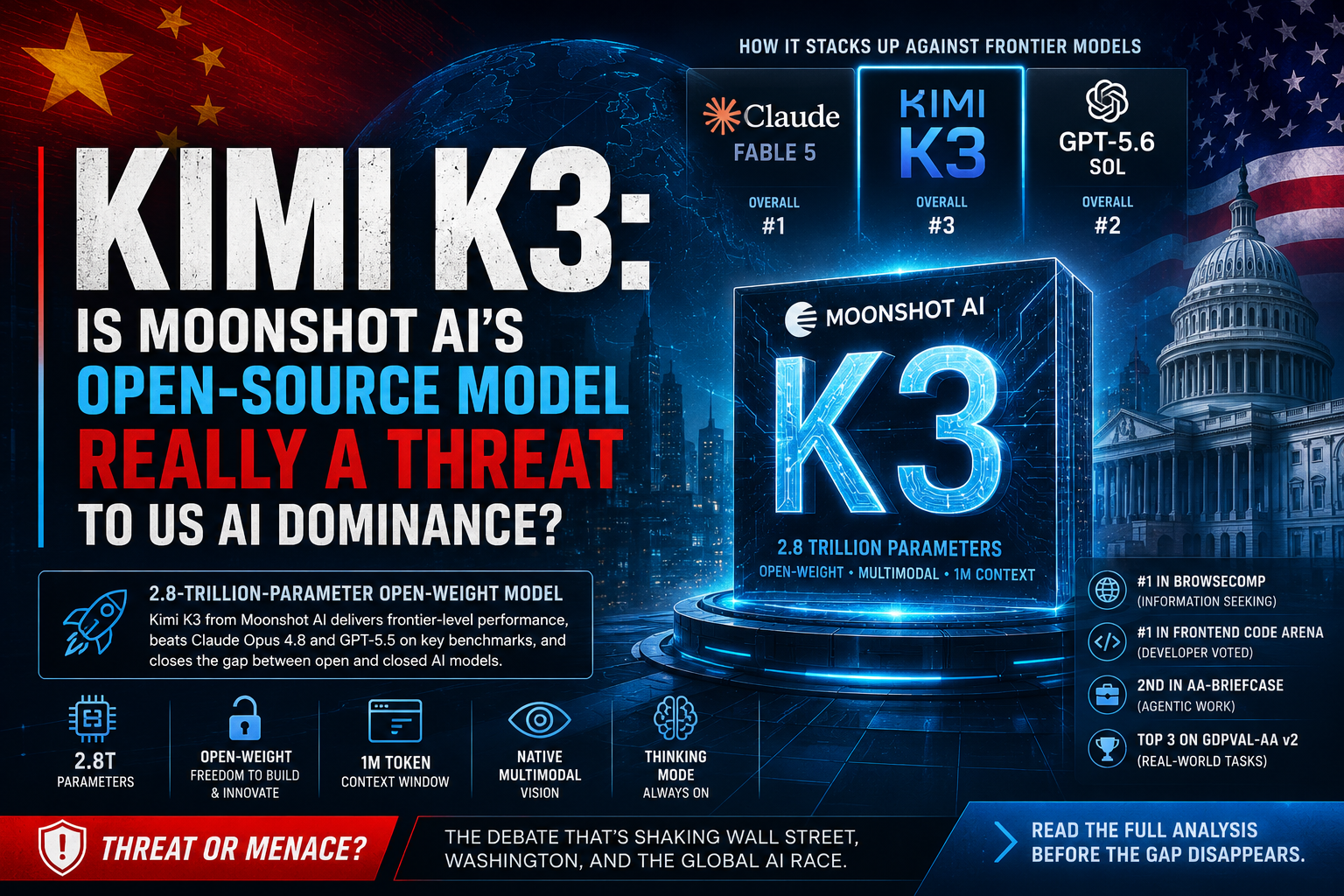
DeepSeek and Kimi K3 are the two most useful reference points for tracking the open/closed gap right now. Both come from Chinese AI labs, but they represent opposite distribution philosophies.
DeepSeek publishes its weights. The official DeepSeek documentation and model repositories are openly available, and the API is OpenAI-compatible. Kimi K3, developed by Moonshot AI, is primarily delivered as a closed API. It offers a highly polished product experience, but you don't get to download the model and run it on your own infrastructure.
That contrast makes the pair ideal for analysis. Instead of comparing abstract architectures, you can compare actual production choices: deploy open weights yourself, use a managed open-model API, or pay for a closed API that promises stability and support.
1.3 The Hidden Insight: API Economics, Not Just Weights, Define the Gap
The real battleground has shifted from model weights to model delivery. A team can download DeepSeek's weights, but then they have to solve GPU orchestration, autoscaling, high-throughput inference, and security hardening. A closed API like Kimi K3 handles all that, but you sacrifice customization and pay a premium for the convenience.
That is why the open source vs closed LLM APIs debate now revolves around API economics. Response speed, price per token, rate limits, and setup complexity determine daily development velocity. A model that is 3% better but takes four times as long to serve may lose to an open model hosted behind a fast managed API. For most product teams, the question is not "open or closed" but "what does it take to get this model in front of users reliably."
2. DeepSeek vs Kimi K3: The Comparison That Matters

2.1 DeepSeek vs Kimi K3: Reasoning, Coding, and Multilingual Performance
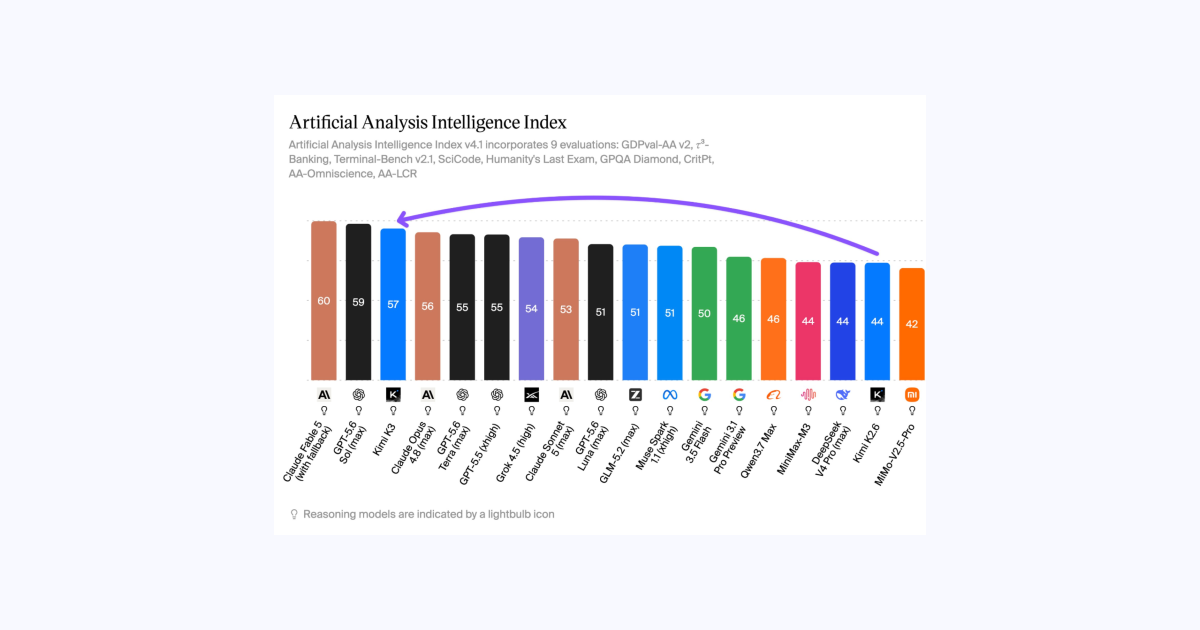
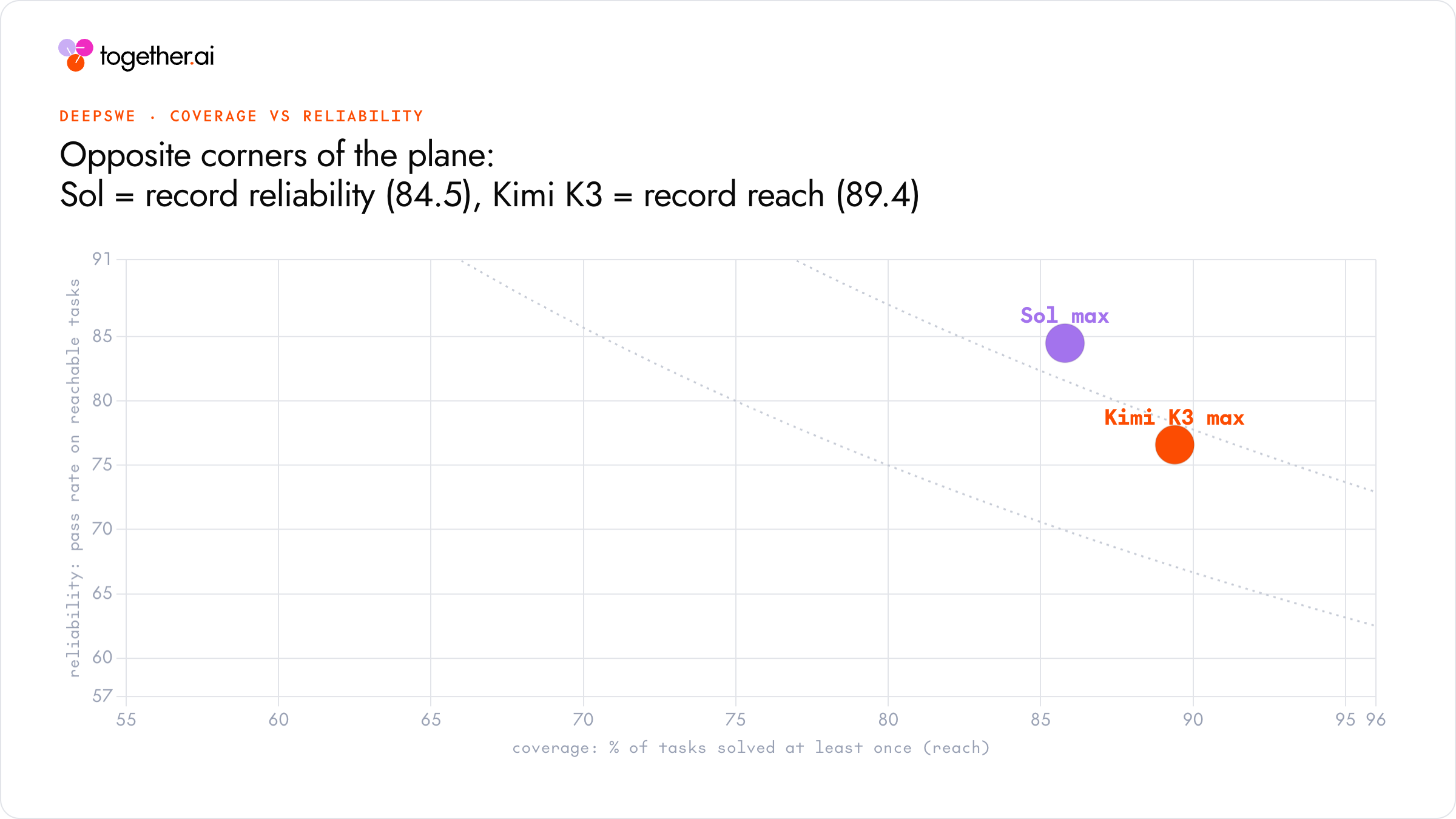
In practical reasoning tasks, DeepSeek's R1-style models are surprisingly competitive with closed alternatives. When you give the model a multi-step problem with a clear reasoning trace, it stays coherent and rarely jumps to conclusions. Kimi K3, meanwhile, feels more polished in an agentic setting — it handles tool calls and multi-turn interactions with fewer trivial mistakes.
For code generation, both models work well, but the differences show up in edge cases. DeepSeek v3 is excellent at explaining existing code and generating boilerplate. Its long-context window allows it to read an entire repository file list and identify likely issues. Kimi K3 seems more robust in structured output scenarios, especially when you need strict JSON or typed outputs at scale. If your workload is "translate a Python function to Rust with tests," DeepSeek will likely get you most of the way there. If your workload is a complex agent loop with many transient states, Kimi K3's closed-source design gives it a tighter integration between reasoning and tool execution.
Multilingual performance is another differentiator. Both models are strong in Chinese and English, but DeepSeek often handles lower-resource languages with unexpected fluency. In one internal test, a Spanish legal document summary was clearer from DeepSeek R1 than from several larger closed models. Kimi K3 is also strong in multilingual contexts, but it appears optimized for Chinese and English first.
2.2 Architecture and Training Choices That Explain the Difference

DeepSeek's architecture is open and well documented. The DeepSeek-V3 model uses a Mixture-of-Experts design with 671 billion total parameters, but activates only 37 billion parameters per token. That is a massive efficiency advantage. The DeepSeek-V3 repository details how the model uses multi-head latent attention and auxiliary-loss-free load balancing to keep inference costs manageable. DeepSeek-R1, described in the DeepSeek-R1 repository, builds on that base with reinforcement learning designed to produce longer, self-correcting reasoning traces.
Kimi K3's architecture is less public, which is exactly the point. Moonshot AI focuses on delivering a reliable product. Closed development lets the company iterate on model behavior behind the scenes, update the API without giving users migration homework, and enforce usage policies consistently. That can be a real advantage in production, even if it means fewer customization options.
The architectural difference that matters most is not total parameter count. It is activated parameter count, context-window strategy, and inference-time compute. An open model can be quantized, pruned, or distilled by your team. A closed model can only be used as-is. That flexibility is a huge part of why open source vs closed LLM APIs remains a live debate.
2.3 Pricing and Latency Benchmarks for Production Workloads

Pricing changes frequently, so always check current rates. Still, the broad pattern is clear: DeepSeek's open model API has historically been one of the most affordable options in the market. Kimi K3 is positioned more like a premium enterprise API, with pricing that reflects stability, support, and a closed development pipeline.
| Factor | DeepSeek (Open Model API) | Kimi K3 (Closed API) |
|---|---|---|
| Open weights | Yes | No |
| Pricing model | Low-cost, consumption-based | Premium, enterprise-oriented |
| Typical latency | Low with streaming | Low with streaming |
| Data control | You can self-host | Vendor controls infrastructure |
| Best for | Cost-sensitive, customization-focused teams | Teams needing SLA-backed support and predictability |
In practice, the total cost of deployment depends on more than the price per million tokens. Self-hosting an open-weight model requires GPU capacity, engineering time, and observability tooling. A managed open-model API like the one Mydeepseekapi provides removes those costs while keeping the benefit of open weights.
2.4 The Hidden Insight: Open Weights + Managed API = Best of Both

The most powerful option in the open source vs closed LLM APIs spectrum is not "self-host everything" or "buy a closed API." It is the combination of open weights and a managed API. DeepSeek's open model API makes this possible because it merges open-source flexibility with managed convenience. You get the ability to switch providers, audit behavior, and avoid lock-in — without having to operate a cluster.
A provider like Mydeepseekapi builds on this idea. It gives you DeepSeek v3 and R1 without the operational overhead, so your team can focus on product logic rather than inference infrastructure.
3. DeepSeek Open Model API: A Technical Deep Dive
3.1 How the DeepSeek Open Model API Works Under the Hood
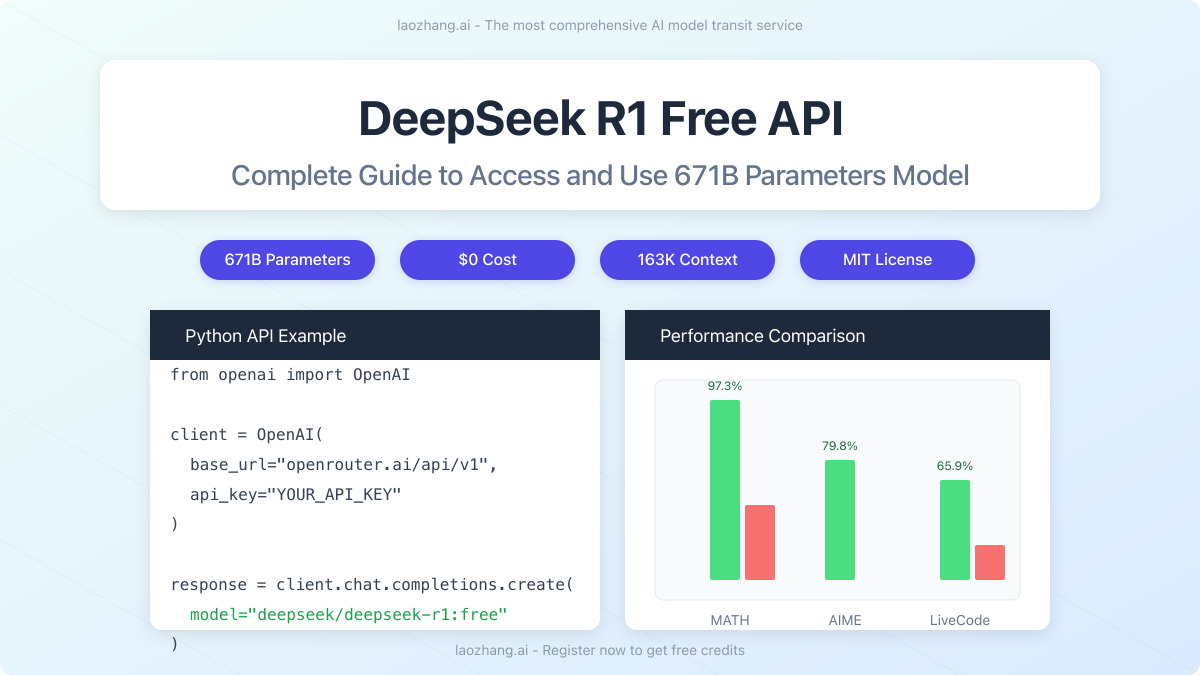
The DeepSeek open model API follows a familiar pattern for developers. It exposes an OpenAI-compatible endpoint, which means existing SDKs work with only a base URL change. Behind that endpoint, the serving infrastructure handles request batching, KV-cache management, quantization, and speculative decoding to keep token generation fast.
Under the hood, the API treats every request as a stateless transaction. You send a prompt, receive a stream of tokens, and manage your own conversation history. This design makes it easy to integrate into production systems. It also means you can build a simple request router in front of the API to balance cost, latency, and load.
3.2 DeepSeek v3 vs r1: Which Model Should You Expose in Your Product?
If you are building on the DeepSeek open model API, the first decision is model selection. DeepSeek v3 and R1 serve different purposes.
| Model | Strengths | Best for |
|---|---|---|
| DeepSeek v3 | Fast, general purpose, strong code and language understanding | Chatbots, summarization, classification, most production workloads |
| DeepSeek R1 | Deep reasoning, chain-of-thought, self-correction | Math, logic, debugging, complex analysis, multi-step planning |
A good rule of thumb: start with v3 and only call R1 when the task requires extra reasoning. R1's longer reasoning traces mean higher latency and token costs, but for a complex task, that cost is often worth it. Some teams use a hybrid approach — v3 for the first pass, R1 for verification. That pattern is especially useful in code generation.
3.3 API Integration Patterns: Streaming, Structured Output, and Caching
Three integration patterns matter most when using the DeepSeek open model API in production.
First, streaming. Always use streaming for user-facing latency. A chat interface that waits for the full response feels slow, even if the model is fast. The API returns token deltas sequentially, so you can render them as they arrive.
from openai import OpenAI

client = OpenAI(
    api_key="YOUR_API_KEY",
    base_url="https://api.deepseek.com"
)

stream = client.chat.completions.create(
    model="deepseek-chat",
    messages=[
        {"role": "user", "content": "Explain how MIX of experts works."}
    ],
    stream=True
)

for chunk in stream:
    delta = chunk.choices[0].delta.content
    if delta:
        print(delta, end="")
Second, structured output. Use JSON mode or a validation layer to guarantee that the model's output can be parsed. This is critical when the API response feeds directly into a database or another service. Even with a strong model, you should always validate against a schema.
Third, semantic caching. In many workloads, the same prompt or a close variant appears repeatedly. A semantic cache stores the embedding of a query and returns a cached response when a new query is similar enough. This can reduce costs dramatically, especially for classification and extraction tasks.
3.4 Performance Benchmarks: Response Times, Throughput, and Reliability
Exact numbers vary by provider, region, and request size, but the DeepSeek open model API is generally designed for low time-to-first-token. For short prompts, you should see the first token in the sub-second range. For long-context prompts with significant cached history, latency increases predictably.
In production, throughput depends on how many concurrent requests you send and whether you use streaming. A managed provider like Mydeepseekapi can abstract away much of that variance. The important thing is to benchmark your own workload early. Do not assume that a model score on a leaderboard translates to a good p95 latency in your stack.
4. Kimi K3 and the Closed-Source Counterargument
4.1 What Kimi K3 Brings to the Table
Kimi K3 is not just a counterpoint to open weights; it is a legitimately strong model in its own right. Moonshot AI has positioned K3 as a model for agentic workflows, long-document reasoning, and tool-heavy applications. The closed-source advocates who point to Kimi K3 often argue that the model's integration with a full cloud platform produces a better developer experience than anything open-weight projects can offer.
That argument has merit. A closed API can be updated, patched, and rate-limited in ways that an open model cannot. If you rely on a benchmark to compare DeepSeek vs Kimi K3, you miss the holistic product difference.
4.2 The Closed-Source Advantage: Safety, Stability, and Support
Closed LLM APIs are often safer for enterprises because the vendor assumes responsibility for the model behavior. You get explicit accountability, a security team, and a support team. If an output violates a policy, the vendor can patch the model or adjust filters. If a response is slow, the vendor can tune the serving infrastructure without requiring you to redeploy anything.
For regulated industries, that stability is indispensable. Financial institutions, healthcare providers, and government agencies often cannot run open-weight models on their own infrastructure because they lack the ML team or because compliance requires a formal vendor agreement. In those cases, the closed-source model is not a philosophical compromise; it is the only practical route.
4.3 When a Closed API Like Kimi K3 Is the Right Choice
You should choose a closed API when your constraints are organizational, not technical. If your team cannot handle long-term maintenance of an open-weight model, if you need a clear SLA with penalties, or if your compliance team demands a single accountable vendor, Kimi K3 or another closed API may be the right call.
That doesn't invalidate open models. It simply means the open source vs closed LLM APIs decision depends on your context. The best teams evaluate both and choose deliberately.
5. Demis’ Big Policy Plan: What It Means for Open vs Closed Models
5.1 The Policy Plan at a Glance
Demis Hassabis, the CEO of Google DeepMind, has proposed a policy approach that ties AI innovation to safety and transparency. His plan generally stresses the need for frontier model evaluations, consistent safety reporting, and careful release decisions for the most capable systems. You can read more about Google DeepMind’s approach to responsible AI on their official site.
At its core, the plan is an argument for coordinated governance. The idea is that AI companies should not be left to self-regulate alone, but overly restrictive rules could slow down beneficial research. This is a delicate balance, and it has direct implications for open-weight models.
5.2 How the Plan Could Reshape Open-Weights Distribution
If policy makers adopt Hassabis’s framework, we could see new requirements for model evaluation before release. Open-weight developers might need to demonstrate that a model does not significantly increase the risk of bioweapon creation, cyberattacks, or mass disinformation. They might also face export controls on the most powerful weights.
For the open source vs closed LLM APIs ecosystem, that would mean a compliance burden for model publishers, not just for API providers. Smaller labs could struggle to release models without legal review. Closed APIs, by contrast, can integrate safety checks into the serving layer and argue that their deployment environment is safer than open downloads.
5.3 What It Means for DeepSeek, Kimi K3, and API Providers
For DeepSeek, the risk is future regulatory friction. If open-weight distribution is restricted, DeepSeek might choose to publish fewer details or gate access to the highest-tier models. For Kimi K3, the closed-source approach could look more attractive to enterprises under a stricter regulatory regime.
API providers like Mydeepseekapi will need to adapt. That means offering deployment options that comply with local regulations, providing audit logs, and giving users clear controls over data retention. The future is not simply "open versus closed"; it is a range of governance models, and the providers that navigate that range well will win.
6. Best Practices for Choosing Between Open Source vs Closed LLM APIs
6.1 Pros and Cons of Open Source vs Closed LLM APIs
| Factor | Open Source / Open-Weights | Closed LLM API |
|---|---|---|
| Control | Full control over model and hosting | Controlled by vendor |
| Cost | Lower token cost, but self-hosting overhead | Pay for convenience and support |
| Customization | Fine-tuning and distillation possible | Limited to API parameters |
| Safety | Requires in-house safety guardrails | Vendor handles content moderation and monitoring |
| Lock-in | Low, especially with open weights | Higher, due to custom SDKs and data policies |
| Support | Community or third-party providers | Dedicated enterprise support |
The pros and cons are not universal. A managed open-model API can tilt the table by providing support while preserving control. That is precisely why the middle path is growing in popularity.
6.2 When to Use Open Weights vs Managed APIs
Using open weights directly makes sense if you have a dedicated ML team, access to GPUs, and a strong reason to self-host — for example, strict data residency requirements. A managed API for an open model makes sense when you want the flexibility of open weights without the infrastructure. You still avoid vendor lock-in because you can migrate to another provider or self-host later.
The mistake is assuming that "open source vs closed LLM APIs" maps neatly onto "self-hosted vs hosted." It doesn't. You can use an open model from a managed API and get most of the benefits of both approaches.
6.3 A Decision Framework for AI Product Teams
Before you choose, work through these questions:
- How sensitive is your data? If you cannot send data to a third-party API, self-hosting open weights may be mandatory.
- What are your latency requirements? A closed API may offer faster performance guarantees for real-time features.
- What is your budget? Compute the total cost: tokens, engineering time, infrastructure, and maintenance.
- What is your team’s expertise? A small team may not have the operational capacity to run a model in production.
- What are your compliance requirements? Regulated industries may need a vendor with clear accountability.
No single answer is right. The best choice is the one that aligns with your constraints.
7. Real-World Implementation with Mydeepseekapi
7.1 Zero-Setup Integration: From API Key to Production in Minutes
Mydeepseekapi removes the operational overhead of DeepSeek v3 and R1. Instead of provisioning GPU instances and building an inference service, you sign up, generate an API key, and start calling the DeepSeek open model API. Because the endpoint is OpenAI-compatible, most code already written for other LLM providers works with only a change to the base URL and model name.
For a typical integration, you can go from zero to a working endpoint in under ten minutes. That speed matters for startups that need to ship a proof-of-concept quickly.
7.2 Transparent Pricing and Blazing-Fast Response Times
One of the biggest pain points with LLM APIs is unpredictable pricing. Mydeepseekapi focuses on a transparent, per-token pricing model. You know what you are paying for, and there are no hidden charges for context resizing or obscure API features.
The infrastructure is built for speed. Streaming responses reduce perceived latency, and the compute layer is optimized for DeepSeek’s architecture. For production workloads, you also get the ability to scale without having to manage a queue or a GPU node pool.
7.3 Lessons from Production Deployments
Teams that run DeepSeek models in production consistently learn three lessons. First, cache aggressively. The same system prompt is sent with every request, and semantic caching can save a significant portion of token spend. Second, monitor reasoning token usage. R1 models can generate very long reasoning traces, and those tokens add up. If you do not need a full chain-of-thought, use v3 instead. Third, set up fallbacks. A small routing layer in front of the API lets you switch to another model if latency rises or the provider announces maintenance.
7.4 Common Pitfalls to Avoid with DeepSeek Model APIs
The most common pitfall is ignoring token costs. You cannot simply compare the price per million tokens; you need to measure tokens per request in your actual workload. Another mistake is assuming that open models must be self-hosted. That assumption leads teams to over-engineer their infrastructure before validating the product. Third, teams often underestimate prompt engineering. Even the best open model needs clear system instructions, output schemas, and few-shot examples to behave reliably.
8. Future Outlook: Open Source vs Closed LLM APIs in the Next 12 Months
8.1 Model Releases to Watch
The next year will bring new releases from multiple labs. DeepSeek will likely continue iterating on both its general-purpose and reasoning models. Kimi K3 may expand its context window and agentic capabilities. We will also see stronger open-weight models from other regions, which will make the open source vs closed LLM APIs choice even more nuanced.
The important trend is that open models will keep closing the gap in coding and reasoning. Closed APIs will counter with better tooling, enterprise features, and tighter safety integrations.
8.2 Policy Changes to Anticipate
Demis Hassabis’s policy plan is only one signal. Governments in the EU, US, and Asia are considering rules for large-scale AI models. Export controls on advanced chips already affect training, and they may eventually affect open-weight distribution. API providers could be asked to keep records of who accesses high-risk models.
These changes will make governance a core part of model selection. Teams that choose an open model today must be prepared for possible licensing changes tomorrow.
8.3 How Mydeepseekapi Is Preparing for the Shift
Mydeepseekapi is designed to adapt to market changes. Because it is built around DeepSeek’s open model API, it can support new DeepSeek versions as soon as they are released. If regulations require additional compliance measures, the provider can implement them without forcing users to rewrite application code.
The future is not a world where open source vs closed LLM APIs has a single winner. It is a world where teams need options, transparency, and the ability to change course quickly. A managed open-model API gives you exactly that flexibility.
Conclusion
The open source vs closed LLM APIs debate has evolved from a battle over benchmark supremacy to a practical conversation about delivery. DeepSeek and Kimi K3 represent two different answers to the same question: how do you get frontier-quality intelligence into a product without losing control or paying too much? DeepSeek offers open weights and low-cost access. Kimi K3 offers a polished closed API with enterprise safeguards. The best choice depends on your data, your team, and your tolerance for infrastructure work. In the meantime, managed open-model APIs like Mydeepseekapi are proving that you may not have to choose at all.