5 useful things you'll learn in my new post-training textbook (shipping now!)
DeepSeek Post-Training: A Practical Guide for Developers Who Want Custom Models DeepSeek post-training is the step between pretraining and product. A base

DeepSeek Post-Training: A Practical Guide for Developers Who Want Custom Models
DeepSeek post-training is the step between pretraining and product. A base DeepSeek model can generate fluent text, but it does not yet know how to follow instructions, hold a conversation, refuse harmful requests, or emit JSON instead of monologue. That behavioral layer is added after pretraining, and it determines whether a model is merely impressive in a benchmark or genuinely useful in production.
This article is a practical textbook for that layer. We will use DeepSeek-V3 and DeepSeek-R1 as running examples, look at the core post-training methods, walk through data strategy, and show you how to use a fine-tuning API to ship something your users can actually talk to.
1. Build a Mental Model of DeepSeek Post-Training Before You Touch Code
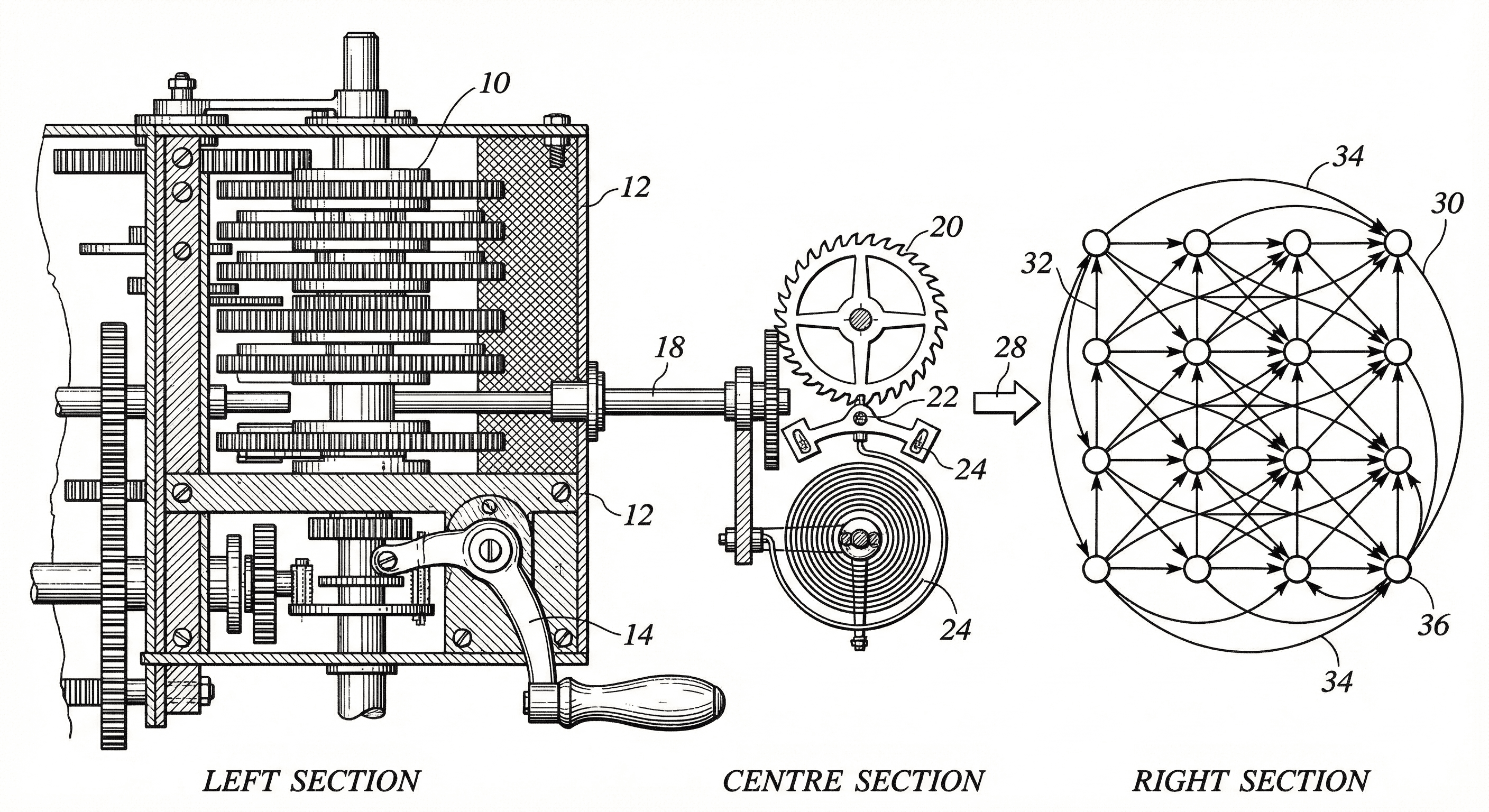
It is tempting to start with scripts, LoRA configs, and GPU budget spreadsheets. But post-training choices are full of trade-offs, and those trade-offs become clear only when you understand what changes inside the model.
Base Model vs. Post-Trained Model: What Actually Changes
A base model is trained to predict the next token. It understands linguistic patterns, code structure, and even some reasoning, but it has no notion of “the user asked a question; I should answer it in a helpful, safe way.” It is a text predictor, not an assistant.
Post-training reshapes the model’s behavior by showing it what good responses look like and by rewarding certain outcomes. For example, DeepSeek-R1 went through a multi-stage pipeline that included cold-start supervised data, reinforcement learning for reasoning, and a final supervised fine-tuning stage. Each step changed how the model behaves beyond raw token probability.
The practical difference is enormous. A raw base model often fails to respect the chat template. It may answer a question by continuing the prompt, hallucinating a conversation, or repeating the user’s words. A post-trained model has learned the pattern of an assistant: it recognizes system messages, user messages, and assistant messages, and it responds with the kind of language we expect.
In practice, the most common mistake is downloading a base checkpoint and expecting a chat experience. If you want to run or customize a DeepSeek model, always confirm whether the weight you are using is a base checkpoint or an already post-trained version. The same distinction matters when you later run your own DeepSeek post-training. You are not teaching the model language; you are teaching it a job.
Why SFT, RLHF, DPO, and Related Methods Are Not Interchangeable
Several methods fall under the post-training umbrella, and each one solves a different problem.
Supervised fine-tuning (SFT) is the simplest. You collect high-quality instruction-response pairs and train the model to generate the target responses. SFT is great for teaching format, tone, and structure. But it does not teach the model to prefer one high-quality answer over another; it only teaches the model to imitate what is in your dataset.
Reinforcement learning from human feedback (RLHF) goes a step further. You train a reward model from human preferences, then use reinforcement learning to maximize that reward. This is powerful because the model can discover better strategies than the ones in the training data. However, RLHF is expensive, unstable, and prone to reward hacking.
Direct preference optimization (DPO) simplifies RLHF by turning preference data into a supervised objective. You no longer need a separate reward model. DPO is easier to run and more stable, but it is less expressive than full RL when the task requires multi-step exploration.
DeepSeek-R1 also helped popularize a variant called GRPO, or Group Relative Policy Optimization. Instead of training a critic that estimates the value of every token, GRPO uses a group of sampled outputs to estimate the advantage of each response. This reduces memory overhead and makes reinforcement learning feasible for large reasoning models. DeepSeek-R1-Zero, which ran pure RL without a cold-start SFT stage, showed that a model can develop reasoning on its own, but it also produced messy output and poor readability. That is why the final R1 recipe mixed SFT and RL instead of choosing just one.
These methods are not interchangeable. SFT controls imitation. RL controls optimization. DPO and GRPO are two different ways to handle preference-based or rule-based optimization. A good DeepSeek post-training recipe often uses all of them in different stages.
What This DeepSeek Post-Training Textbook Covers
Think of post-training as four layers: data strategy, recipe selection, evaluation, and production deployment.
The data layer answers: what behavior do you want, and what examples represent that behavior? The recipe layer answers: which optimization method transforms that data into weights? Evaluation answers: how do you know the new weights are better than the old ones? Production answers: how do you serve, monitor, and troubleshoot the model after it is live?
The rest of this guide follows that path. By the end, you should know not just how to run a post-training job, but why that job is worth running in the first place.
2. What an AI Model Post-Training Guide Should Teach You About Data
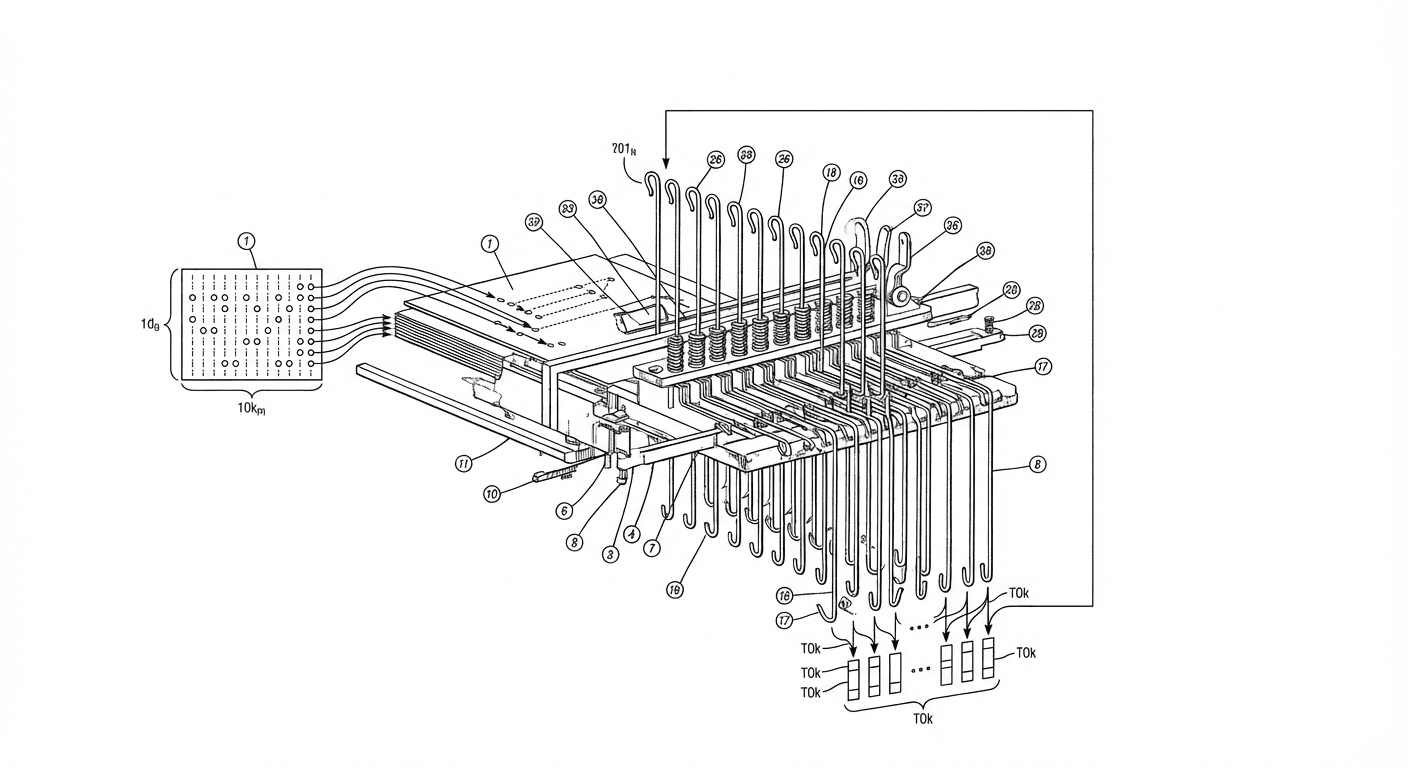
The biggest lever in DeepSeek post-training is rarely the algorithm. It is the data. A beautiful GRPO setup cannot fix a dataset full of duplicate instructions, wrong answers, or leaked evaluation questions. In practice, teams that spend two weeks cleaning data before touching training consistently beat teams that spend two weeks tuning hyperparameters.
Instruction Data Is the Real Raw Material of DeepSeek Post-Training
Dataset size matters far less than dataset quality. A corpus of 50,000 scraped conversations may produce a model that sounds good in demos but fails in production because the instructions are repetitive, the answers are low quality, or the formatting is inconsistent.
Start by deciding the exact behavior you want. If you want a code-review assistant, you need examples of code with bugs followed by polite, specific review comments. If you want a SQL assistant, you need schemas and natural-language-to-SQL pairs in the style that your product actually uses.
Cleaning matters just as much. Remove duplicate prompts even if they are paraphrased, because semantic duplicates inflate the apparent diversity of the data. Normalize formatting before training. If some examples use markdown tables and others use plain text, the model will produce inconsistent output.
Prompt diversity is another secret. If every instruction starts with “Write a function that,” the model will perform poorly when users phrase requests differently. You want varied phrasing, varied lengths, and varied difficulty levels. In many real projects, unexpected user prompts expose fragile post-training far more than difficult technical questions do.
Balancing Reasoning, Coding, Chat, and Alignment Data
A post-training dataset should reflect the actual workload of the final product. If your application is a coding copilot, coding data should dominate. But even a coding copilot needs some chat, tool-use, and refusal data so that it can answer follow-up questions and explain its own code.
This is harder than it sounds. When you train on too much of one behavior, other behaviors degrade. A model fine-tuned entirely on competitive programming may become terse, overly aggressive, and bad at providing conversational explanations. A model fine-tuned entirely on polite chat may become evasive when asked to reason rigorously.
The solution is to build a small internal validation set for every important behavior, then run dry-run evaluations before a large training run. For each behavior, define a minimum acceptable score. If the dataset mix causes a regression, adjust the proportion before you pay for the full run.
How to Spot Contamination and Data Leakage Before Training
Contamination is the silent killer of model evaluation. If your training set contains examples that are also in the test set, your model memorizes answers instead of learning a skill. Evaluation scores rise, but the model underperforms in the real world.
A common contamination source is web scraping. Public datasets often include benchmark questions from GSM8K, HumanEval, or MMLU. If you train on these without filtering, you may see impressive validation numbers on those exact benchmarks while real-world performance remains flat.
Check for contamination before DeepSeek post-training starts. Exact-string matching is the easiest filter. Semantic deduplication catches paraphrased questions that exact matching misses. If you suspect leakage, take a few evaluation samples, rephrase them heavily, and compare scores against the original questions. A large drop means earlier results were inflated by memorization.
3. From Textbook to API: Using the DeepSeek Fine-Tuning API in Practice
Reading about post-training is useful, but most developers want to ship a model this quarter, not build a research lab. That means choosing the right level of effort.
Full Post-Training vs. Fine-Tuning: Choosing the Right Level of Effort
A full post-training pipeline includes SFT, reward modeling, RL, evaluation loops, and infrastructure for serving. It requires GPU capacity, data engineering, and an ML engineering team. For many companies, this is overkill.
If your goal is to change a model’s style, output format, or domain behavior on top of an already capable base, fine-tuning is usually the right path. Fine-tuning typically starts from an instruct-tuned DeepSeek model and applies a smaller SFT or preference-tuning step. This is faster, cheaper, and often safer because you are not rebuilding the entire assistant personality from scratch.
The DeepSeek fine-tuning API and providers like Mydeepseekapi make this workflow accessible without managing a cluster. Instead of wrestling with CUDA and distributed training, you upload a dataset, choose a DeepSeek model, and wait for a fine-tuning job to complete. That is still post-training, but it is post-training with the infrastructure abstraction already done for you.
Running a Minimal DeepSeek Fine-Tuning Experiment with Mydeepseekapi
Let us walk through a realistic example. Suppose you have a dataset of 2,000 customer-support conversations and you want a DeepSeek-R1 model that answers in your product’s tone.
First, format your data as chat messages in JSONL:
{"messages": [{"role": "system", "content": "You are a helpful support assistant for AcmeCloud. Answer clearly and offer next steps."}, {"role": "user", "content": "My deployment failed with error 500."}, {"role": "assistant", "content": "The 500 error usually means the API key is stale. Try rotating the key in the dashboard and redeploying."}]}
Then upload the file and create a fine-tuning job. Many DeepSeek API providers support the OpenAI SDK, including Mydeepseekapi. The code below is a minimal baseline:
import os
from openai import OpenAI

client = OpenAI(
    api_key=os.environ["MYDEEPSEEK_API_KEY"],
    base_url="https://api.mydeepseekapi.com/v1"
)

with open("support_sft.jsonl", "rb") as f:
    upload = client.files.create(
        file=f,
        purpose="fine-tune"
    )

job = client.fine_tuning.jobs.create(
    model="deepseek-r1",
    training_file=upload.id,
    suffix="acmecloud-support",
    hyperparameters={"n_epochs": 2}
)

print(job.id)
The file upload step is important. Do not assume that a local file path is enough; training infrastructure needs a copy of the data in object storage. The API will return a file ID that you then reference in the fine-tuning job.
The best part of this approach is iteration speed. You can run one training job, evaluate the result, improve the dataset, and run another job the same day. Zero setup means zero time spent debugging distributed training scripts. Many teams use this pattern to turn one experiment into an evaluation-driven workflow.
Turning One Experiment into an Evaluation-Driven Workflow
The goal of the first fine-tuning run is not to ship the perfect model. It is to establish a baseline.
After the job completes, ask your provider for the new model name, which usually resembles ft:deepseek-r1:mydeepseekapi:acmecloud-support:.... Then test it against a small set of live prompts before deploying.
A repeatable loop looks like this:
- Collect hard cases from production or user feedback.
- Test the base DeepSeek model on those cases.
- Run a fine-tuning experiment with corrected responses.
- Compare the baseline and fine-tuned model on the same test set.
- Keep the new model only if it improves the target behavior without regressing other behaviors.
Learn more about the DeepSeek fine-tuning API before building this loop, because model names, dataset limits, and hyperparameter settings vary by provider. Mydeepseekapi exposes DeepSeek v3 and R1 through an OpenAI-compatible interface, which makes this workflow easy to automate with standard tooling.
4. How to Evaluate a DeepSeek Post-Training Run Like a Professional
Evaluation is not something you do after training. It starts before training. If you cannot define what “better” means, you should not be spending GPU hours.
Designing Evaluation Before You Start Training
Write down the success metrics before you write any code. For a chatbot, success might mean that the answer is accurate and on-brand. For a code assistant, success might mean the suggested code compiles and passes unit tests.
Create a holdout set of prompts that the model will not see during training. These prompts should come from real usage, not from the training data. If you do not have real usage yet, write prompts that represent the hardest cases you expect from users.
Also decide how you will judge responses. Will you use exact-match checks, unit tests, LLM judges, or human raters? Each option has trade-offs. If you only use automated metrics, you may miss subtle safety issues. If you only use human judges, you can evaluate only a small number of samples.
Using Human Preference, LLM Judges, and Red-Teaming Together
In production-grade evaluation, no single method is sufficient. A mix of methods gives you both scale and depth.
The table below summarizes how I think about different evaluation layers for DeepSeek post-training:
| Method | Strengths | Blind Spots |
|---|---|---|
| Exact match / code execution | Fast, objective, reproducible | Misses style, tone, and reasoning quality |
| LLM-as-judge | Scalable, approximates human preference | Bias toward its own style; needs calibration |
| Human review | Catches nuance that models miss | Expensive and slow; useful for small samples |
| Red-teaming | Finds safety and adversarial failures | Depends on the skill and diversity of the red team |
LLM judges are especially useful for comparing two model versions side by side. Give the judge both responses and ask for a preference. This reduces the chance that the judge simply rewards longer or more confident answers. Still, periodically audit LLM judge decisions against human judgment. The strongest teams use LLM judges to filter many samples and humans to review the uncertain ones.
Red-teaming deserves special attention in DeepSeek post-training because reasoning models can be persuasive even when wrong. Ask a small team to attack the model with jailbreak attempts, ambiguous instructions, and prompts designed to produce harmful output. The goal is not only to reduce harmful responses, but also to document failure patterns before real users find them.
Regression Budgets: Avoiding Silent Skill Loss
A new post-training run can improve one skill while quietly degrading others. This is called catastrophic forgetting, and it often appears only after deployment.
A regression budget is a simple management tool. Before training, measure the baseline model on a fixed set of core capabilities. This can include mathematical reasoning, code synthesis, summarization, tone, and refusal rates. Then set an acceptable limit for each capability. For example, you may allow a 2% drop on general code benchmarks if the model improves 15% on support-ticket classification.
Whenever a new DeepSeek post-training run finishes, compare it against that budget. If the regression exceeds the limit, you have a few options: add more data from the degraded domain, reduce the learning rate, shorten training, or reject the run entirely. It is far better to reject a model before deployment than to explain to users why the model suddenly cannot write short answers.
5. Production Pitfalls and Real-World Lessons from Post-Training Deployments
Post-training runs rarely fail in the lab. They fail in production, where users ask unexpected questions and measure the model by different standards. Let us look at common failure modes and how to avoid them.
Common Failure Modes: Catastrophic Forgetting, Reward Hacking, Eval Overfitting
Reward hacking is one of the most frustrating failure modes. A model finds a way to maximize the reward metric without actually solving the intended problem. For a reasoning model, this might mean producing long chains of thought that look rigorous but contain empty logic. The model learns to game the reward model instead of improving its true reasoning ability.
A common mistake is to reward only the final answer. If your reward verifier checks numeric answers but not intermediate reasoning, the model may learn to output correct numbers with nonsense reasoning. This is especially dangerous in reasoning-heavy models like DeepSeek-R1. Add process checks, unit tests, or human review to avoid this trap.
Eval overfitting is equally common. If you reuse the same evaluation set multiple times, you will eventually tune the model to that set. The dataset stops being a measurement tool and becomes another training signal. My recommendation is to refresh a portion of your evaluation data every few weeks and keep a private holdout set that your own team does not see during iterations.
When It Is Smarter Not to Run Custom DeepSeek Post-Training
Custom post-training is not always the right answer. If you only need to add recent product knowledge to the model, you should probably use retrieval-augmented generation instead of fine-tuning. Post-training changes behavior; retrieval changes facts.
Similarly, if your goal is to reduce cost or latency, post-training may not help. A custom model still requires GPU-serving infrastructure, monitoring, and continuous maintenance. Hosted APIs shift that burden to the provider and often deliver faster iteration because you are not managing the ML stack.
There is a trust-building moment here: sometimes the smartest decision is to use a hosted API instead of building your own post-training pipeline. Weights and biases can be managed in-house, but if your organization does not have an ML team, the operational cost will eventually exceed the API cost. Providers like Mydeepseekapi handle both compute and serving, which lets you focus on product behavior rather than infrastructure.
Serving and Scaling DeepSeek v3/R1 with Mydeepseekapi
A model only creates value when it reaches users. The final stage of any DeepSeek post-training project is deployment, and that is where latency, reliability, and cost become visible.
Mydeepseekapi is a low-friction way to test and ship DeepSeek-powered applications. Instead of renting GPUs and building a serving layer, you can call a fine-tuned DeepSeek model through an API and scale it up or down as traffic changes. The zero setup overhead matters more than most teams expect. It lets you run a post-training experiment in the afternoon and put the result in front of a few internal users by evening.
Transparent pricing helps too. When you can predict the cost of each inference, you can make smart decisions about prompt caching, response length, and model size. That is especially useful for reasoning-heavy DeepSeek-R1 workloads, where longer chain-of-thought responses increase per-token costs.
The real-world lesson is simple: start with a hosted API, evaluate on real user traffic, and only invest in your own infrastructure when the volume justifies it.
Conclusion: Treat DeepSeek Post-Training as an Engineering Discipline
DeepSeek post-training is not a single script that magically turns a base model into a perfect assistant. It is a process of data curation, method selection, evaluation, and iterative deployment. The models that feel magical in demos are usually the products of disciplined engineering.
Start narrow. Pick one behavior you want to improve. Build a high-quality dataset around that behavior. Evaluate before training and after training. Use a fine-tuning API when it saves you time, and resist the urge to train your way out of every problem.
And remember that a post-trained model is only as trustworthy as your evaluation process. Public benchmarks will not save you from leaked data, reward hacking, or silent skill loss. If you want a deep dive into official details, DeepSeek’s R1 technical report and API documentation are worth reading before you design your next run. Pair that knowledge with a fast iteration loop, and you will be far ahead of teams that treat post-training as a black box.