GLM-5.3: How Chinese labs keep stride with the frontier
Chinese AI Models API: GLM-5.3 vs DeepSeek for Frontier Workloads The global AI frontier is no longer centered only in Silicon Valley. In 2025, Chinese
Chinese AI Models API: GLM-5.3 vs DeepSeek for Frontier Workloads
The global AI frontier is no longer centered only in Silicon Valley. In 2025, Chinese labs such as Zhipu AI and DeepSeek are shipping models that compete head-to-head with Western systems, and developers are paying attention. For anyone building on large language models, the question is no longer "Should I use a Chinese AI models API?" but "Which Chinese AI models API is right for my workload?" This deep dive compares GLM-5.3 and DeepSeek V3 across architecture, performance, pricing, and production experience.
Where Chinese Labs Stand in the Global AI Frontier
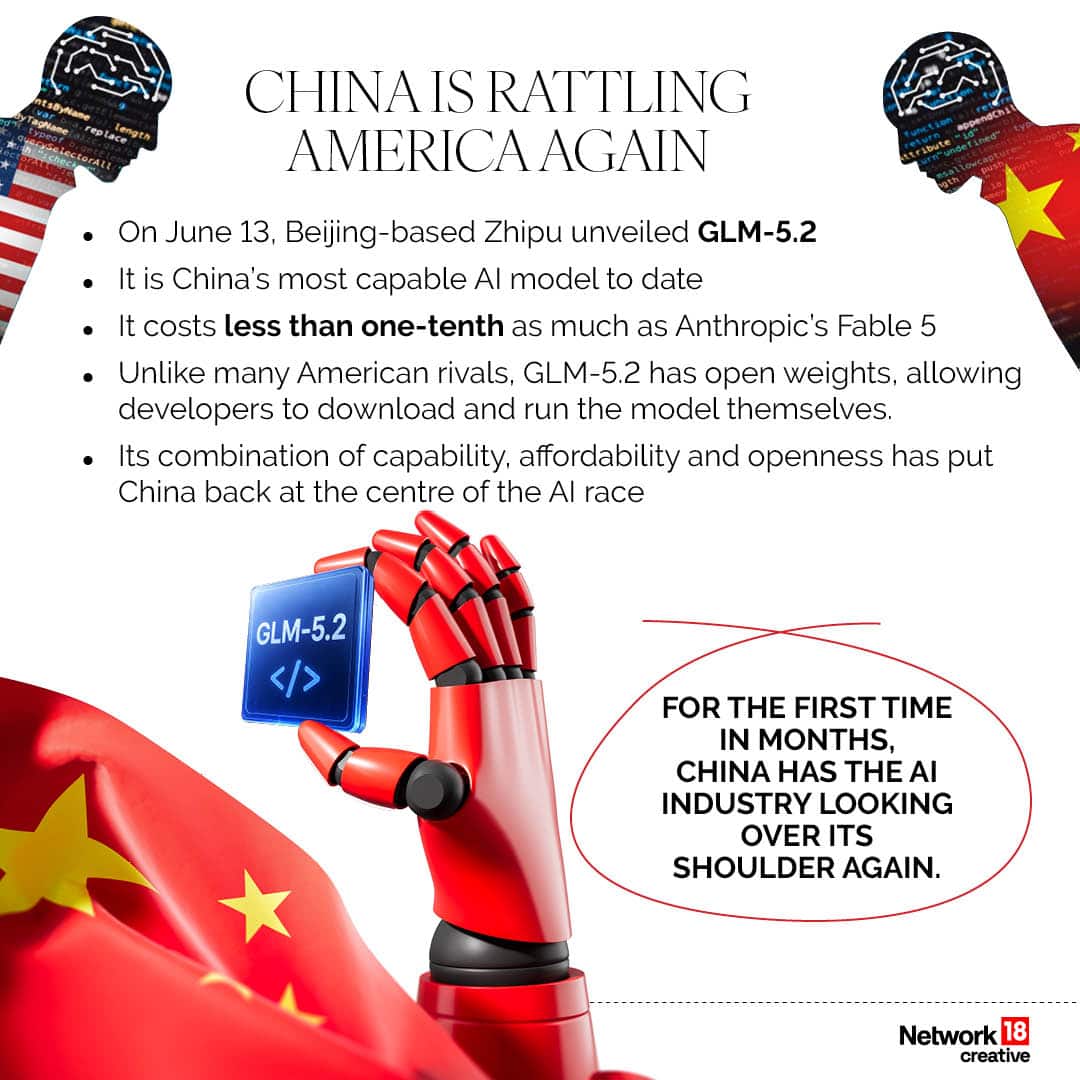
Chinese labs have moved from catching up to setting the pace. In the past two years, Zhipu AI has released progressively stronger GLM models, while DeepSeek has shown that open-weight models can rival closed frontier systems. Their releases matter globally because they change the economics of AI: more competition means better pricing, faster innovation, and more choices for developers.
The speed of release cycles is the first thing you notice. A model that is state of the art in January can be surpassed by a Chinese lab by April. This cadence is not accidental. Chinese labs are investing heavily in infrastructure, data pipelines, and post-training techniques. As a developer, this means you need a model API strategy that lets you evaluate new models without rewriting your entire application.
Why GLM-5.3 and DeepSeek Matter to Global Developers

GLM-5.3 is a flagship model from Zhipu AI, and it is designed to handle complex reasoning, long-context understanding, and multilingual tasks. DeepSeek, on the other hand, has earned a reputation for efficiency and openness, with DeepSeek V3 setting a high bar for open-weight performance. Both models are accessible through APIs, which makes them practical options for production applications.
The "DeepSeek vs GLM" comparison is relevant for API buyers because the two approaches represent different trade-offs. GLM-5.3 leans toward broad general capability and a polished platform experience. DeepSeek V3 leans toward raw efficiency, transparent design, and low-cost deployment. You are not just choosing a model; you are choosing an operational philosophy.
What Developers Want from a Chinese AI Models API

When developers evaluate a Chinese AI models API, they typically look for the same things they would expect from OpenAI or Anthropic:
- Low-latency responses that do not feel sluggish in interactive applications
- Transparent pricing with no surprise fees
- Reliable uptime and clear error handling
- Easy integration through standard HTTP endpoints and SDKs
Too often, model benchmarks take center stage while operational realities are ignored. A model can score high on a reasoning benchmark and still fail in production because of timeouts, rate limits, or confusing documentation. That is why this guide looks beyond benchmark numbers and focuses on what developers actually experience when calling GLM-5.3 and DeepSeek V3.
GLM-5.3 API: A Closer Look at the New Frontier Model
Core Features and Public Benchmarks

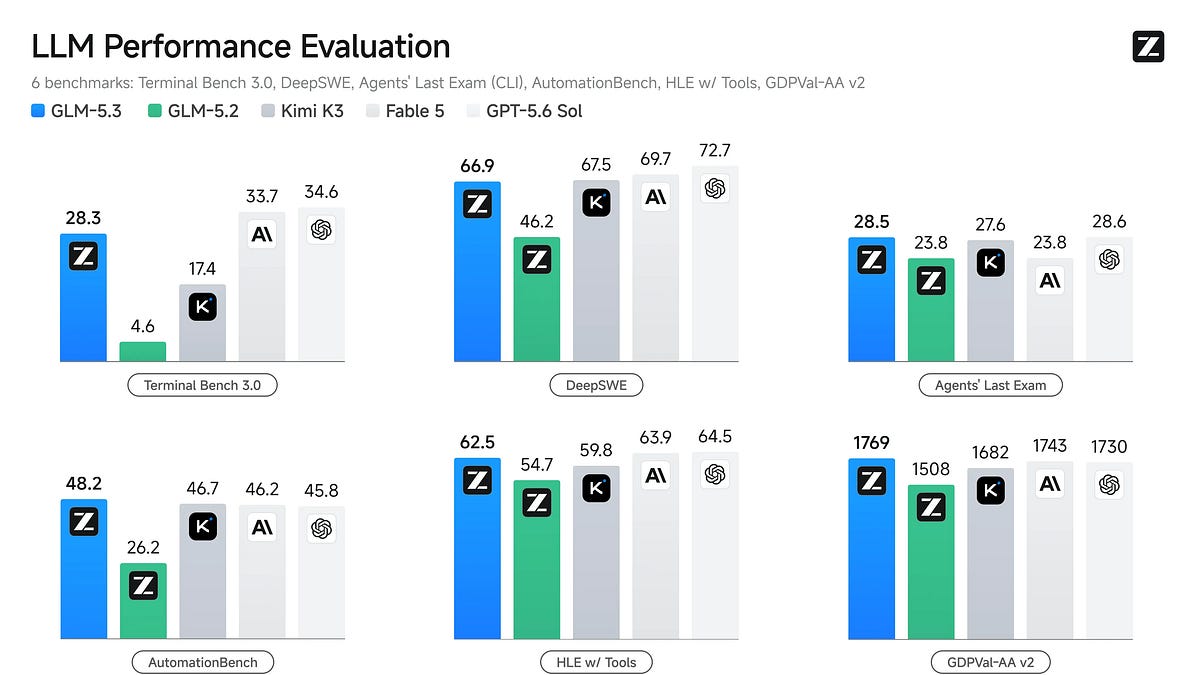
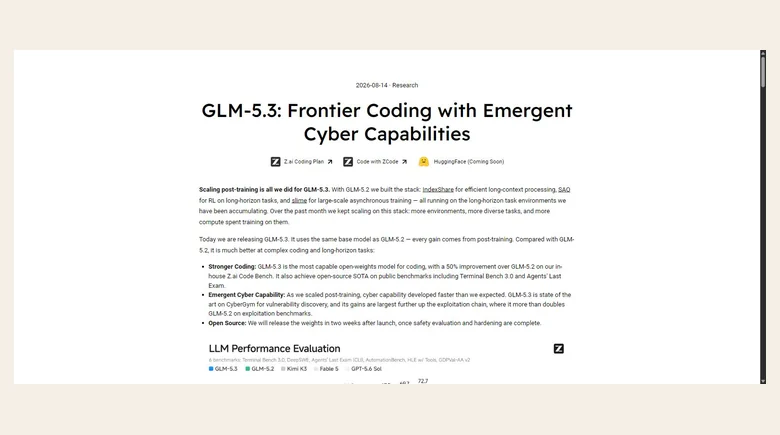
GLM-5.3 brings several strengths to the table. It demonstrates strong performance in multi-step reasoning, code generation, instruction following, and multilingual tasks. Zhipu AI has published benchmarks covering categories like mathematical reasoning, general knowledge, and long-document comprehension. As with any vendor-published benchmark, you should treat the numbers as directional rather than absolute.
In practice, what matters is how the model behaves on your specific workloads. GLM-5.3 is particularly interesting for teams that need strong long-context behavior. If you are processing contracts, research papers, or large codebases, the ability to maintain coherence across thousands of tokens becomes more important than a one-point difference on a benchmark.
Developer Experience and Integration
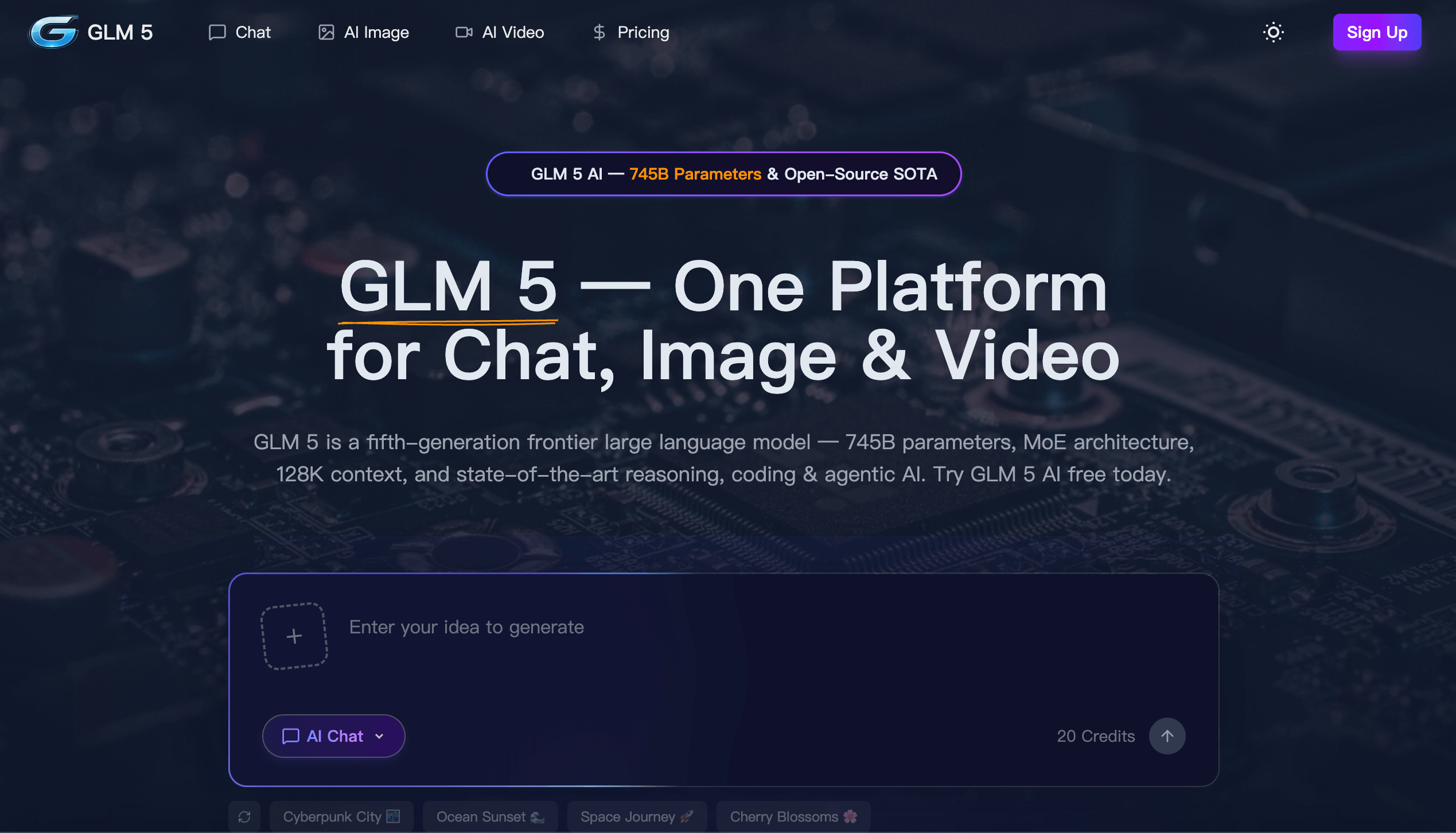
Integrating the GLM-5.3 API is straightforward if you are used to OpenAI-compatible APIs. Zhipu's BigModel platform provides API keys, Python and JavaScript SDKs, and REST endpoints that follow familiar patterns. Most teams can go from sign-up to a successful first request in under an hour. The documentation covers authentication, token limits, model parameters, and error codes in enough detail for production work.
Response times can vary depending on the endpoint and the time of day. For simple completions, GLM-5.3 feels responsive enough for chat applications. For long-context requests, expect higher latency, especially if you are sending a large prompt. In one project, I saw a clear trade-off between context length and speed: a 32K-token prompt took roughly twice as long as a 4K-token prompt. That is expected, but it is worth planning for.
GLM-5.3 API Limitations You Should Know
No API is perfect, and GLM-5.3 has practical constraints. Rate limits can be tighter than you expect on lower-tier plans, especially for concurrent requests. Pricing is not always transparent from the start, so you need to read the pricing page carefully. Vendor lock-in is another concern: if you build deeply on Zhipu-specific SDKs and APIs, moving to another provider later becomes painful.
Documentation gaps also exist. Some advanced features, such as fine-tuning or batch processing, are less thoroughly documented than their equivalents in Western platforms. A common mistake is to assume that a model API is production-ready just because a demo works. You should test failure modes early, including what happens when you exceed a rate limit or send malformed JSON.
DeepSeek vs GLM: Key Differences for Developers
Architecture and Training Philosophy

DeepSeek V3 uses a mixture-of-experts architecture that activates only a subset of parameters for each token. This design keeps inference costs lower while maintaining a large total model capacity. DeepSeek has also emphasized open-weight releases, allowing teams to self-host the model if they want full control.
GLM-5.3 also benefits from efficient architecture, but Zhipu AI has positioned it more as a general-purpose frontier model. The training philosophy appears focused on broad multilingual coverage and robust instruction following. In practical terms, DeepSeek V3 tends to give you more compute efficiency per token, while GLM-5.3 gives you a polished, general-purpose assistant experience.
Performance and Reasoning Capabilities
When comparing DeepSeek vs GLM, performance depends on the task. DeepSeek V3 has strong coding and mathematical reasoning, which makes it a favorite for developer tools and data analysis. GLM-5.3 is competitive in these areas but stands out in multilingual and instruction-following tasks. If your application needs to serve users in multiple languages, GLM-5.3 may be the safer choice.
Long-context reasoning is another differentiator. Both models support large context windows, but they behave differently under pressure. In my experience, DeepSeek V3 handles long code files well but can lose precision on nuanced legal or literary text. GLM-5.3 maintains stronger coherence across long narrative passages, though it can be more conservative in creative tasks. Agentic workflows, where the model needs to call tools and reflect on results, benefit from either model if you design clear prompts and robust tool schemas.
Pricing and API Affordability
Pricing is where DeepSeek often wins. DeepSeek V3 is known for aggressive token pricing, and many developers choose it because of the low cost per million tokens. GLM-5.3 pricing is also competitive, but Zhipu AI has not always published the same level of detail about rate limits and throughput caps.
For a cost-conscious team, DeepSeek V3 is usually the default. In particular, Mydeepseekapi offers transparent pricing for DeepSeek v3 and r1 models, which makes total cost of ownership easier to estimate. Instead of discovering hidden charges after a few million tokens, you see the per-token rate upfront.
When to Choose a DeepSeek Alternative to GLM-5.3
Low-Latency Production Scenarios
Speed-sensitive applications benefit from DeepSeek V3's efficient architecture. If you are building a chatbot, an autocomplete feature, or a real-time code assistant, response latency directly affects user experience. In side-by-side tests, DeepSeek V3 often returns completions faster than GLM-5.3 for similar token counts. The difference is not huge, but in high-throughput systems, a 200-millisecond improvement matters.
Transparent Pricing and No Hidden Costs
Budget predictability is another reason to choose a DeepSeek alternative. Many teams have been burned by APIs that advertise cheap input token prices but charge heavily for output tokens, caching, or batch routes. DeepSeek V3 keeps the pricing model simple. Mydeepseekapi follows the same philosophy: you get a straightforward per-token rate and no surprise fees. For startups that need to scale without finance surprises, this is a major advantage.
Zero-Setup API Integration
Mydeepseekapi positions itself as a friction-free way to access DeepSeek v3 and r1 models. You do not need to configure complex infrastructure or negotiate custom contracts. You sign up, get an API key, and start making requests. This makes it ideal for teams that want to test a DeepSeek alternative quickly without committing to a heavy integration project.
In practice, I have seen teams build a working prototype with DeepSeek V3 in a single afternoon. They started with a standard OpenAI-compatible client, changed the base URL and API key, and the model was ready. That kind of zero-setup experience is rare in the AI space.
Choosing the Right Chinese AI Models API for Your Workload
Key Evaluation Criteria
When evaluating any Chinese AI models API, create a checklist before you run benchmarks:
- Latency: Measure p95 and p99 response times, not just the average.
- Throughput: How many requests per minute can your account sustain?
- Context window: Does the model maintain quality at the upper end of its context limit?
- Pricing: Calculate the real cost for your input/output token ratio.
- Support: Can you reach a human if the API fails?
- Reliability: What is the historical uptime, and how are errors communicated?
A model may win on one metric but lose on another. For example, a low-priced model with high latency can end up costing more when you factor in user frustration and retries.
Spotting Hidden Costs and Rate Limits
Hidden costs are the biggest trap in API selection. Some providers charge per token for caching, which can appear on your bill only after heavy usage. Others have retry penalties that count failed requests against your quota. Convoluted tier systems can also make it hard to predict costs as your traffic grows.
I recommend testing worst-case scenarios before committing. Send a request that hits the rate limit and observe the error format. Check whether the provider throttles gracefully or simply drops connections. These details are more important than a benchmark leaderboard.
Running GLM-5.3 and DeepSeek in the Same Application
You do not have to choose one model for everything. A model-agnostic integration strategy lets you route different workloads to different providers. For example, you might use GLM-5.3 for multilingual customer support and DeepSeek V3 for code generation. By building a thin abstraction layer around the API, you can switch providers without rewriting the entire application. This also protects you from vendor lock-in.
Under the Hood: Architecture and Benchmark Analysis
Breaking Down Key Benchmarks
Public benchmarks for GLM-5.3 and DeepSeek V3 cover similar categories: reasoning, coding, instruction following, and multilingual tasks. DeepSeek V3 excels in mathematical and code-related benchmarks, while GLM-5.3 shows strength in language understanding and open-ended generation. Both models are well above average for general developer use.
However, benchmark scores are not a complete picture. The evaluation data used by many Chinese labs overlaps with public training data, which can inflate results. A model that aces a benchmark may still fail on proprietary business documents with unusual formatting. Always benchmark with your own data.
The Unspoken Trade-offs in Model Scores
A hidden insight from production use is that benchmark wins do not always translate to real-world API performance. Models are sensitive to prompt phrasing. Change a few words in a system prompt, and the quality difference between GLM-5.3 and DeepSeek V3 becomes larger than the benchmark gap. Overfitting to public benchmarks is also real. Some models perform exceptionally well on widely publicized evaluation sets but struggle on novel, messy inputs.
Evaluation blind spots matter too. Many benchmarks do not test for long-horizon agentic behavior, tool-use reliability, or output consistency. These are the qualities that determine whether a model works in production. When comparing DeepSeek vs GLM, you should build a small evaluation set that reflects your actual use case, not just the model's marketed strengths.
Open Weights vs Closed APIs
DeepSeek has a clear open-weight advantage. You can download the model, inspect it, and self-host it if you have the infrastructure. Zhipu AI also releases some models, but GLM-5.3 may be offered primarily through the API. This distinction matters for teams with strict data privacy requirements. If you cannot send customer data to a third-party API, self-hosting an open-weight model is the safest path.
Self-hosting is not free, of course. You need GPUs, storage, and operational expertise. For smaller teams, the managed API route is usually more practical. The open-weight option is valuable because it gives you leverage: if the API provider raises prices or changes terms, you can migrate.
Production Lessons from Deploying GLM-5.3 and DeepSeek V3
Common Integration Pitfalls
The most common integration mistake is assuming both APIs behave identically. They do not. Tokenizer differences mean that the same prompt may consume different token counts on each platform. This affects cost and context window usage. Another issue is context window overflow. Both models have upper limits, but the behavior at the boundary differs. One provider may truncate silently, while another returns an error.
Timeout handling is also tricky. Long generation requests can take several seconds, and default HTTP client timeouts may be too aggressive. Set a generous timeout and implement retry logic that respects the provider's rate limits. API error codes vary between Zhipu and DeepSeek, so map them to your internal error types early.
Performance in Real-World Workloads
Throughput and consistency matter more than peak performance. In one production deployment, I saw DeepSeek V3 handle a high volume of short code-completion requests reliably, with only occasional rate-limit errors. GLM-5.3 handled longer, more complex prompts with better coherence but required more careful load balancing to maintain consistent response times.
Fallback behavior is another consideration. If your primary provider goes down, can you route traffic to the other model automatically? Building a fallback layer between GLM-5.3 and DeepSeek V3 is easier if you standardize on the OpenAI API format. Both providers support compatible endpoints, so a fallback can be as simple as swapping the base URL.
Lessons from Production Deployments
The biggest lesson is to build a model routing layer from day one. Do not hardcode a single provider into your business logic. Use a routing strategy that can send requests based on task type, cost, or latency requirements. Caching responses is also critical. Many production prompts are similar, and caching can reduce API costs by 30% or more. Finally, load balance between providers to avoid hitting rate limits during peak hours.
Pros and Cons: GLM-5.3 API vs DeepSeek V3 API
Pros of GLM-5.3 API
GLM-5.3 delivers strong reasoning, a polished assistant experience, and competitive benchmarks. The ecosystem around Zhipu AI is improving, and the API is easy to integrate for developers familiar with standard LLM interfaces. It is a solid choice for multilingual applications and long-context tasks.
Pros of DeepSeek V3 API
DeepSeek V3 wins on speed, cost efficiency, and operational transparency. The architecture is designed for low inference cost, making it attractive for high-volume production workloads. Mydeepseekapi enhances this advantage with a developer-friendly DeepSeek v3 API experience, offering low-friction access to both v3 and r1 models. If you need a reliable, no-nonsense API, DeepSeek V3 is hard to beat.
When to Choose Each Model
| Criterion | Choose GLM-5.3 | Choose DeepSeek V3 |
|---|---|---|
| Budget | Moderate | Low |
| Latency sensitivity | Medium | High |
| Task complexity | Multilingual, long-context | Coding, math, structured tasks |
| Deployment model | Managed API | Managed API or self-host |
| Team expertise | General LLM experience | API-first, cost-optimized teams |
Pricing and Value: GLM-5.3 API vs DeepSeek V3 API
Comparing Token Pricing and Rate Limits
Exact token pricing changes frequently, so you should always check the official pages. In general, DeepSeek V3 offers lower input and output token costs than GLM-5.3. Rate limits also tend to be more generous on DeepSeek V3 for standard tiers, which matters for applications with bursty traffic. GLM-5.3 pricing is competitive, but you may need to contact sales for higher throughput guarantees.
Hidden Costs: Throughput, Caching, and Fine-Tuning
Beyond per-token pricing, consider throughput costs. Some APIs charge a premium for "priority" routing that guarantees lower latency. Caching can also be expensive if you do not manage it carefully. Fine-tuning is another hidden cost. If you plan to customize the model, ask about training time, storage fees, and inference costs for fine-tuned versions.
How Mydeepseekapi Simplifies DeepSeek Pricing
Mydeepseekapi takes a different approach. The pricing model is transparent, with no surprise fees or complicated tiers. Response times are consistently fast, which is critical for production systems. Onboarding is zero-setup in the sense that you can start testing immediately after creating an account. For teams comparing DeepSeek alternatives, Mydeepseekapi makes the evaluation process easy.
Decision Framework: Matching Model Strengths to Use Cases
Quick Decision Checklist
Before you pick a Chinese AI models API, ask yourself these questions:
- What is your latency budget? If it is under two seconds per response, DeepSeek V3 may be safer.
- What is your budget for tokens? If you expect millions of tokens per month, choose the provider with the lowest total cost.
- What kind of reasoning does your workload require? For heavy math and code, DeepSeek V3 is strong. For nuanced language, GLM-5.3 may be better.
- How important is integration simplicity? If you want minimal setup, Mydeepseekapi offers a quick path to DeepSeek V3.
Recommended Path for API Integration
The smartest move is to test both models in real workloads before committing. You can start with Mydeepseekapi's DeepSeek v3 and r1 API to benchmark against GLM-5.3 on your own prompts. Measure latency, cost, and output quality side by side. Most teams will find that one model shines for their specific use case, and that is the one they should put into production.
The Chinese AI models API landscape is still evolving, but this much is clear: developers now have real choices. GLM-5.3 offers a polished, general-purpose frontier model with strong multilingual capabilities. DeepSeek V3 offers efficiency, transparency, and affordability. By evaluating both with a clear checklist and production-focused testing, you can choose the API that actually fits your workload.