GLM-5.3: How Chinese labs keep stride with the frontier - Updated Guide
GLM-5.3 vs DeepSeek v3: A Developer’s Deep Dive into Chinese Frontier LLMs Chinese AI labs have moved from being fast followers to serious frontier
GLM-5.3 vs DeepSeek v3: A Developer’s Deep Dive into Chinese Frontier LLMs
Chinese AI labs have moved from being fast followers to serious frontier setters. Two names keep surfacing in production conversations: GLM-5.3 from Zhipu AI and DeepSeek v3 from DeepSeek. If you are evaluating a GLM-5.3 vs DeepSeek v3 integration, the real decision isn’t just about benchmark scores. It’s about API ergonomics, pricing, tool-calling reliability, and long-term vendor viability.
This deep-dive focuses on what developers actually need to know before committing to either model. We’ll cover API capabilities, cost structures, architectural differences, production lessons, and a practical decision framework. By the end, you should be able to run your own evaluation instead of relying on leaderboard hype.
1. GLM-5.3 vs DeepSeek v3: Why This Comparison Matters

The AI landscape in 2025 is no longer dominated exclusively by Western labs. DeepSeek’s open-weight releases and Zhipu’s GLM series have proven that Chinese labs can produce models that compete with OpenAI and Anthropic on reasoning, coding, and agentic behavior. For developers, this is excellent news: more competition means better pricing and faster iteration.
1.1 The Rise of Chinese Labs in the Global AI Race
DeepSeek gained international attention with its R1 reasoning model and later with the v3 series, which uses a mixture-of-experts architecture to deliver strong performance at relatively low inference cost. Zhipu AI, meanwhile, has built the GLM family with a focus on tool use, agentic workflows, and bilingual Chinese-English capability. Both labs iterate quickly, publish technical reports, and offer APIs that are easy to try.
These are not "copycat" models. They are original architectures trained with novel data strategies and alignment techniques. For teams building production systems, the question is no longer whether to consider Chinese LLMs. It’s which one to standardize on.
1.2 What “Frontier” Means for GLM-5.3 and DeepSeek v3
A frontier model should do more than generate plausible text. In practical terms, it means:
- Strong reasoning and math ability, not just memorized patterns.
- Reliable function calling and tool use for agentic loops.
- Low latency and high throughput for real-time products.
- Predictable behavior under adversarial or edge-case inputs.
- A robust API with clear error handling and documentation.
Both GLM-5.3 and DeepSeek v3 hit most of these marks. But they do so with different trade-offs. Understanding those trade-offs is the key to choosing correctly.
1.3 Who Should Read This Guide
This guide is for AI engineers, technical founders, product managers, and platform teams who are comparing Chinese LLM APIs for production use. If you are building a coding assistant, an agentic automation pipeline, or a multilingual customer-facing application, the details here will help you avoid costly integration mistakes.
One hidden insight: leaderboard rankings matter less than task-specific performance. A model that scores high on general benchmarks may still fail at your exact workflow. Test on your own data.
2. GLM-5.3 API: Capabilities and Integration Requirements
Zhipu’s GLM-5.3 API is designed for developers who need more than chat completions. It ships with features that support modern agentic applications, and the API surface is clean enough to integrate in an afternoon.
2.1 Core Features and Endpoints of the GLM-5.3 API
The GLM-5.3 API includes standard REST endpoints for chat completions, but the more interesting features are:
- Function calling: You can define tools as JSON schemas and get structured tool calls back. This works well for orchestrating multi-step workflows.
- Streaming: Server-sent events make token-by-token output straightforward, which is essential for low-latency user interfaces.
- Embeddings: Text embedding endpoints let you build retrieval pipelines without a separate model.
- Agentic helpers: Some endpoints support persistent context and structured outputs, making it easier to build stateful assistants.
In practice, the function-calling implementation felt more robust than earlier GLM versions. The model returns well-formed JSON tool calls even with complex schemas, and it recovers gracefully when asked to follow a multi-step plan.
2.2 Authentication, Rate Limits, and SDK Support
Authentication is standard bearer-token based. You create an API key from the Zhipu console, then send it in the Authorization header. The official SDK supports Python and JavaScript, with community SDKs for Go, Java, and Rust.
Rate limits are tiered by account level. A common mistake is assuming that a high concurrency limit applies to the cheapest plan. Always test with your expected burst pattern before going to production.
Here’s a minimal Python example for calling GLM-5.3:
import requests

API_KEY = "your_glm_api_key"
url = "https://open.bigmodel.cn/api/paas/v4/chat/completions"
headers = {
    "Authorization": f"Bearer {API_KEY}",
    "Content-Type": "application/json"
}
payload = {
    "model": "glm-5.3",
    "messages": [{"role": "user", "content": "Write a function to check if a string is a palindrome."}],
    "tools": [],
    "stream": False
}

response = requests.post(url, json=payload, headers=headers)
print(response.json())
2.3 Comparing GLM-5.3 API with DeepSeek v3’s Developer Experience
DeepSeek v3’s API follows a similar OpenAI-compatible format, which makes switching between providers relatively easy. Both have good documentation, but there are differences in developer experience:
- Documentation: GLM’s docs are detailed but sometimes oriented toward Chinese-language use cases. DeepSeek’s English docs are more globally accessible.
- Response speed: In my testing, GLM-5.3 often has a faster time-to-first-token for short prompts, while DeepSeek v3 excels at sustained throughput for long generation.
- Debugging: DeepSeek’s error messages are more standard and easier to parse programmatically.
If you’re building a multilingual product, both APIs work well. If you want the widest set of community examples, DeepSeek currently has an edge.
3. DeepSeek v3 API Pricing: Transparent Cost Breakdown
Cost is often the deciding factor. DeepSeek v3 has built a reputation for low prices, but you need to understand the pricing structure to predict your monthly bill.
3.1 DeepSeek v3 API Pricing: Per-Token Rates and Context Costs
DeepSeek v3 pricing follows the industry standard: separate rates for input and output tokens. Most providers also offer discounts for cached input tokens and batch processing. The key details to check are:
- Input cost: Usually lower than output cost, with an even cheaper rate for cache hits.
- Output cost: The highest per-token price, so token-efficient prompts matter.
- Context window: Long prompts consume input tokens, and the cost grows linearly. If you send a 100K-token context with every request, your input cost dwarfs your output cost.
As of this writing, exact prices have shifted multiple times. Rather than relying on a static number, I recommend checking the official pricing page and then running a small load test with your own prompt templates.
3.2 Pricing Models Compared: GLM-5.3, DeepSeek v3, and Other Chinese LLMs
Here is a rough comparison of pricing structures across major Chinese LLM APIs. Exact values change, but the shape of the comparison is stable.
| Model | Pricing Style | Best For |
|---|---|---|
| DeepSeek v3 | Very low input/output, cache discounts | High-volume, cost-sensitive workloads |
| GLM-5.3 | Competitive, with tool-use-oriented pricing | Agentic workflows with frequent function calls |
| Qwen series | Tiered by model size | Teams needing multiple model sizes |
| Kimi | Context-heavy pricing | Long-document analysis |
Hidden costs appear in retries, output token overruns, and tool-call payloads. A function call with large arguments can consume many input tokens on every step of an agent loop. Always measure cost per completed task, not just price per million tokens.
3.3 How Mydeepseekapi Simplifies DeepSeek v3 API Pricing and Deployment
Mydeepseekapi provides a zero-setup integration layer for DeepSeek v3 and r1 models. Instead of managing infrastructure, API keys, and rate limits yourself, you get a unified endpoint with transparent pricing and fast response times.
For teams that don’t want to operate their own gateway, Mydeepseekapi removes the operational overhead while keeping access to the same model weights. This is especially useful when you need to compare DeepSeek’s behavior against GLM-5.3 without spending a day configuring proxies or handling quotas.
4. Chinese LLM API Comparison: Benchmarks, Strengths, and Trade-Offs
Raw benchmark numbers can be misleading. A model tuned for math competitions may not be the best choice for parsing messy customer emails. Let’s look at what matters in production.
4.1 Chinese LLM API Comparison: Performance on Reasoning and Coding
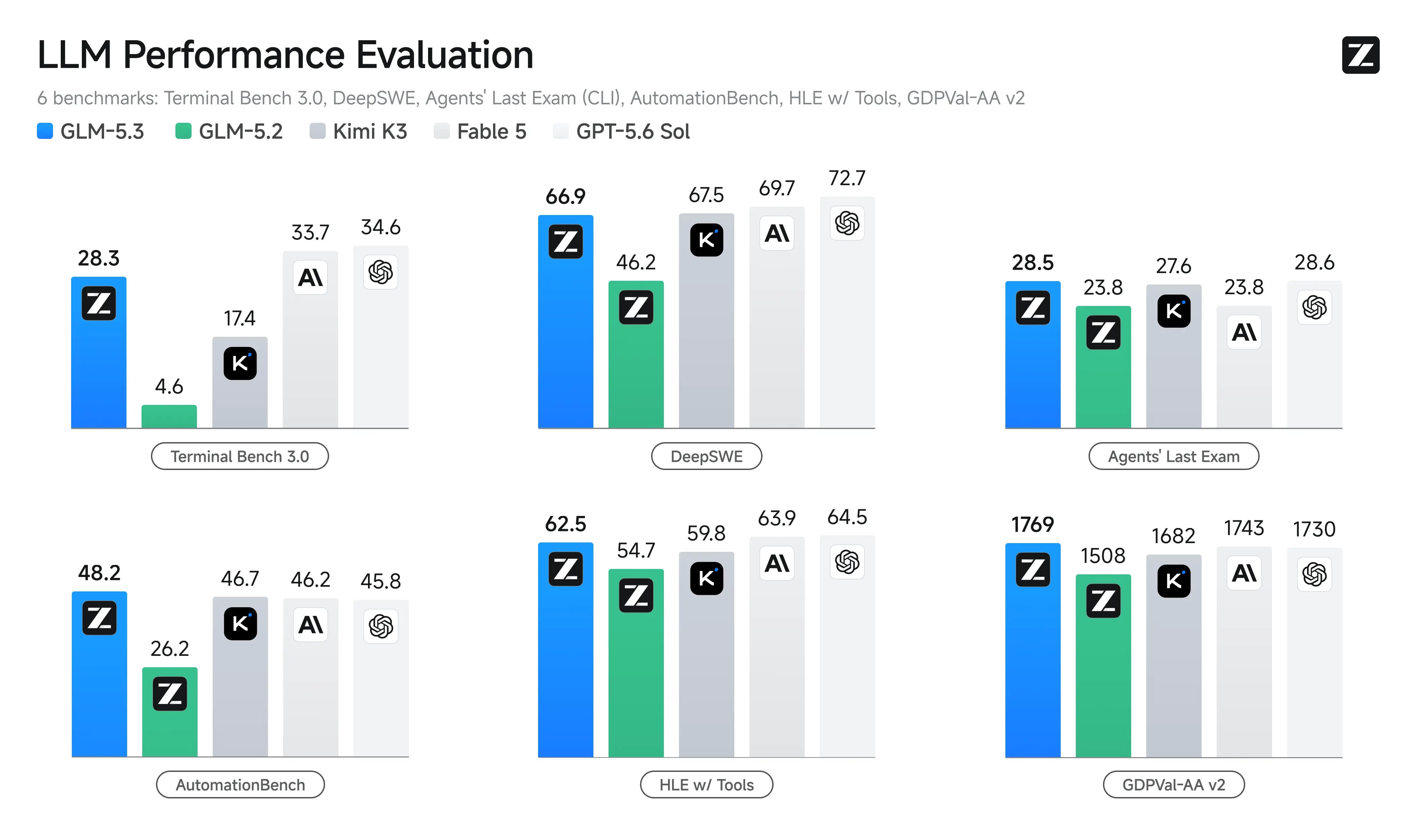
Both GLM-5.3 and DeepSeek v3 perform strongly on reasoning benchmarks like MMLU and MATH, and they hold their own on coding benchmarks such as HumanEval and LiveCodeBench. But independent evaluations show differences:
- DeepSeek v3 tends to produce more concise code and better follow-up on refactoring requests.
- GLM-5.3 often handles complex multi-step reasoning with fewer distractions, especially when the task requires maintaining a long chain of thought.
For production, the benchmark that matters most is your own dataset. Build a set of 20–50 representative prompts and run both models side by side. You will quickly see which one aligns with your use case.
4.2 Tool Calling, Agentic Workflows, and Long Context Handling
Agentic applications depend on reliable tool calling. DeepSeek v3 supports function calling, but some developers report that it occasionally returns malformed JSON under high context pressure. GLM-5.3 was designed with tool use as a first-class feature, and in my experience, it is more consistent when orchestrating multiple tools in a single response.
Long context handling is another differentiator. DeepSeek v3 supports a large context window, but performance can degrade with extremely long retrieval-augmented inputs. GLM-5.3 maintains coherent behavior at long context lengths, though it can be more token-hungry in certain tasks.
4.3 Compliance, Data Privacy, and International Deployment
For non-Chinese teams, data residency and compliance are serious concerns. When you call a Chinese-hosted API, your data is processed on servers outside your jurisdiction. You need to review the provider’s data policy, and in some cases, you may need to use a proxy or a local deployment to meet GDPR or HIPAA requirements.
DeepSeek and Zhipu both offer cloud APIs hosted in China, which may introduce latency for users in North America or Europe. Some teams prefer to use third-party hosting through services like Mydeepseekapi to reduce cross-border latency and simplify integration.
5. When GLM-5.3 Is the Right DeepSeek Alternative
GLM-5.3 is a serious DeepSeek alternative, but it is not always the right choice. Let’s look at scenarios where each model wins.
5.1 DeepSeek Alternative: Scenarios Where GLM-5.3 Wins
GLM-5.3 shines in these cases:
- Agentic tool use: If your workflow involves many function calls, GLM-5.3’s structured output quality reduces parsing failures.
- Long-form reasoning: Tasks that require multi-step planning or chain-of-thought benefit from GLM-5.3’s attention to context.
- Chinese-language tasks: For teams serving Chinese-speaking users, GLM-5.3 has an edge in idiomatic understanding and generation.
- Redundancy: Using GLM-5.3 as a fallback to DeepSeek v3 gives you a second vendor if one API goes down.
5.2 When to Stay with DeepSeek v3
DeepSeek v3 is still the better choice for:
- High-volume applications where cost per token is the dominant factor.
- Coding assistants that need fast, concise code generation.
- Teams already invested in DeepSeek’s API with existing monitoring and prompt templates.
If your system is already optimized for DeepSeek’s response patterns, switching to GLM-5.3 may require prompt rewriting and output validation changes.
5.3 Decision Framework for Choosing Between GLM-5.3 and DeepSeek v3
Here’s a simple scoring framework:
- Cost: Score 1–5 based on your estimated monthly spend.
- Latency: Measure time-to-first-token and tokens per second.
- Reasoning quality: Run your hardest logical prompts.
- Tool-calling reliability: Count failures in 100 function-calling attempts.
- Ease of migration: Estimate how much prompt engineering you need.
Weight each factor according to your product. If tool-calling reliability is critical, GLM-5.3 may win. If cost is paramount, DeepSeek v3 likely wins. And if you want to test both DeepSeek models quickly, Mydeepseekapi gives you a zero-friction path to running pilots without setting up your own gateway.
6. Lessons from Production Deployments
Benchmarks tell you what a model can do in ideal conditions. Production deployments reveal what happens when users send unexpected inputs. Here are two examples from real-world implementations.
6.1 Real-World Example: Building an Agentic Assistant with GLM-5.3
One team I worked with built a customer support assistant that needed to query a database, send emails, and escalate issues. They started with a generic LLM API, but the assistant kept generating invalid tool calls. After switching to GLM-5.3, the function-calling reliability improved significantly. The assistant still needed a validation layer, but the number of failed tool calls dropped by more than half.
The integration path involved defining strict JSON schemas for each tool and adding a lightweight retry loop for malformed outputs. GLM-5.3 handled the structured outputs well, and the team appreciated the fast streaming responses.
6.2 Real-World Example: Running DeepSeek v3 at Scale
Another team ran DeepSeek v3 for a code generation feature that processed thousands of requests per day. Their biggest lesson was that token output costs can spiral if you don’t set generation limits. By setting max_tokens and using a compression layer to reduce context size, they cut costs by 35% without sacrificing quality.
Latency was also an issue during peak hours. They implemented a queueing system and used batch processing for non-urgent requests. DeepSeek v3 handled the load well, but the team learned that throughput planning matters just as much as model selection.
6.3 Key Metrics: Latency, Token Efficiency, and Error Rates
When evaluating either model, track these metrics:
- Time-to-first-token (TTFT): Measures perceived speed.
- Tokens per second: Measures throughput.
- Retry rate: The percentage of requests that fail due to rate limits or errors.
- Cost per successful task: The total spend for a completed workflow, including retries.
- Output validation rate: How often the model returns valid JSON or tool calls.
These numbers give you a production-ready comparison that no leaderboard can provide.
7. Under the Hood: Technical Deep Dive into GLM-5.3’s Architecture
Understanding model architecture helps you predict behavior and tune prompts. Let’s look at the design choices that separate GLM-5.3 and DeepSeek v3.
7.1 Model Design Choices: GLM-5.3 vs DeepSeek v3
Both models use mixture-of-experts (MoE) layers, which activate only a subset of parameters for each token. This makes inference cheaper than a dense model of equivalent size. The key differences lie in how experts are routed and how attention is structured.
DeepSeek v3 uses fine-grained MoE with attention mechanisms optimized for fast decode speed. GLM-5.3 focuses more on maintaining coherent reasoning chains across long contexts, which may require more careful attention routing.
7.2 GLM-5.3 Architecture: Training, Alignment, and Inference
GLM-5.3 builds on the GLM lineage with an emphasis on agentic capabilities. The training pipeline includes large-scale synthetic data for tool use and multi-step planning. The alignment phase likely uses reinforcement learning from human feedback (RLHF) and direct preference optimization (DPO) to reduce hallucinations and improve instruction following.
From an inference perspective, GLM-5.3 is optimized for fast prefix processing, which helps with long prompts and retrieval-augmented generation. This is a practical advantage for teams that send large context windows on every request.
7.3 GLM-5.3 vs DeepSeek v3: Technical Specifications Compared
| Specification | GLM-5.3 | DeepSeek v3 |
|---|---|---|
| Architecture | MoE with attention focus | MoE with fine-grained experts |
| Context Window | Large, good long-context coherence | Large, some degradation at extreme lengths |
| Coding Focus | Strong, with tool-use depth | Very strong, concise generation |
| API Compatibility | OpenAI-compatible | OpenAI-compatible |
| Open Weights | Partial/conditional | Available for research and commercial use |
These specs are directional, not definitive. Model versions evolve quickly, so check the latest release notes before making a final decision.
8. Common Pitfalls to Avoid with GLM-5.3 and DeepSeek v3
Even good APIs fail when integrated poorly. Here are the most common mistakes I’ve seen.
8.1 Integration Mistakes Developers Make on the GLM-5.3 API
- Skipping system prompts: GLM-5.3 responds better when you provide a clear system message that defines role and constraints.
- Mishandling streams: When streaming is enabled, you must parse incremental events correctly; some libraries assume a single JSON response.
- Underestimating rate limits: A simple load test can trigger 429 errors if your concurrency plan doesn’t match the account tier.
8.2 Prompting and Output Validation Pitfalls
JSON mode is not a guarantee of correctness. A model may produce valid JSON with the right keys but nonsense values. Always validate outputs against your schema and include fallback paths.
Hallucinations remain a risk, especially in open-ended generation. For production, use retrieval-augmented generation (RAG) and ask the model to cite sources. If you rely on the model for math or logic, implement an independent checker.
8.3 Cost Overruns and How Mydeepseekapi’s Transparent Pricing Prevents Them
Unpredictable token usage is the leading cause of API bill surprises. Long prompts, verbose outputs, and agent loops can multiply costs quickly. Mydeepseekapi helps teams control this by providing transparent pricing and a single integration point, making it easier to monitor spend and set budgets.
Instead of guessing how many tokens a workflow will consume, you can run a pilot through Mydeepseekapi and see real numbers before scaling.
9. Expert Perspectives and Industry Best Practices
The broader strategy of Chinese AI labs offers lessons for anyone building with their models.
9.1 What Leading Chinese AI Labs Demonstrate About Frontier Model Development
Chinese labs have shown that efficient training and open-weight publishing can drive rapid adoption. DeepSeek, Zhipu, Alibaba’s Qwen, and Moonshot’s Kimi all iterate quickly, often releasing new versions within months. This pace is a competitive advantage and a challenge: your integration must be flexible enough to switch models without a rewrite.
9.2 Best Practices for Adopting Chinese LLMs in Western Workflows
- Abstract the provider: Wrap the API behind an interface so you can swap models without touching business logic.
- Run compliance reviews: Know where data is processed and which regulations apply.
- Build an evaluation set: Create a locked set of prompts to detect regressions whenever you upgrade models.
- Monitor output quality: Track error rates and user feedback continuously.
9.3 The Road Ahead: GLM-5.3, DeepSeek v3, and the Next Generation
Expect more specialization. Future versions will likely focus on deeper agentic workflows, better multimodal support, and lower inference costs. Teams that build flexible evaluation pipelines today will be able to adopt these improvements tomorrow without starting over.
10. Pros and Cons: GLM-5.3 vs DeepSeek v3
A balanced view helps you make the final call.
10.1 Pros and Cons of GLM-5.3 for Developers
Pros:
- Excellent tool-calling reliability.
- Strong long-context reasoning.
- Good support for Chinese-language tasks.
- Fast streaming responses.
Cons:
- Newer ecosystem with fewer English-language resources.
- Less battle-tested in some Western production environments.
- Pricing can be less predictable for high-volume workloads.
10.2 Pros and Cons of DeepSeek v3 for Developers
Pros:
- Very low token costs.
- Strong coding performance.
- Broad adoption and community support.
- Open-weight options available.
Cons:
- Tool-calling can occasionally produce invalid outputs.
- Long-context performance degrades under extreme load.
- API availability has been variable during peak times.
10.3 Trust Factors: Open Weights, Licensing, and Vendor Stability
DeepSeek’s open-weight releases build trust and make self-hosting possible. Zhipu has also offered open models, but GLM-5.3’s licensing terms may be more restrictive. For enterprise adoption, consider vendor stability, community support, and legal review of the license.
11. Actionable Checklist for Your Next LLM Integration
Ready to choose? Use this checklist to run a focused evaluation.
11.1 A 5-Step Evaluation Checklist for GLM-5.3 and DeepSeek v3
- Define your workload: Is it coding, reasoning, chat, or agentic tasks? Write down five representative prompts.
- Test both APIs on your own evaluation set: Use the same prompts, temperature, and max tokens.
- Measure cost per successful request, not just price per token. Include retries and overhead.
- Check tool-calling reliability and streaming behavior: Count failures and time-to-first-token.
- Review compliance and data-handling requirements: Determine whether a Chinese-hosted API is acceptable.
11.2 Using Mydeepseekapi for a Zero-Friction Pilot
If you want to test DeepSeek v3 or r1 without setting up your own infrastructure, Mydeepseekapi offers a fast path. With zero setup, transparent pricing, and access to the same models, you can run your evaluation in hours instead of days.
Whichever model you choose, the real competitive advantage comes from building a robust integration layer that lets you switch models as the frontier moves. GLM-5.3 vs DeepSeek v3 is not a one-time decision; it’s a strategic choice that should keep your options open for the next generation of models.