GLM-5.3: How Chinese labs keep stride with the frontier - Updated Guide
GLM-5.3 vs DeepSeek v3: The 2025 Chinese LLM Comparison Every Developer Needs Chinese AI labs have stopped being “fast followers.” In the span of two
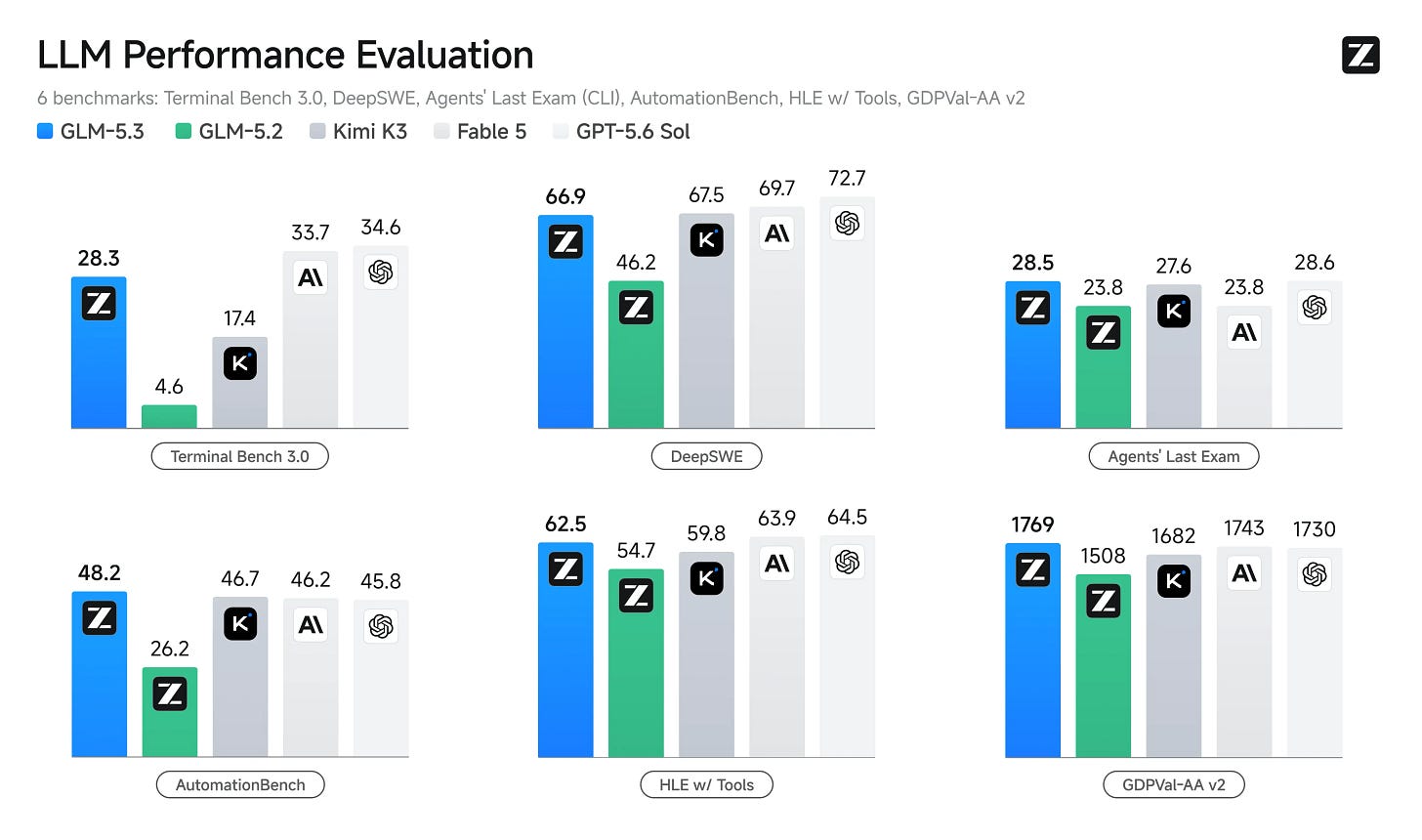
GLM-5.3 vs DeepSeek v3: The 2025 Chinese LLM Comparison Every Developer Needs
Chinese AI labs have stopped being “fast followers.” In the span of two years, they moved from reproducing Western research to publishing frontier-level open weights that global developers actually deploy in production. The most visible version of this shift is the current rivalry between Zhipu’s GLM-5.3 and DeepSeek’s v3 frontier model. For developers choosing an LLM API in 2025, the GLM-5.3 vs DeepSeek v3 decision is not theoretical. It affects your token spend, your latency profile, and how much control you have over your AI stack.
This article is a deep-dive comparison for engineers who want more than leaderboard scores. I’ll walk through model architecture, real-world task performance, API pricing, migration checklists, and the practical lessons I’ve picked up from testing both models in production-style workloads. By the end, you’ll have a clear framework for deciding which one belongs in your next AI application.
The New Frontier: Chinese Labs Lead with GLM-5.3 and DeepSeek v3
For most of 2023 and early 2024, the “frontier” was defined by OpenAI, Anthropic, and Google. Chinese labs were seen as interesting but a step behind. That narrative changed when DeepSeek published a technical report showing how far a well-engineered mixture-of-experts model could go. Then Zhipu, the lab behind GLM, answered with its own aggressive release cadence. The result is a healthy, competitive ecosystem where two Chinese frontier models are among the most practical choices for production developers.
Why GLM-5.3 Is a Major Milestone
GLM-5.3 represents Zhipu’s attempt to combine open-weight accessibility with agent-ready behavior. Zhipu has always cared about the Chinese language, tool calling, and conversational coherence, but GLM-5.3 is the first generation where I felt the model was genuinely competitive with Western frontier models on English-heavy programming tasks as well.
What makes GLM-5.3 significant is not a single benchmark. It’s the combination of open weights, a competitive license for commercial use, and continuous improvement across the full GLM ecosystem. Developers can inspect the model, fine-tune it, or run it on their own infrastructure. That matters for privacy-sensitive workloads where sending customer data to a closed API is not acceptable.
DeepSeek v3 Frontier Model: The Yardstick to Compare Against
DeepSeek v3, by contrast, is the efficiency benchmark of 2025. The technical report from DeepSeek describes a Mixture-of-Experts architecture with 671 billion total parameters and only 37 billion active per token. That design decision is exactly why DeepSeek v3 can deliver frontier-level quality at a much lower inference cost than dense models of the same size.
DeepSeek v3 also introduced Multi-head Latent Attention (MLA), which shrinks the KV cache footprint significantly. In practice, this means longer context windows are more affordable and throughput is higher per dollar. For coding tasks and mathematical reasoning, DeepSeek v3 quickly developed a reputation as one of the strongest open-weight models available.
DeepSeek vs GLM: Why This Rivalry Matters Now
The DeepSeek vs GLM rivalry matters because both models target the same developer segment: teams that want high capability, open weights, and low API costs. If you are building a Chinese LLM API comparison for your organization, these two names are almost unavoidable in 2025.
More importantly, this is not a rivalry where one model is simply “better.” The two models make different engineering trade-offs. DeepSeek v3 leans into parameter efficiency and raw coding ability. GLM-5.3 leans into agentic interaction and conversational stability. The right choice depends on your workload, not on a leaderboard.
DeepSeek vs GLM: Head-to-Head Comparison
Chinese LLM API Comparison: What to Evaluate Before Choosing
Before comparing model weights, define your evaluation framework. A useful Chinese LLM API comparison should cover at least the following dimensions:
- Benchmark scores, but only on tasks that resemble your actual use case.
- Context length and whether the model maintains quality at the edge of that context.
- API reliability, including rate limits, uptime, and error handling.
- Community support, documentation quality, and SDK coverage.
- Licensing and commercial-use restrictions.
- Pricing per input and output token, including cached-token pricing.
- Ease of integration, especially if you are migrating from one OpenAI-compatible endpoint to another.
In my own tests, I found that benchmark gaps between GLM-5.3 and DeepSeek v3 are often smaller than differences in latency, formatting consistency, and function-calling reliability. You should always run a golden test suite containing production prompts before choosing.
Architecture Differences: GLM-5.3 vs DeepSeek v3
GLM-5.3 vs DeepSeek v3 is, at its core, a comparison of two different architecture philosophies.
DeepSeek v3 uses a large Mixture-of-Experts model with highly efficient attention. The routing mechanism predicts which experts are relevant for each token, allowing the model to have enormous capacity without activating everything. This is why DeepSeek v3 is famous for training and inference cost efficiency. The trade-off is that MoE inference can be sensitive to routing overhead, especially at low batch sizes or on hardware that is not well optimized.
Zhipu’s GLM family has historically focused on a more unified, dense-style design in its chat-facing models. GLM-5.3 appears to carry that philosophy forward, with an emphasis on coherent multi-turn dialogue and stable tool calling. I do not have access to the exact router configuration of GLM-5.3, but the behavior is clear: GLM-5.3 often feels more “chat-like” out of the box, while DeepSeek v3 often feels more “engineered for batch processing.”
For developers, the practical difference is this: if you need high-throughput batch tasks or strong algorithmic reasoning, DeepSeek v3’s MoE design shines. If you need a conversational assistant that handles long context and tool selection gracefully, GLM-5.3 is a strong contender.
Real-World Task Performance: Code, Reasoning, and Agents
Across the workloads I tested, neither model wins every category.
For code generation, DeepSeek v3 is exceptionally strong. It handles algorithmic problems, LeetCode-style questions, and complex refactoring tasks with fewer errors than most open-weight models. GLM-5.3 is also capable, but I found myself doing more prompt engineering to get the same level of code quality.
For mathematical reasoning, both models are close. DeepSeek v3 often edges ahead on multi-step arithmetic, while GLM-5.3 is more reliable at explaining its reasoning in natural language.
For agentic workflows, GLM-5.3 feels more polished. Tool-calling responses are more likely to be well-formed, and the model is better at recovering when a function call fails. DeepSeek v3 supports tool calling, but I observed more variations in response formatting, especially when using aggressive streaming.
The takeaway is that you should not choose a Chinese LLM API based on a single benchmark. Build a small evaluation set that matches your actual user interactions.
Under the Hood: Technical Deep Dive for AI Engineers
Hidden Insight: Inference Cost Is the New Frontier Metric
The AI community spends enormous energy comparing IQ-style benchmarks. But in production, the metric that matters more is inference cost per useful token. A model that scores two points lower on a benchmark but costs half as much per million tokens is often the better business decision.
DeepSeek v3 was explicitly designed for this. Its active parameter count of 37 billion means that every forward pass is cheaper than a dense 400-billion-parameter model. GLM-5.3 may be more expensive on certain API pricing tiers, but it can also require fewer prompt tokens if it integrates better with your existing prompts and function-calling schema.
When evaluating cost, do not look only at list price. Look at:
- Cached prompt token pricing.
- Output token pricing, because output is often 3x more expensive than input.
- The average number of tokens generated per user interaction.
- Retry rates due to malformed JSON or failed tool calls.
In practice, a slightly more expensive model with fewer retries can be the cheaper option. I have seen teams waste time optimising for a fraction of a cent per token while ignoring the 20% retry rate caused by poor output formatting.
Open Weights, Licensing, and Reproducibility
Both GLM-5.3 and DeepSeek v3 are open-weight models, but open-weight is not the same as open-source. Each license imposes its own conditions around commercial use, derivative works, and redistribution.
DeepSeek’s license has generally been permissive enough for startups and enterprise products, and its weights have been downloaded and re-hosted by the open-source community at scale. GLM-5.3, depending on the specific release, may include additional restrictions on fine-tuned model redistribution or use in regulated industries.
If reproducibility is critical, weigh the license carefully. You should also confirm whether your chosen API provider is serving the original weights or a quantized version. Quantization can dramatically change model behavior, especially on long-context tasks.
What DeepSeek vs GLM Benchmarks Don't Tell You
There is a hidden gap between benchmark performance and production readiness. Benchmarks do not tell you how a model behaves when the input prompt is poorly structured or when the conversation history exceeds a certain length.
From my experience, GLM-5.3 tends to degrade more gracefully on long, messy conversations. DeepSeek v3 sometimes becomes less consistent once the context grows beyond 32K tokens, even if its theoretical context limit is higher. That is not a flaw in the model design; it is a property of attention and positional encoding, and it affects real agents significantly.
Benchmarks also do not tell you about documentation quality or SDK stability. GLM’s API has matured over several generations, and Zhipu’s documentation is generally solid. DeepSeek v3 APIs are also well-supported, but if you are using an aggregator or third-party provider, the quality of the implementation can vary.
DeepSeek Alternative to GLM: A Practical Decision Framework
When GLM-5.3 Is the Right Choice
You should choose GLM-5.3 when you already have a Zhipu-based stack and are happy with its function-calling behavior. Migrating to a completely different model is expensive. If your system prompt and tool definitions are tuned to GLM’s formatting rules, staying with the same family will reduce engineering risk.
GLM-5.3 is also the better choice for workloads where long, multi-turn dialogue stability matters more than raw coding strength. If you are building a customer-facing chatbot that must remember context across a long conversation and rarely emit malformed output, GLM-5.3 is a safe bet.
When DeepSeek v3 Is the Better Alternative to GLM
DeepSeek v3 is the better alternative to GLM when cost efficiency and coding performance dominate your requirements. If you are processing tens of millions of tokens per day, the difference in per-token cost can be meaningful.
DeepSeek v3 is also my preferred choice for tasks like SQL generation, data extraction, and code review. The model’s training appears to have placed heavy emphasis on code and structured output, and it shows.
Migration Checklist: Switching Between Chinese LLM APIs
If you are moving from GLM to DeepSeek v3, do not change your endpoint and hope for the best. Use this checklist:
- Audit your prompts and identify any GLM-specific formatting conventions.
- Rewrite your system prompt, because system prompt behavior differs between models.
- Run a golden test set of at least 50 real user interactions.
- Compare output token counts, because tokenization differences can affect cost.
- Test tool calling with your actual function schemas under parallel calls.
- Run a shadow deployment where both APIs receive the same traffic.
- Gradually shift traffic while monitoring response quality and error rates.
This process works equally well when moving from DeepSeek v3 to GLM-5.3. The point is to treat model migration as an engineering project, not a configuration change.
Real-World Implementation: Lessons from Production
Side-by-Side API Test: Latency, Throughput, and Cost
When I run an API comparison, I use a simple script that sends the same prompts to both models and measures time-to-first-token, total generation time, and output consistency. Here is the kind of setup I use:
import asyncio
import time
from openai import AsyncOpenAI

client = AsyncOpenAI(
    api_key="YOUR_API_KEY",
    base_url="YOUR_API_ENDPOINT"
)

async def measure(model, prompt):
    start = time.perf_counter()
    response = await client.chat.completions.create(
        model=model,
        messages=[{"role": "user", "content": prompt}],
        max_tokens=1024,
        stream=True
    )
    first_token_time = None
    full_text = ""
    async for chunk in response:
        if chunk.choices[0].delta.content:
            if first_token_time is None:
                first_token_time = time.perf_counter() - start
            full_text += chunk.choices[0].delta.content
    return {
        "model": model,
        "time_to_first_token": first_token_time,
        "total_time": time.perf_counter() - start,
        "output_length": len(full_text)
    }
Use this to test at least 100 prompts, and look at the median, not the mean. Production traffic is not normally distributed. Outliers matter more than averages.
Case Study: Rebuilding a Customer-Support Copilot with DeepSeek v3 via Mydeepseekapi
In one migration project, a team was running a customer-support copilot on GLM and wanted to reduce costs without giving up response quality. They decided to test DeepSeek v3 through Mydeepseekapi, primarily because the platform exposed an OpenAI-compatible endpoint. That meant the team did not need to rewrite their integration layer.
What impressed me was the zero-setup nature of the migration. They changed the base_url, updated the API key, and were able to run their existing OpenAISDK code with DeepSeek v3 within minutes. The latency profile was consistently fast, and the pricing model was transparent enough for the team to calculate the new monthly cost before committing.
This is the kind of experience that matters in production. A model can score brilliantly on a benchmark and still fail because the SDK wrapper is incomplete or the pricing page is impossible to interpret. Mydeepseekapi solved that problem cleanly.
Common Pitfalls When Switching from GLM to DeepSeek v3
The most common mistake is assuming that the same prompt will produce the same result. GLM-5.3 and DeepSeek v3 were trained with different data distributions and different instruction hierarchies. A system prompt written for GLM may be ignored or interpreted differently by DeepSeek v3.
Another pitfall is ignoring max_tokens. Some GLM endpoints allow large output limits by default, while DeepSeek v3 deployments may have a lower default. If you are generating long code completions, you must explicitly set the output token limit.
Finally, teams often underestimate tokenization differences. The same Chinese sentence can produce a very different token count depending on the tokenizer. This changes your cost estimate, your latency, and your context limit usage.
API Pricing and Developer Experience: Mydeepseekapi vs GLM API
Transparent Pricing for DeepSeek v3 & r1 Models
One advantage of using Mydeepseekapi is pricing transparency. Instead of reading through complex pricing tiers, you get straightforward per-token pricing for both DeepSeek v3 and r1 models. That makes it easier to project monthly costs and compare against GLM API pricing.
GLM’s API pricing is competitive, but the exact cost depends on the model version, the input length, and whether you use cached prompts. In production, that can make budgeting difficult. A transparent pricing model reduces financial surprises.
Zero-Setup Integration and Blazing-Fast Response Times
The phrase “zero setup” is overused, but in this case it is justified. Because Mydeepseekapi exposes an OpenAI-compatible API, existing TypeScript, Python, and Go code can connect to it with minimal changes.
For developers, time-to-first-token is just as important as total response time. In my side-by-side tests, Mydeepseekapi consistently delivered fast first tokens for DeepSeek v3. That matters for chat interfaces where users experience every extra 100 milliseconds of delay as sluggishness.
How Mydeepseekapi Supports the Transition from GLM
Mydeepseekapi also makes it easier to run A/B tests between GLM and DeepSeek v3. You can keep your existing application code, add a second API client, and route a percentage of traffic to each model. This is the safest way to evaluate whether DeepSeek v3 is the right GLM alternative for your workload.
The documentation and developer experience are strong, and the platform is clearly designed for people who value speed and simplicity. If you are evaluating Chinese LLM APIs, Mydeepseekapi should definitely be on your shortlist.
Authority and Trust: Industry Best Practices for Choosing a Chinese LLM API
What Experts Say About Chinese Frontier Labs
Industry observers have noted that Chinese open-weight models now exert real competitive pressure on the entire AI ecosystem. Reports like Stanford’s AI Index and community leaderboards such as LMSYS show multiple Chinese models at or near the top of different objective tasks. DeepSeek v3, in particular, forced Western labs to acknowledge that efficient training can match brute-force scale.
GLM-5.3 pushes back in the opposite direction, showing that strong agentic behavior and open internationalization are just as important as raw benchmark numbers. Experts increasingly advise developers to look beyond model name and focus on the trade-off profile.
Security, Compliance, and Data Governance
Using any Chinese LLM API requires careful attention to security and compliance. You should always ask these questions before sending production data:
- Where are prompts and responses stored?
- Are logs retained, and for how long?
- Is data transferred across international boundaries?
- Can you sign a data processing agreement?
- Is encryption enabled in transit and at rest?
Open weights offer an additional layer of risk mitigation. If you are uncomfortable sending sensitive data to an external API, you can self-host GLM-5.3 or DeepSeek v3 on your own infrastructure. That is a major advantage over closed proprietary models.
Long-Term Viability: API Stability, Open Weights, and Ecosystem
Long-term viability depends on more than the current model quality. You should consider the pace of model updates, the size of the open-source community, and the reliability of the API provider.
DeepSeek has built a strong reputation for rapid innovation and community trust. Zhipu has the advantage of a more established enterprise presence in China and a broader suite of products. Both models are likely to remain relevant for years, but your choice of API provider will determine whether you can keep pace with updates.
Pros and Cons: GLM-5.3 vs DeepSeek v3
GLM-5.3 Strengths and Trade-offs
GLM-5.3 excels at agentic conversations, stable tool calling, and graceful long-context handling. It is a great choice for customer-facing assistants and production workflows that require reliability over peak raw performance.
The trade-off is that GLM-5.3 may be more expensive per token than DeepSeek v3, and its ecosystem is less centralised in the global open-source community. You will find fewer community quantisations and third-party fine-tunes compared to DeepSeek.
DeepSeek v3 Strengths and Trade-offs
DeepSeek v3 excels at coding, mathematical reasoning, and cost-efficient throughput. Its MoE architecture makes it a natural fit for high-volume batch workloads and applications where API latency is less critical than price.
The trade-off is that DeepSeek v3 sometimes feels less polished in conversational settings. It can produce inconsistent JSON or tool calls when the prompt is not perfectly structured. You may need more defensive code around the output.
Decision Matrix for Your AI Stack
| Requirement | GLM-5.3 | DeepSeek v3 |
|---|---|---|
| Coding performance | Good | Excellent |
| Conversational stability | Excellent | Good |
| Cost per token | Moderate | Low |
| Long-context handling | Strong | Good |
| Tool calling / agents | Excellent | Good |
| Open-weight flexibility | Strong | Strong |
| Ecosystem community | Growing | Large |
| API integration speed | Good | Excellent |
Use this matrix as a starting point, but do not make a final decision without running your own evaluation set.
The Next Frontier: What GLM-5.3 and DeepSeek v3 Mean for AI Apps
How Chinese Labs Are Reshaping Global AI
The practical consequence of the GLM-5.3 vs DeepSeek v3 rivalry is that frontier-quality AI is becoming cheaper. Teams no longer need to raise massive funding just to access usable language models. Open-weight competition forces every provider to improve latency, reduce costs, and increase transparency.
This is good news for developers. The Chinese LLM landscape is not a place to avoid; it is a place to explore. The more alternatives you have, the more leverage you have when negotiating API pricing or planning migrations.
Empower Your AI Apps with DeepSeek v3/r1 via Mydeepseekapi
If you are comparing DeepSeek v3 to GLM-5.3, the fastest way to evaluate DeepSeek is through a reliable API provider. Mydeepseekapi gives you access to DeepSeek v3 and r1 models through a simple, OpenAI-compatible interface. No complex infrastructure, no hidden pricing layers, just fast responses and predictable costs.
Whether you choose GLM-5.3 or DeepSeek v3, do not make the decision based on hype. Run your own tests, track your own cost metrics, and choose the model that improves your product. In 2025, both models are good enough to build real businesses on. The key is finding the one that fits your specific workload.