GLM-5.3: How Chinese labs keep stride with the frontier - Updated Guide
GLM-5.3 and the Rise of Frontier Chinese AI Labs The release of GLM-5.3 from Zhipu AI adds another major reference point to the fast-moving world of
GLM-5.3 and the Rise of Frontier Chinese AI Labs
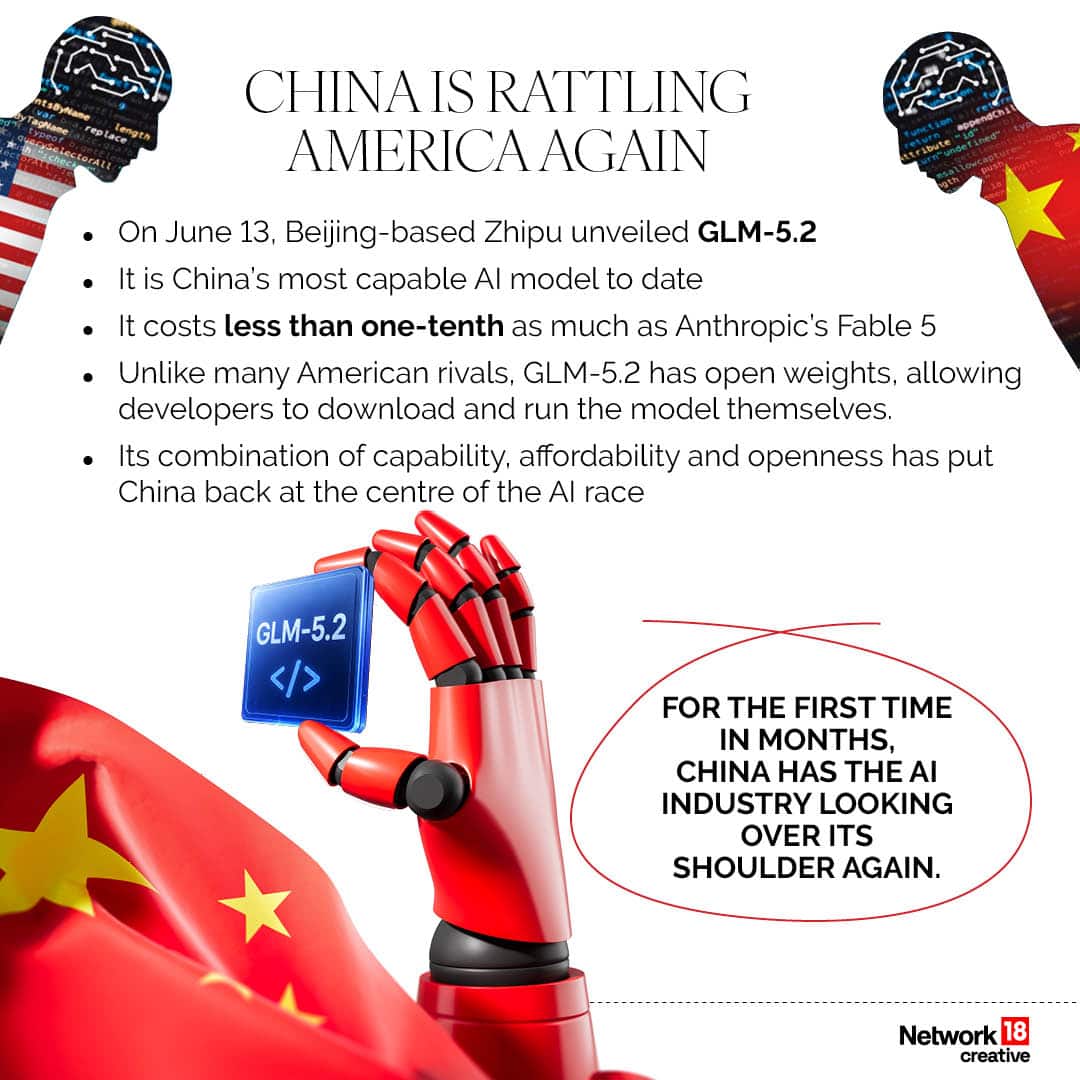
The release of GLM-5.3 from Zhipu AI adds another major reference point to the fast-moving world of frontier Chinese AI labs. On the surface, the launch looks like a standard model update: new weights, new benchmark numbers, another headline. But for developers and engineering teams, the more important story is broader. Chinese AI model APIs have matured to a point where choosing between GLM and DeepSeek is an engineering decision, not just a leaderboard decision.
This deep-dive gives you a practical look at GLM-5.3, compares it with the DeepSeek API, and walks through when GLM-5.3 makes sense as a DeepSeek alternative. The goal is to help you evaluate these models for real workloads, not hypothetical benchmark runs.
Why GLM-5.3 Matters Now

The timing of GLM-5.3 matters because it shows that Zhipu is not slowing down. The company has been shipping updates across its GLM family, and GLM-5.3 is positioned as a frontier-level generalist model with particular strengths in long-context understanding and tool use. It enters a competitive landscape already shaped by DeepSeek, Alibaba’s Qwen, Moonshot, and other ambitious labs.
There is a hidden insight here that often gets lost in benchmark coverage: for production teams, API stability and ecosystem compatibility often matter more than raw benchmark wins. A model that is 2% better on a reasoning benchmark but has flaky endpoints, confusing rate limits, or poor SDK support will slow you down. GLM-5.3 is worth watching not only because of what Zhipu claims about model quality, but because the API experience around it has become more serious.
When you evaluate frontier Chinese AI labs, you need to separate the model from the platform. GLM-5.3 may bring strong capabilities, but your real question should be: can I integrate this into my stack without unnecessary pain? That is the lens we will use throughout this article.
The Chinese AI Model Landscape Before GLM-5.3

Before GLM-5.3, the Chinese AI model landscape was already crowded. DeepSeek drew global attention with open-weight models and low API prices. Qwen became a popular open-source choice for enterprise teams. Moonshot built a reputation around long-context processing. Zhipu, with its GLM series, has been a consistent competitor, especially in the Chinese market and increasingly for international developers.
What changed with GLM-5.3 is the perception of Zhipu as a serious option for global developers. The new model is part of a wave of Chinese AI model APIs that now offer OpenAI-compatible endpoints, solid documentation, and practical features like function calling and streaming. In other words, Chinese labs are no longer just releasing impressive research artifacts. They are building developer platforms.
That shift matters because it gives you more choice. You no longer have to pick between “frontier model” and “usable API.” DeepSeek proved that open weights and low-cost inference could be combined with a clean developer experience. GLM-5.3 signals that Zhipu wants the same credibility.
GLM vs DeepSeek: A DeepSeek API Comparison

If you are evaluating LLM providers today, the comparison between GLM-5.3 and DeepSeek is one of the most practical discussions you can have. Both are strong, both offer competitive APIs, and both have distinct trade-offs. The rest of this section is a DeepSeek API comparison from a developer’s perspective.
Model Architecture: GLM-5.3 vs DeepSeek v3 and R1
DeepSeek v3 is a Mixture-of-Experts model designed with inference cost and efficiency in mind. It gives you solid general-purpose performance at a very competitive price. DeepSeek R1, on the other hand, is a reasoning-focused model that uses reinforcement learning to generate longer chain-of-thought responses, which makes it particularly strong for math, logic, and complex problem-solving.
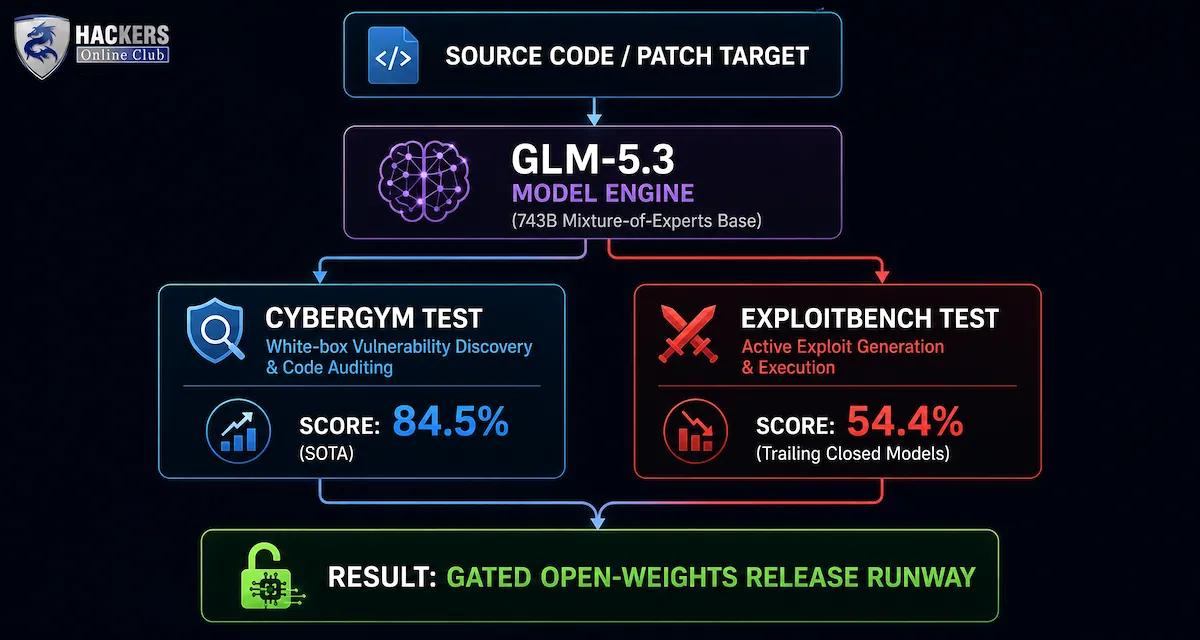
GLM-5.3 follows a different design philosophy. Zhipu positions it as a generalist frontier model that balances reasoning, code generation, and long-context understanding. While DeepSeek separates “chat” and “reasoner” workflows, GLM-5.3 aims to handle both in a single model. In practice, that can simplify integration because you don’t need to route between different model flavors for different task types.
For technical decision-makers, the architecture details matter less than the practical consequences. DeepSeek gives you a clear high-volume path with v3 and a high-reasoning path with R1. GLM-5.3 gives you a broader single model that may reduce workflow complexity.
API Compatibility and Developer Experience
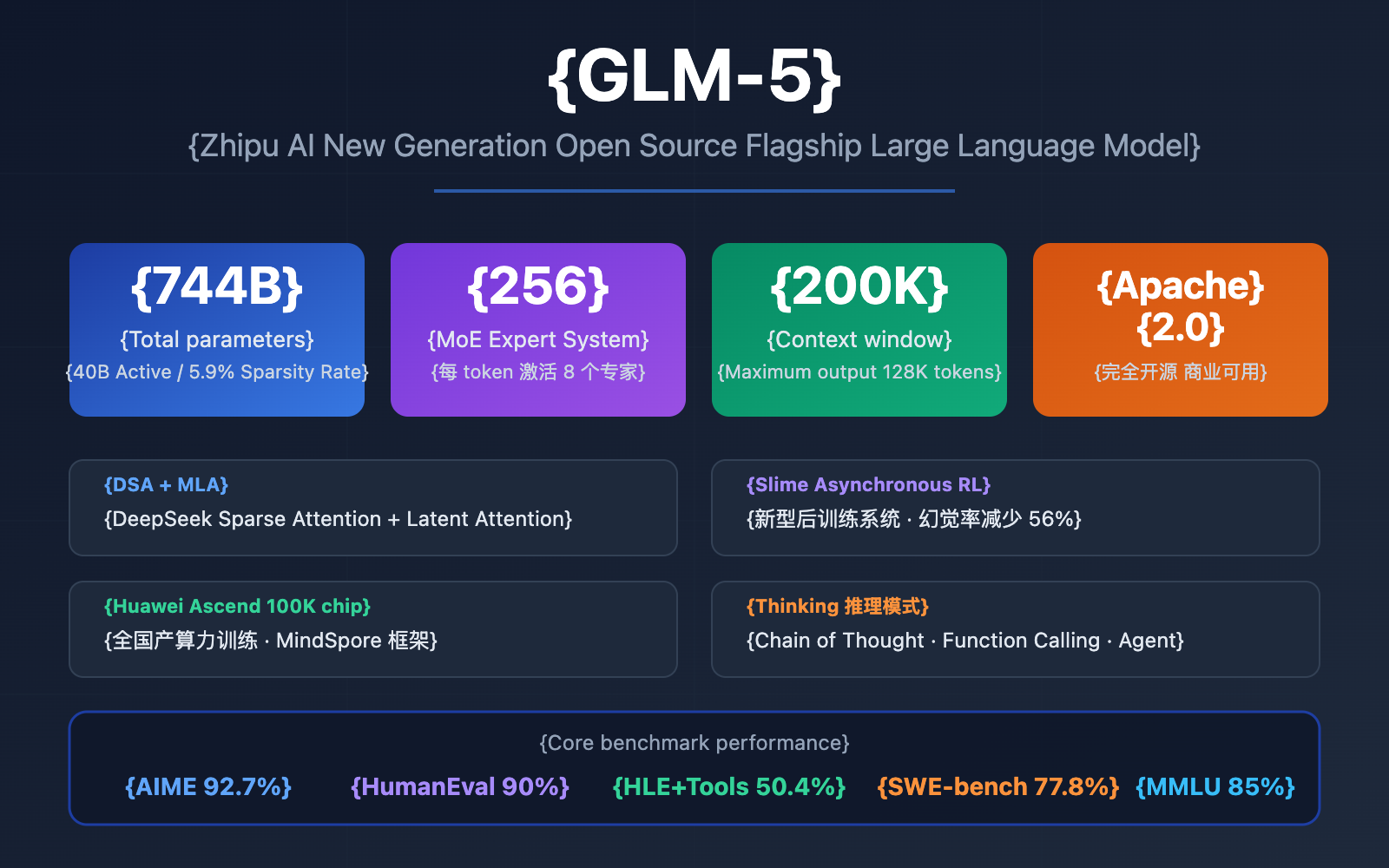
Both DeepSeek and GLM expose API interfaces that are compatible with the OpenAI SDK. That is a huge advantage. If your application already talks to OpenAI, you can switch to the official DeepSeek API documentation or to a GLM endpoint by changing the base URL and API key.
The OpenAI SDK works with both providers, which means you can prototype quickly without writing a new client. In practice, this is one of the strongest arguments for taking Chinese AI model APIs seriously. The compatibility layer reduces migration friction and allows multi-model workflows.
There are still differences. DeepSeek’s documentation is well organized and includes clear pricing tables. Zhipu’s Z.ai documentation is improving, but it can feel less polished if you are coming from Western provider ecosystems. Rate limits, model naming conventions, and retry behavior also differ. When implementing, don’t assume that settings that worked for one API will transfer perfectly to the other.
Benchmark Report: Reasoning, Code, and Multilingual Tasks
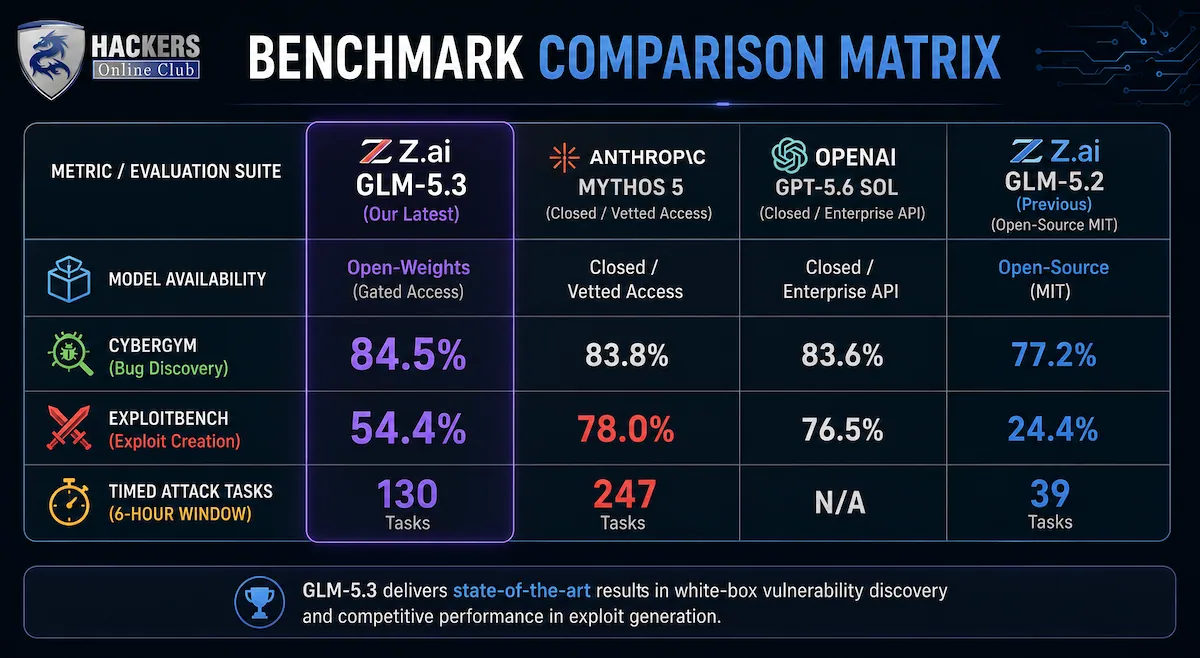
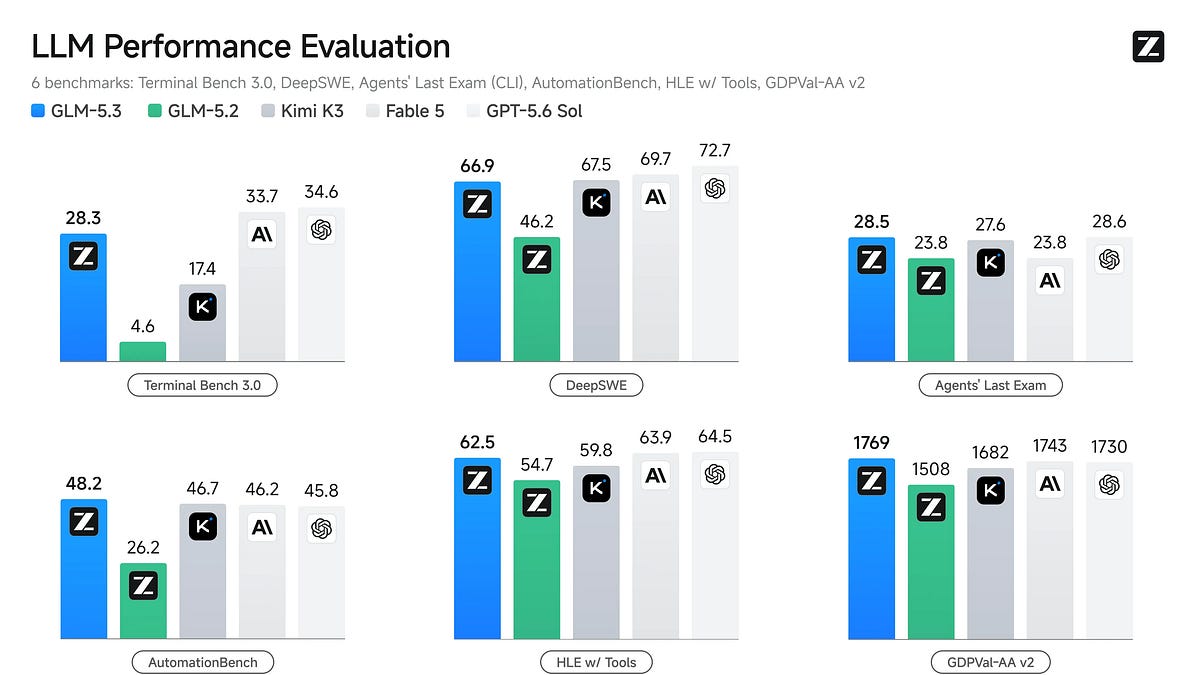
Benchmarks from official reports and independent trackers show that both models are highly competitive. DeepSeek’s R1 remains a reference point for reasoning-heavy benchmarks, while DeepSeek v3 is a cost-efficient workhorse. GLM-5.3 is strong in areas like code generation, mathematical reasoning, and multilingual tasks, which makes sense given Zhipu’s focus on building models for global and Chinese-language users.
Sites like Artificial Analysis aggregate model quality and speed measurements across many providers. They are useful for getting a rough sense of the landscape. But the best benchmark is your own workload. A model that scores well on a public benchmark can still fail on your documents, your prompt patterns, or your required output format.
When comparing GLM-5.3 and DeepSeek, build an evaluation set with representative tasks from your product. Test for exact output schema, tone, and edge cases. That will tell you more than any leaderboard.
GLM-5.3 as a DeepSeek Alternative: Where It Makes Sense
For many teams, the practical question is not “which model is better?” but “when should I consider GLM-5.3 as a DeepSeek alternative?” Let’s look at concrete scenarios.
Use Cases That Favor GLM-5.3
GLM-5.3 is a good candidate when your workload depends on long-context comprehension. If you are processing multi-hundred-page documents, building retrieval pipelines over large text chunks, or analyzing long conversation histories, GLM-5.3’s architecture and context handling may give you better results than a general-purpose model like DeepSeek v3.
Another area is complex agentic workflows. GLM-5.3 is designed with tool use in mind. Function calling, structured outputs, and multi-step tool selection feel more integrated compared to models that treat tool use as an afterthought. If you are building agents that need to call external APIs, interact with databases, or make decisions across several steps, GLM-5.3 is worth testing.
Multilingual retrieval is another sweet spot. Zhipu has invested heavily in Chinese and English performance, and GLM-5.3 handles code-switching and multilingual queries well. For applications serving diverse language markets, that can be a meaningful advantage.
Where DeepSeek Still Leads
DeepSeek still has several important advantages. The first is open weights. DeepSeek v3 and R1 are available for self-hosting, and the community around them is large and active. If you want to run models on your own infrastructure, DeepSeek is often the safer choice.
The second advantage is cost efficiency. DeepSeek v3, through the official API, is known for competitive pricing and good latency for high-volume tasks. If your application is simple classification, summarization, or basic chat, DeepSeek will often be the more economical default.
The third advantage is R1’s specialized reasoning strength. For hard math, logic, and coding problems where you need deeper deliberation, DeepSeek R1 remains a strong option. You can also see the model’s reasoning process, which is useful for debugging.
Should You Switch From DeepSeek to GLM-5.3?
The honest answer is: not automatically. You should not switch from DeepSeek to GLM-5.3 based on a single benchmark result. Instead, use a decision framework.
Keep DeepSeek if you have a stable workload that already performs well, especially if you are latency-sensitive or cost-sensitive. Evaluate GLM-5.3 if you are hitting limits with context length, tool use, or multilingual quality. Run both in parallel if your application mixes simple high-volume tasks with complex reasoning or retrieval tasks.
The best approach is to start with a small pilot project. Pick one non-critical feature, route it to GLM-5.3, and compare the output quality, latency, and cost against DeepSeek. Then make the migration decision with real data.
Inside GLM-5.3: Technical Deep Dive
To understand why GLM-5.3 matters, it helps to look at what the model does well under the hood.
Context Window and Long-Context Engineering
GLM-5.3 continues Zhipu’s focus on long-context processing. The model is built to handle inputs that go far beyond typical chat use cases. In practical terms, this means you can feed it large chunks of source material, legal documents, technical reports, or entire conversation logs without immediately losing coherence.
Long-context engineering also affects retrieval-augmented generation. If your RAG pipeline relies on multiple retrieved passages, a model with strong long-context handling can process more context at once and reduce the need for aggressive chunking. That can lead to better answers and simpler pipeline architecture.
Tool Use, Function Calling, and Agentic Workflows
GLM-5.3 treats tool use as a first-class capability. It is designed to follow structured output schemas, call functions with the correct arguments, and maintain state across multiple tool interactions. This is important for agentic workflows, where the model must decide which tool to use, parse responses, and adjust its plan.
In practice, this reduces the amount of prompt engineering you need. You can define functions and let the model choose the right one. The model also handles malformed tool outputs more gracefully, which is a common pain point when building agents with older models.
What Makes GLM-5.3 a Frontier Model
Calling a model “frontier” is often marketing, but in GLM-5.3’s case the claim reflects real investment in training efficiency, data quality, and post-training alignment. Zhipu has focused on making the model not just strong at answering questions, but also reliable at following instructions and producing consistent output formats.
The broader frontier Chinese AI labs story is about reaching near-OpenAI-level quality with smaller budgets and different technical strategies. GLM-5.3 shows that Chinese labs can offer serious competition, especially when you consider the pace of release cycles and the willingness to iterate quickly based on community feedback.
Hands-On With Chinese AI Model APIs
Working with Chinese AI model APIs is not much different from working with Western providers, but there are a few important details to understand.
Integration Requirements for Modern Chinese AI APIs
Most Chinese AI model APIs require you to create an account, generate an API key, and pick a model name. You then send HTTP requests to a base URL. The easiest path is to use OpenAI-compatible clients because they are already familiar and well documented.
You also need to be aware of rate limits and response formats. Some providers enforce strict concurrency limits, while others are more flexible. Before building in production, check the documentation for token limits, timeout behavior, and error message formats.
Building Multi-Model Workflows: GLM-5.3 and DeepSeek
You do not have to choose one model. A common pattern is to route simple requests to DeepSeek and complex requests to GLM-5.3. Here is a minimal example using the OpenAI SDK:
import os
from openai import OpenAI

deepseek = OpenAI(
    api_key=os.environ.get("DEEPSEEK_API_KEY"),
    base_url="https://api.deepseek.com",
)

glm = OpenAI(
    api_key=os.environ.get("GLM_API_KEY"),
    base_url="https://open.bigmodel.cn/api/paas/v4",
)

def route_request(prompt, task="simple"):
    if task == "reasoning":
        client = deepseek
        model = "deepseek-reasoner"
    elif task == "long_context":
        client = glm
        model = "glm-5.3"
    else:
        client = deepseek
        model = "deepseek-chat"

    response = client.chat.completions.create(
        model=model,
        messages=[{"role": "user", "content": prompt}],
        stream=True,
    )
    return response
This approach gives you flexibility. Simple classification and extraction tasks go to DeepSeek for lower cost. Long-context analysis or complex tool-use tasks go to GLM-5.3. Later, if one model improves, you can change the routing logic without rebuilding your application.
Using Mydeepseekapi for Seamless DeepSeek v3/r1 Integration
If you decide that DeepSeek is the right fit for your project, you do not need to deal with infrastructure complexity. Mydeepseekapi simplifies DeepSeek v3 and R1 integration by providing OpenAI-compatible endpoints, blazing-fast response times, transparent pricing, and zero setup hassle.
That means you can start calling DeepSeek v3 and R1 with the same SDK you already use. You focus on application logic instead of managing servers, proxies, or API gateways. For teams that want to move quickly, Mydeepseekapi is a practical way to get DeepSeek into production with minimal friction.
Real-World Implementation: Lessons From Production Deployments
Theory is useful, but production always teaches you something different. Here are lessons from real deployments involving GLM-5.3 and DeepSeek.
Case Study: Moving an Application Between GLM-5.3 and DeepSeek
Consider a customer support application that needs to summarize long email threads and extract structured action items. The first version used DeepSeek v3 because it was cheap and fast. It worked well for short threads, but when emails exceeded several thousand tokens, the summaries became less structured and the model sometimes missed key decisions.
The team tested GLM-5.3 on the same workload. The improvement was visible: the model kept the original thread context better and produced more consistent JSON output. However, the cost per request was higher. Instead of migrating the entire application, the team routed long threads to GLM-5.3 and kept short threads on DeepSeek v3. The result was better quality without a major cost increase.
This is the most realistic migration pattern. You rarely need to switch everything at once. You evaluate, identify the workload segment that benefits from a different model, and adjust the routing.
Common Pitfalls With Chinese AI Model APIs
There are some consistent pitfalls to avoid when integrating Chinese AI model APIs:
- Token counting differences. The same text may be counted differently by different providers. Always test token usage on real inputs before estimating costs.
- Rate limit surprises. Some providers have lower default limits than expected. Check the documentation and plan for bursty traffic.
- Variable latency. DeepSeek R1 can be slow because reasoning takes time. GLM-5.3 may also show higher latency on long contexts. Build timeouts that are generous enough for the task.
- JSON formatting inconsistencies. Even when a model supports JSON mode, output can sometimes include extra characters. Use robust parsers and schema validation.
A common mistake is to assume that a provider’s response format is identical to another provider’s format. In practice, subtle differences can break your application. Always test against the actual API before production.
Monitoring Model Quality and API Costs
Once you have a multi-model pipeline, you need to monitor it continuously. Track cost-per-request, accuracy drift, timeout rates, and user-facing quality metrics. If you are using an LLM to classify or extract information, set up a small evaluation set that you run after every model update.
This is especially important when you use Chinese AI model APIs because release cycles are fast. A model that is available today may be deprecated tomorrow, or a new version may change behavior. If you have evaluation tests in place, you can adopt improvements safely.
Choosing Between GLM-5.3 and DeepSeek API for Your Next Project
At the end of the day, you need a decision. Here is a practical way to choose between GLM-5.3 and DeepSeek API for your next project.
Key Selection Criteria: Latency, Accuracy, Pricing, and Compliance
Start with latency. If your product needs instant responses, DeepSeek v3 is often the stronger choice because it is optimized for speed. If you need deep reasoning, DeepSeek R1 can be slow, so you need to manage user expectations.
Next, look at accuracy on your specific tasks. Build an evaluation set and measure both models. Do not rely on general impressions.
Pricing is another major factor. DeepSeek is known for low-cost API access. GLM-5.3 may be more expensive depending on the workload. Finally, think about compliance. Chinese AI model APIs may have data retention policies that differ from providers in other regions. Consider where your data is hosted and whether that match your legal requirements.
Pros and Cons of GLM-5.3 and DeepSeek
Here is a balanced comparison:
| Feature | GLM-5.3 | DeepSeek v3 / R1 |
|---|---|---|
| Strong in | Long context, tool use, multilingual | Cost-efficient general tasks, reasoning |
| Open weights | No | Yes, for v3 and R1 |
| API compatibility | OpenAI-compatible | OpenAI-compatible |
| Community size | Growing, smaller | Large and active |
| Documentation | Improving | Mature and detailed |
| Best for | Complex agents, long documents | High-volume production, self-hosting |
Both options have trade-offs. GLM-5.3 is not automatically better because it is newer. DeepSeek is not automatically better because it is cheaper. Your workload decides.
When DeepSeek Wins: Using Mydeepseekapi to Accelerate Delivery
For many projects, DeepSeek is still the most rational default. If you need strong reasoning, efficient inference, or open-weight flexibility, DeepSeek wins. When that is the case, Mydeepseekapi helps you move faster by removing the integration burden.
Mydeepseekapi supports both DeepSeek v3 and R1 models, giving you access to a unified API with transparent pricing and fast response times. You can go from a blank project to a working integration in minutes. That is valuable when you want to validate an idea or meet a tight deadline.
Industry Best Practices, Security, and the Future of Chinese AI Labs
The final part of this article looks at the bigger picture: security, official research, and what the future holds for frontier Chinese AI labs.
What Official Documentation and Benchmarks Say
The best way to evaluate DeepSeek is to read the source material. The DeepSeek v3 technical report explains the architecture and training choices. The DeepSeek R1 paper describes the reasoning training approach. These documents are open and detailed, which gives developers confidence in how the models work.
For GLM-5.3, the Z.ai documentation is the place to start. It includes API guides, model descriptions, and the latest updates. Third-party benchmark sites like Artificial Analysis also provide independent measurements of quality and speed. Use multiple sources, not just vendor claims.
Security and Data Governance for Chinese AI APIs
Enterprise teams should be careful before sending sensitive data to any third-party AI API, including Chinese AI model APIs. Review the provider’s data retention policy, privacy terms, and compliance certifications. Some providers may retain prompts and responses for training, while others offer zero-retention options.
The safe approach is to test models with non-sensitive data before any enterprise rollout. If you need to process personal data, make sure your use case is allowed under your own compliance framework. Data governance is not a reason to avoid Chinese AI APIs, but it is a reason to do due diligence.
The Future: GLM-5.3, DeepSeek, and Next-Generation Frontier Chinese AI Labs
GLM-5.3 is a strong signal that frontier Chinese AI labs will keep pushing forward. Zhipu, DeepSeek, and Alibaba’s Qwen team are all working on the next generation of models. The pace of improvement is remarkable, and each release raises the bar for API quality, open weights, and developer experience.
For developers, this is good news. More competition means better models, better pricing, and more choices. Platforms like Mydeepseekapi play a useful role in this ecosystem by making it easier to access a specific provider without building your own infrastructure.
Conclusion
GLM-5.3 is more than another model release. It is part of a broader shift in which frontier Chinese AI labs are competing on production readiness, API stability, and developer experience, not just benchmark scores. When you compare GLM-5.3 with DeepSeek, focus on your workload, not the hype.
DeepSeek remains an excellent default for many production API use cases, and Mydeepseekapi makes it easy to integrate DeepSeek v3 and R1 with no setup hassle. GLM-5.3 is a compelling DeepSeek alternative when you need long-context understanding, advanced tool use, or strong multilingual performance. The best strategy is to test both, measure what matters, and keep your model routing flexible. That way, when the next frontier model arrives, you are ready to adopt it without rewriting everything.