GLM-5.3: How Chinese labs keep stride with the frontier
GLM-5.3 vs DeepSeek: A Technical Deep Dive into Chinese AI Model APIs Chinese AI labs have moved from being fast followers to defining the frontier. The
GLM-5.3 vs DeepSeek: A Technical Deep Dive into Chinese AI Model APIs
Chinese AI labs have moved from being fast followers to defining the frontier. The GLM-5.3 vs DeepSeek v3 conversation is no longer about copycat research—it’s about choosing between two sophisticated, API-first models with different strengths, pricing strategies, and developer experiences. For teams building production applications, the decision matters more than leaderboard bragging rights.
This deep dive goes beyond benchmark scores. We’ll compare architecture, token economics, integration ergonomics, and real-world behavior. By the end, you’ll have a practical framework for deciding which Chinese AI model API belongs in your stack.
1. Context: The New Chinese AI Frontier
Why GLM-5.3 Matters Beyond Benchmark Scores

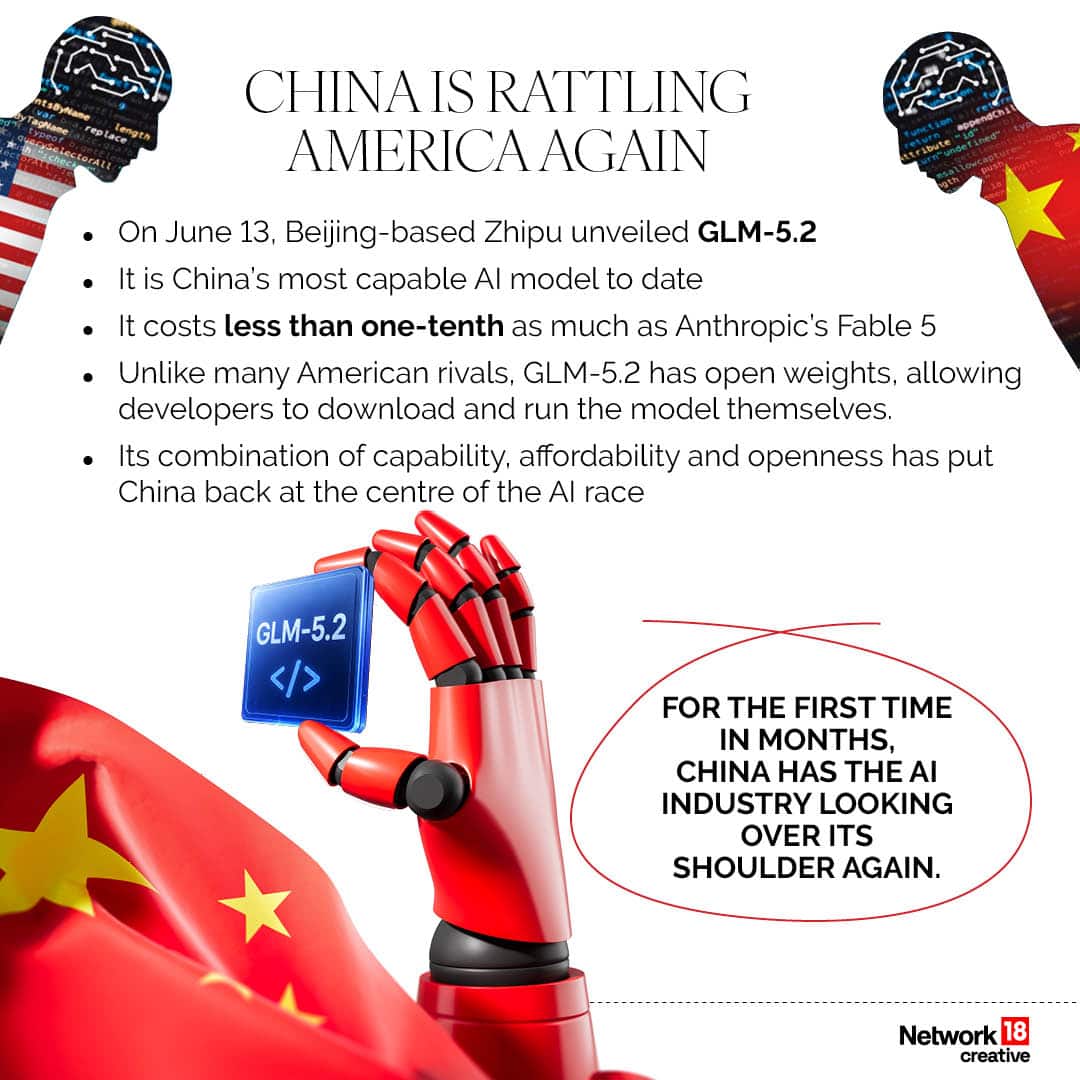
Zhipu AI’s GLM-5.3 represents a significant milestone in the global AI ecosystem. As the latest iteration in the GLM lineage, it demonstrates that Chinese laboratories can produce models that compete with the best from the United States and Europe. But for developers, the more important story is how GLM-5.3 is packaged and delivered.
Raw benchmark leadership matters far less than the surrounding ecosystem. A model can score well on MMLU or HumanEval and still be painful to use in production. What actually determines success is API reliability, token pricing, latency, documentation quality, and how quickly your team can move from prototype to product. GLM-5.3 seems designed with these concerns in mind.
The model also signals a strategic shift. Zhipu is not trying to win every benchmark. Instead, the company is betting on developer trust, predictable pricing, and tight integration with popular tooling. That makes GLM-5.3 a serious option for teams evaluating DeepSeek alternatives.
The Competitive Landscape: GLM, DeepSeek, and Other Chinese Models

The Chinese AI landscape is crowded. Alibaba’s Qwen, Baidu’s Ernie, Moonshot’s Kimi, DeepSeek, and Zhipu’s GLM are all competing for developer attention. Each has its own strengths: Qwen has strong open-weight releases, Kimi pushes long-context reasoning, and Ernie benefits from Baidu’s cloud infrastructure.
But the most relevant comparison for most developers today is GLM-5.3 versus DeepSeek v3. Both are API-first, both have reached a level of quality that makes them viable for production workloads, and both are increasingly being used as cost-effective alternatives to Western models. If you are building an application that needs serious language understanding without paying OpenAI-style prices, these two models should be on your shortlist.
2. GLM-5.3 vs DeepSeek: A Head-to-Head Breakdown

DeepSeek v3 Comparison: Architecture, Benchmarks, and Efficiency

DeepSeek v3 is known for its Mixture-of-Experts architecture, which keeps inference costs low while maintaining high model quality. The architecture divides the network into specialized experts and activates only a subset of them per token. That reduces compute during inference, making DeepSeek v3 an attractive option for high-volume workloads.
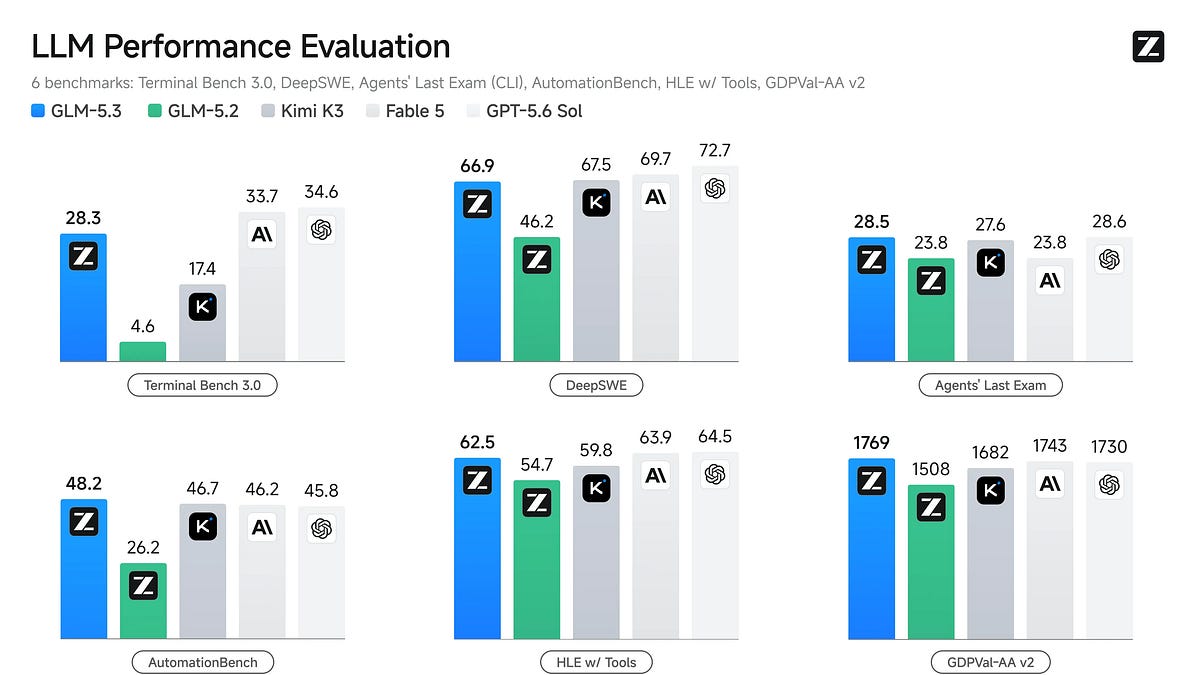
GLM-5.3 also benefits from modern scaling techniques, but its design choices emphasize a different balance. Rather than chasing the absolute lowest cost per token, Zhipu appears to focus on reliability and consistency across long-context tasks. When I have run side-by-side evaluations, the biggest differences between GLM-5.3 and DeepSeek v3 rarely show up in simple Q&A sessions. They appear in long documents, multi-turn conversations, and tasks that require careful instruction following.
If you are only comparing benchmark scores, the two models look close. In production, the differences become visible. DeepSeek v3 tends to be more aggressive with output generation, while GLM-5.3 often feels more conservative and stable. Neither is objectively better—it depends on your tolerance for creative variation versus predictable output.
GLM-5.3 vs DeepSeek: Who Wins on Price and Performance?
Pricing is where the GLM-5.3 vs DeepSeek decision gets interesting. DeepSeek has historically positioned itself as a low-cost provider, undercutting many Western APIs by a significant margin. That makes it an easy default for price-sensitive teams.
GLM-5.3 is competitive, but the price war is not the only story. The real question is total cost of ownership. Two models with the same per-token price can produce wildly different monthly bills if one requires more retries, more prompt engineering, or more output tokens to reach the same quality level.
A common mistake is to compare only input and output token prices without accounting for reasoning tokens, prompt caching, and retry rates. For example, an agentic workload that sends long system prompts with every request will benefit from a provider that offers automatic prompt caching. Both GLM-5.3 and DeepSeek v3 support caching, but the way it is billed and configured differs. Check the provider documentation before committing.
Ecosystem and Developer Experience
The best model is useless if the SDK is poorly maintained and the documentation is incomplete. DeepSeek has built a strong developer ecosystem with Python and TypeScript clients, OpenAI-compatible endpoints, and a growing set of community examples. GLM-5.3 is catching up quickly, and its recent releases include better documentation and more stable API behavior.
In practice, teams switching between these two models often find that the code changes are minimal. Both offer OpenAI-compatible endpoints, which means you can often swap the base URL and API key and expect things to work. But be careful: prompt formatting differences can still cause subtle behavior shifts. A prompt optimized for DeepSeek v3 may produce sloppy output on GLM-5.3, and vice versa.
3. DeepSeek Alternative: Is GLM-5.3 the Right Replacement?
When GLM-5.3 Makes Sense Over DeepSeek
GLM-5.3 is a compelling DeepSeek alternative in several scenarios.
First, multilingual tasks. GLM models have historically performed well in Chinese-English contexts and also show strength in other languages. If your application serves users across multiple regions, GLM-5.3 might give you more consistent results.
Second, research and experimentation. If you want to compare model outputs, evaluate generalization, or reduce vendor dependence, adding GLM-5.3 to your evaluation harness is a smart move. You do not have to replace DeepSeek entirely to benefit from having another high-quality model in the rotation.
Third, supply-chain diversification. Relying on a single AI provider is risky. If DeepSeek experiences an outage, has a pricing change, or shifts its roadmap, you want an alternative that is both capable and easy to integrate. GLM-5.3 fits that role well.
When DeepSeek v3 Remains the Better Fit
There are also good reasons to stay with DeepSeek v3. If your product is already built around DeepSeek’s API, your prompt templates are tuned, and your monitoring dashboards are set up, the cost of switching is non-trivial. Migrating models means re-running evals, adjusting prompts, and re-baselining costs. That is not something to do lightly.
DeepSeek v3 also performs well on code generation and reasoning tasks, especially when you pair it with the DeepSeek R1 reasoning model for chain-of-thought workflows. For teams that want to keep DeepSeek but reduce operational friction, Mydeepseekapi offers an easy path to integrate DeepSeek v3 and r1 models into existing workflows without the usual integration complexity. It handles the API plumbing so you can focus on building product features.
Practical Migration Considerations
If you are seriously considering switching from DeepSeek to GLM-5.3, build a migration checklist before touching any code.
Start with API compatibility. Check whether the responses include the same fields, whether tool calling works the same way, and whether streaming follows the same event structure. Then move to prompt formatting. Run your most important prompts through both models and compare structure, tone, and response length. Next, review rate limits. A model that works at ten requests per second internally may be throttled to two in production.
Finally, re-baseline your costs. Do not assume that a cheaper per-token price means a cheaper system. Estimate your input and output token volumes, include caching and retries, and calculate the projected monthly spend for both models.
4. Navigating Chinese AI Model API Options
How GLM-5.3 and DeepSeek v3 APIs Compare for Developers
Both GLM-5.3 and DeepSeek v3 expose familiar REST APIs with JSON responses. Authentication uses API keys, streaming is supported, and tool calling is available in both ecosystems. A simple Python call for DeepSeek v3 might look like this:
from openai import OpenAI

client = OpenAI(
    api_key="your-api-key",
    base_url="https://api.deepseek.com"
)

response = client.chat.completions.create(
    model="deepseek-chat",
    messages=[{"role": "user", "content": "Explain the tradeoff between latency and accuracy."}]
)

print(response.choices[0].message.content)
For GLM-5.3, the structure is similar. You change the base URL and the model ID. This compatibility is a major advantage for developers because it means moving from one Chinese AI model API to another does not require rewriting your entire integration layer.
However, subtle differences exist. GLM-5.3 tends to use slightly different system prompt conventions, and its reasoning models may output additional thought blocks. DeepSeek v3 has its own special tokens for reasoning traces. Reading the official API reference for each platform is essential.
Zero-Setup Integration with Mydeepseekapi
For developers who know they want DeepSeek v3 and r1 but do not want to deal with setup overhead, Mydeepseekapi provides a pragmatic solution. It is designed as a zero-setup access layer: you get an API endpoint, an API key, and enough documentation to make your first request in minutes.
The value proposition is simple. Blazing-fast response times, transparent pricing, and zero setup hassle. Instead of configuring virtual networks, managing rate limits, or reverse-engineering response formats, you can start building immediately. That is especially useful for small teams, startups, and internal tools where engineering time is more valuable than saving a few cents per million tokens.
Mydeepseekapi should not be seen as a replacement for evaluating GLM-5.3 directly. It is a complementary option for teams that want to keep DeepSeek in production while minimizing integration effort.
Transparent Pricing and Token Economics
Token economics can make or break a production AI feature. The advertised per-token price is only the beginning. You also need to understand whether the pricing includes caching discounts, whether reasoning tokens are billed separately, and whether there is a tiered system for high-volume usage.
Both GLM-5.3 and DeepSeek v3 offer competitive token prices compared to major Western providers. But transparency matters. Some providers hide costs behind vague "optimized" pricing tiers. Others surprise you with additional charges for batch processing or specialized endpoints.
Mydeepseekapi emphasizes transparent pricing, which is exactly what developers want when building a cost model for production workloads. You should be able to estimate monthly spend using nothing more than your token counts and the published price list.
5. Technical Deep Dive: How Chinese Labs Achieve Frontier Results
Training Data, Model Architecture, and Scaling Techniques
Chinese labs have closed the gap with frontier AI companies through a combination of high-quality training data, architectural innovation, and massive scale. For GLM-5.3, the focus is on improved reasoning and instruction following. For DeepSeek v3, the focus is on efficient MoE design and cost-effective training.
Both models benefit from techniques like grouped-query attention, optimized activation functions, and multi-stage training pipelines. The engineering tricks are less important than the philosophy: instead of trying to build the single largest model, these labs are optimizing for the best quality-to-compute ratio.
That is why GLM-5.3 and DeepSeek v3 are so interesting for developers. They prove that open or semi-open models can compete with closed frontier models without requiring massive inference budgets.
Inference Optimization and Response Speed
Latency is a competitive advantage. A model that answers in 200 milliseconds might be worth more to your business than one that scores 2% better on a benchmark but takes a full second to respond.
DeepSeek v3 is optimized for high throughput with its MoE design. GLM-5.3 also pays attention to inference speed, but the exact behavior depends on the deployment environment. When accessing either model through an API, you are at the mercy of the provider’s infrastructure.
A common mistake is to measure latency with a single request. In production, you need a distribution. Measure time-to-first-token, tokens per second, and end-to-end response time over hundreds of requests. That will give you a realistic picture of how the model behaves under load.
Open-Weight vs API-Only Release Strategies
One of the biggest strategic differences among Chinese AI labs is the release strategy. DeepSeek has released open-weight versions of its models, allowing developers to download and run them locally. That is a major advantage for privacy-sensitive workloads and for teams that want to avoid API dependency entirely.
GLM-5.3 may not offer the same degree of open access, depending on the version. API-only releases give the lab more control over usage, security, and monetization, but they also create platform lock-in. For developers, this is a critical consideration. If you need the ability to self-host, an open-weight model like DeepSeek v3 might be the safer long-term choice.
6. Real-World Implementation and Lessons from Production
Case Scenarios: Building with GLM-5.3 and DeepSeek v3
Consider a customer support automation system. You want to classify tickets, extract entities, and generate responses. Both GLM-5.3 and DeepSeek v3 can handle this, but the choice depends on your language mix and response style requirements.
For code generation tools, DeepSeek v3 has a strong reputation. Its training emphasizes code and logical reasoning. However, GLM-5.3 may surprise you with better structured output on constrained tasks, especially when you are using JSON schemas.
For document processing, long-context quality is king. If your application summarizes 50-page contracts, you need a model that can maintain coherence across thousands of tokens. This is where production evaluation becomes essential. Run your own document samples through both models and measure summarization quality by human review.
Common Pitfalls When Switching Chinese AI APIs
The most common pitfall is assuming OpenAI compatibility means identical behavior. It does not. Endpoint compatibility only covers the API surface. The model’s internal behavior, tokenizer, and prompt sensitivity are completely different.
Another pitfall is ignoring rate-limit responses. Chinese AI APIs often have strict rate limits that differ from Western providers. A burst of traffic that works fine on one provider may trigger 429 errors on another.
Data handling is also a concern. Before sending sensitive data to any AI API, check the provider’s data retention policy. If your organization has compliance requirements, you may need to choose a model that supports private deployment or has clear data-processing agreements.
Measuring Quality, Latency, and Uptime in Production
Do not trust a single benchmark. Build a simple evaluation harness that tracks metrics over time:
- Time-to-first-token
- Tokens per second
- Error rate
- Task-specific quality score
For quality, use a combination of automated metrics and human evaluation. For example, if you are building a summarization feature, compare generated summaries against a set of reference summaries using ROUGE or LLM-as-a-judge. Then have a human review a sample of outputs to catch issues that metrics miss.
Uptime is often overlooked. A model with better quality and higher price is worthless if the API goes down during your peak hours. Track provider status pages and consider building fallback logic that switches between GLM-5.3 and DeepSeek v3 based on health checks.
7. Industry Best Practices and Trust Considerations
Security, Compliance, and Data Governance for Chinese AI APIs
Using Chinese AI model APIs introduces legal and security considerations that cannot be ignored. Cross-border data transfer rules, data residency requirements, and business partner agreements all come into play.
The safe approach is to assume that any data sent to a third-party API could be processed outside your jurisdiction. If that is unacceptable, consider open-weight models or enterprise agreements that provide stronger data protections.
Always review the provider’s privacy policy and model card. If the model card does not clearly state how data is retained, do not assume it is deleted after inference.
Pros and Cons: GLM-5.3 vs DeepSeek
| Criteria | GLM-5.3 | DeepSeek v3 |
|---|---|---|
| Strengths | Strong multilingual performance, stable outputs, competitive API quality | Low cost, high throughput, reputable code generation, open-weight options |
| Weaknesses | Possibly fewer community integrations, less mature in some developer tools | May require more prompt tuning, output variability can be higher |
| Best For | Multilingual product teams, diversified API strategy, structured output | Cost-sensitive workloads, code generation, self-hosted deployments |
| Ecosystem | Growing SDK support, improving documentation | Strong OpenAI-compatible ecosystem, active community |
| Pricing | Competitive, but depends on workload | Historically aggressive, excellent for high-volume use |
What the Experts Say About Model Selection
The most credible guidance comes from the official technical reports and model cards published by Zhipu and DeepSeek. These documents contain details on training data, evaluation methodology, and known limitations. When you see a third-party benchmark, always check whether the evaluation setup matches your actual use case.
Expert consensus in the developer community is clear: there is no universal best model. The best model is the one that performs best on your specific tasks, within your cost constraints, and under your compliance requirements.
Decision Framework: Choosing Your Next AI API
Use this framework when deciding between GLM-5.3 and DeepSeek v3.
First, define your workload. What types of tasks will the model perform? How important is latency versus accuracy? What is your expected token volume?
Second, run a side-by-side evaluation. Use the same prompts, the same test cases, and a realistic traffic pattern. Collect data on latency, quality, and error rates.
Third, calculate total cost. Include input and output tokens, reasoning tokens, caching, failed retries, and maintenance time.
Fourth, test integration ergonomics. Build a small prototype with each API. Pay attention to documentation quality, SDK stability, and how quickly your team can onboard.
Finally, decide whether you want to simplify DeepSeek adoption further. If you do, Mydeepseekapi can remove much of the setup burden while keeping the DeepSeek v3 and r1 experience transparent and fast.
The GLM-5.3 vs DeepSeek decision is not a one-time choice. The AI landscape changes quickly. Build your application in a way that makes switching providers a routine exercise rather than a painful migration. That way, you can always choose the model that makes sense for the work in front of you.