Claude Sonnet 5.5
Claude Sonnet 5.5 vs DeepSeek: A Comprehensive API Deep Dive Choosing between Anthropic’s newest Sonnet-class model and DeepSeek’s aggressively priced API
Claude Sonnet 5.5 vs DeepSeek: A Comprehensive API Deep Dive
Choosing between Anthropic’s newest Sonnet-class model and DeepSeek’s aggressively priced API is no longer a simple “which model is smarter?” question. For developers and technical decision-makers, the real challenge is matching reasoning quality, context handling, latency, compliance, and total cost to a specific production workload. This comprehensive Claude Sonnet 5.5 vs DeepSeek deep dive walks through the architectural, operational, and financial tradeoffs you need to understand before committing.
A quick note on versions: model names, context limits, and prices change quickly. Claude Sonnet 5.5 is treated here as the latest Sonnet-class release in this comparison. Always verify current details in official Anthropic and DeepSeek documentation before procurement. For teams that want a zero-setup route to DeepSeek v3 and r1, Mydeepseekapi is a practical access layer worth evaluating.
Claude Sonnet 5.5 vs DeepSeek: The Core Comparison

The core comparison comes down to five dimensions: reasoning depth, context and tool use, speed, ecosystem maturity, and cost predictability. Claude Sonnet 5.5 generally targets teams that need polished instruction following, safety tuning, and enterprise reliability. DeepSeek v3 and r1 target teams that need strong raw capability at a fraction of premium API prices, especially for high-volume or cost-sensitive workloads.
What Claude Sonnet 5.5 Brings to the Table
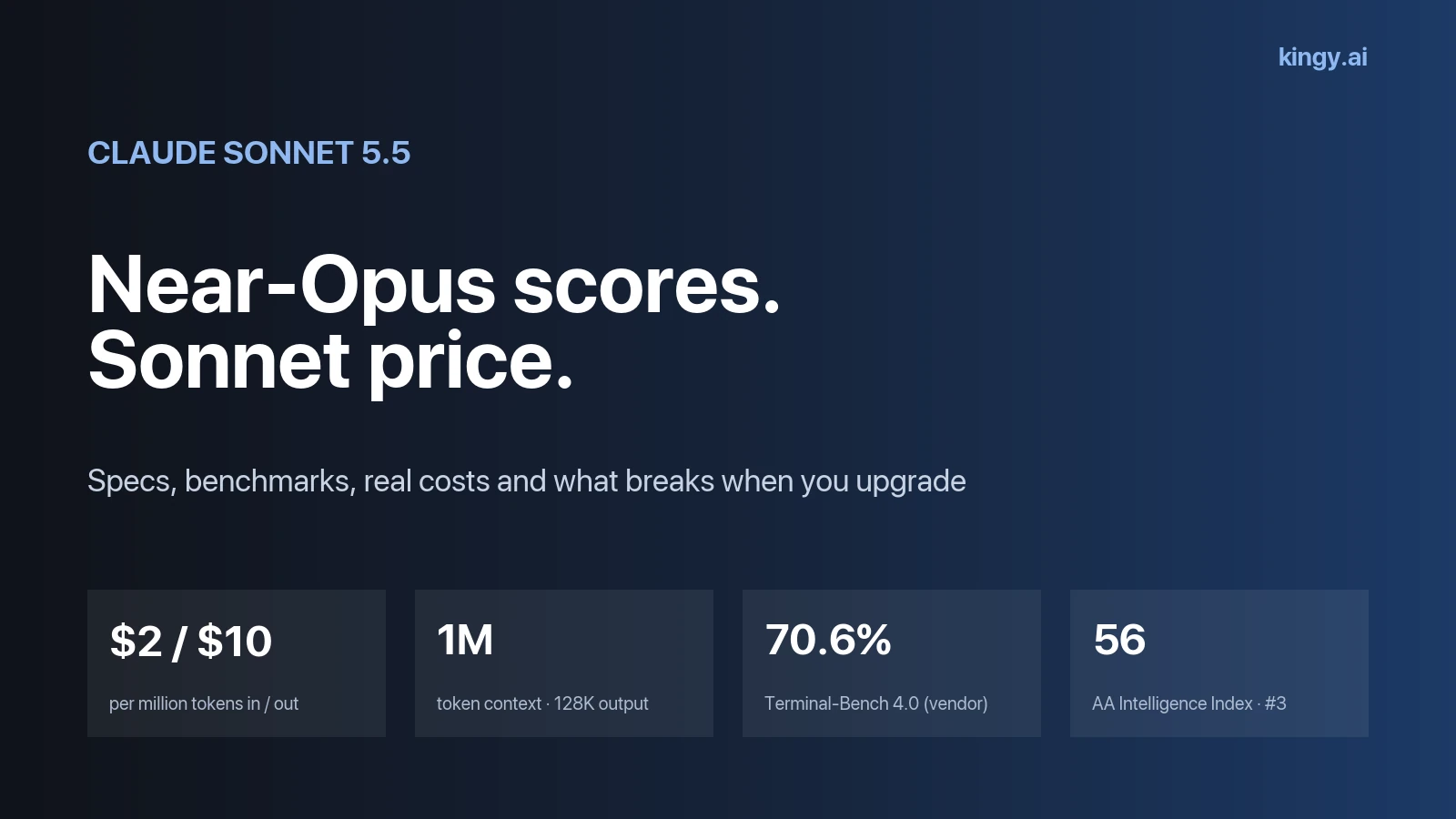
Anthropic positions its Sonnet line as the balanced workhorse between speed and intelligence. In practice, that means strong reasoning quality, reliable instruction following, and careful safety behavior. Sonnet-class models are often chosen for customer-facing assistants, complex agent workflows, code review, document analysis, and enterprise applications where a bad output can create real business risk.
Claude Sonnet 5.5 is expected to continue Anthropic’s strengths: nuanced system-prompt adherence, long-context handling, mature tool use, and a well-documented API ecosystem. The tradeoff is cost. Premium models with heavy safety tuning and enterprise support typically carry higher input and output token rates than open-weight alternatives. Rate limits can also become a bottleneck during traffic spikes unless you negotiate higher tiers.
DeepSeek’s Strengths in the AI API Landscape
DeepSeek v3 is a mixture-of-experts model known for strong inference efficiency, while DeepSeek r1 is a reasoning-focused model that exposes chain-of-thought-style reasoning in controlled ways. Together, they have made DeepSeek a serious alternative to premium APIs. The appeal is straightforward: competitive reasoning, low token costs, open-weight momentum, and fast inference potential when served on optimized infrastructure.
For developers, DeepSeek’s OpenAI-compatible API style reduces migration friction. That compatibility matters because many teams already have OpenAI-style SDKs, retry logic, and streaming handlers. If you want to integrate DeepSeek v3 and r1 with minimal setup, DeepSeek v3 & r1 via Mydeepseekapi offers a practical starting point.
Key Differences in Reasoning, Context, and Speed

Reasoning style differs in subtle ways. Claude Sonnet 5.5 tends to produce polished, safety-aware answers with strong instruction adherence. DeepSeek r1 often shines on math, coding, and step-by-step analysis, but it may need more explicit prompting to match Claude’s formatting discipline. In production, the better model depends on your evaluation set, not on a public leaderboard.
Context windows are another differentiator. Sonnet-class Claude models have historically supported very long contexts, making them attractive for large document analysis. DeepSeek API context limits vary by model and provider, so check the exact endpoint. Speed is equally nuanced: DeepSeek’s MoE architecture can deliver high throughput, but latency depends on region, concurrency, and provider load. Claude may offer more predictable enterprise latency, while DeepSeek can be faster and cheaper at scale.
| Dimension | Claude Sonnet 5.5 | DeepSeek v3 / r1 |
|---|---|---|
| Reasoning style | Polished, safety-aware, instruction-heavy | Direct, strong on math/code, prompt-sensitive |
| Context handling | Typically long-context, enterprise-friendly | Varies by model and provider |
| Tool calling | Mature, well-documented | Growing, OpenAI-compatible patterns |
| Latency | Predictable with enterprise tiers | Fast when well-provisioned, provider-dependent |
| Cost profile | Premium | Aggressive, especially cache hits |
| Ecosystem | Mature SDKs, compliance controls | Open-weight momentum, flexible hosting |
Claude Sonnet 5.5 API Pricing Comparison
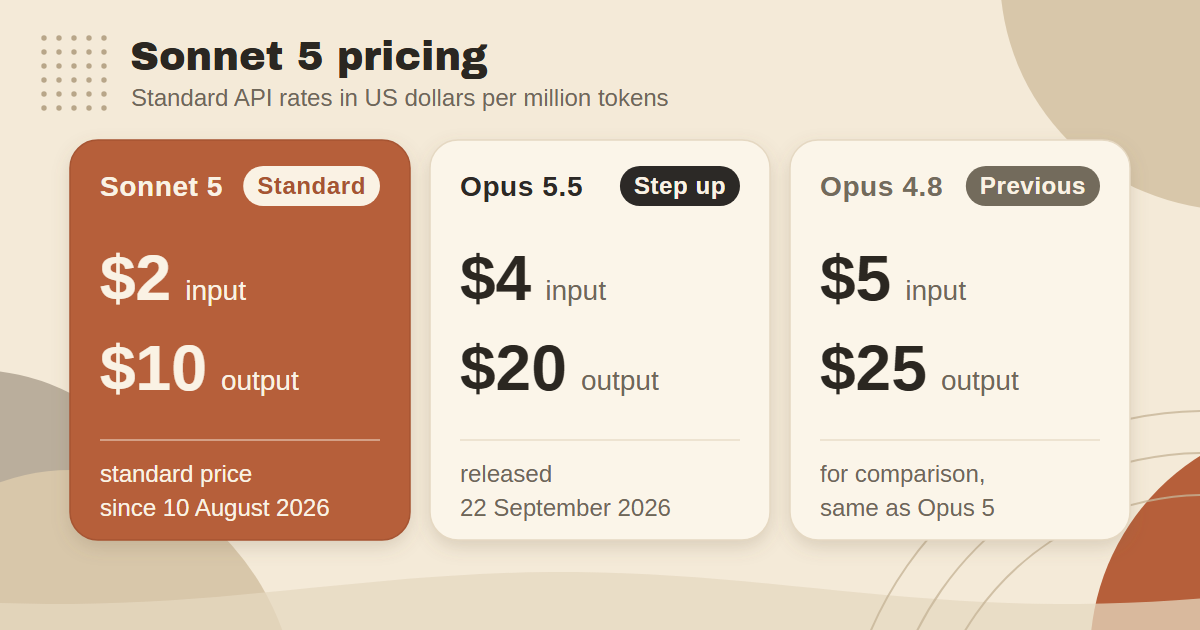
Sticker price is only the beginning. A real Claude Sonnet 5.5 API pricing comparison must account for input tokens, output tokens, cache reads and writes, batch discounts, retries, rate limits, and engineering time. Output tokens usually dominate cost because they are priced higher and generated sequentially. Long prompts increase input cost, but prompt caching can reduce repeated context expenses.
Token-Based Pricing Breakdown
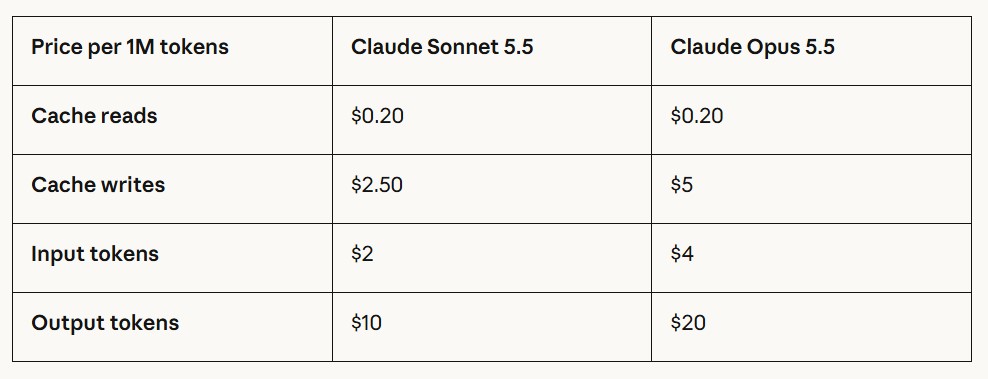
Most providers price input and output tokens separately. Claude Sonnet 5.5 likely follows Anthropic’s tiered structure: premium input and output rates, with discounts for prompt caching and batch processing. DeepSeek’s API is known for lower base rates and especially cheap cache-hit pricing. At scale, cache hit rate becomes a major cost lever. If your application sends the same system prompt or document context repeatedly, caching can cut costs dramatically.
Batch processing is another lever. Non-urgent jobs like summarization, classification, and dataset enrichment can run asynchronously at a discount. Streaming chat, by contrast, demands low first-token latency and steady throughput. The cheapest model is not always the lowest total cost if it requires more retries or longer prompts.
Hidden Costs: Rate Limits, Latency, and Scaling
Rate limits create hidden costs. When you hit a concurrency ceiling, you either queue requests, add retries, or pay for higher tiers. Retries consume tokens and engineering attention. Latency also drives infrastructure cost: a p95 latency spike can force you to add replicas, redesign UX, or move work to background jobs.
Observability is another hidden line item. You need token dashboards, prompt logs, quality evaluations, and budget alerts. Without them, a single runaway feature can burn through your monthly budget. Vendor lock-in adds long-term cost too. If prompts, tools, and output parsers are tightly coupled to one provider, switching later becomes expensive.
How Mydeepseekapi Delivers Transparent Pricing as a DeepSeek Alternative to Claude Sonnet
For teams seeking a cost-predictable route to DeepSeek, Mydeepseekapi’s transparent pricing is designed to reduce guesswork. Instead of managing provider quotas, regional endpoints, and setup overhead, you can access DeepSeek v3 and r1 through a single integration. The pitch is simple: blazing-fast response times, transparent pricing, and zero setup hassle.
If your Claude Sonnet bill is growing faster than your product, try Mydeepseekapi for high-volume workloads. You can keep premium models for edge cases and route bulk traffic to DeepSeek v3 and r1 through Mydeepseekapi.
Performance Benchmarks: Claude Sonnet 5.5 and DeepSeek in Production
Public benchmarks are useful for headlines, not procurement. Production performance depends on prompt design, concurrency, tokenization, caching, and provider infrastructure. A model that wins a reasoning benchmark may lose on first-token latency, JSON reliability, or cost per resolved support ticket.
Latency, Throughput, and Response Quality
Measure p50 and p95 latency, tokens per second, cold-start behavior, and streaming first-token time. Cold starts matter if you use serverless inference. Streaming matters for chat UX. Throughput matters for batch pipelines. Quality should be measured with your own evaluation set: exact-match tasks, human preference, hallucination rate, refusal rate, and format compliance.
In practice, Claude Sonnet 5.5 tends to produce consistent, well-formatted outputs with strong safety behavior. DeepSeek v3 and r1 can match or exceed it on coding and math prompts, but quality varies more with prompt phrasing. Always run a shadow evaluation before migrating traffic.
Case Study: Swapping Claude Sonnet 5.5 for DeepSeek in a Production Chatbot
A SaaS support chatbot initially used Claude Sonnet 5.5 for all conversations. Quality was excellent, but monthly costs climbed as usage grew. The team migrated 80% of low-risk traffic to DeepSeek v3 and r1 via Mydeepseekapi. They kept Claude Sonnet 5.5 for escalations, sensitive account changes, and complex troubleshooting.
The migration required prompt changes: clearer system prompts, stricter JSON schemas, and few-shot examples for refund and cancellation flows. They added fallback routing: if confidence dropped or a safety trigger fired, the request went to Claude. Monitoring included token dashboards, hallucination scores, and per-feature cost attribution. Result: significant cost savings, faster median response times, and acceptable quality for most conversations. Some edge cases still needed Claude.
Common Pitfalls When Comparing Claude Sonnet 5.5 vs DeepSeek
Common pitfalls include cherry-picked benchmarks, prompt sensitivity, tokenizer differences, context caching effects, and unfair latency tests. Tokenizers matter because the same text can produce different token counts across providers, skewing cost comparisons. Caching can make a model look cheaper than it is if your test reuses the same prefix. Latency tests are unfair if one model runs in a different region or under different concurrency.
Technical Deep Dive: How Claude Sonnet 5.5 and DeepSeek Handle Prompts
Context Window, Function Calling, and Multimodal Support
Claude Sonnet 5.5 is likely to offer long-context handling and mature tool use. DeepSeek v3 and r1 support function calling through OpenAI-compatible patterns, but schema details and parallel tool calls may differ. Structured output is achievable with both, though Claude may be more consistent with XML-style tags and tool schemas. Multimodal support is a key divide: Claude models often support vision, while DeepSeek’s text-focused API may not support image input on every endpoint. If your product needs image understanding, verify modality support first.
Model Architecture and Inference Efficiency
DeepSeek v3 uses a mixture-of-experts architecture, activating a subset of parameters per token, which can lower inference cost. DeepSeek r1 adds reasoning-oriented training. Anthropic does not publish the same architecture details for Claude, but Sonnet-class models are optimized for reliability and safety. Throughput differences come from hardware utilization, batching, quantization, and attention patterns. MoE models can be very efficient but may require larger batches to hit peak throughput.
API Design and Developer Experience
Claude’s SDK and API are well-documented, with clear streaming, tool-use, and error-handling patterns. DeepSeek’s OpenAI-compatible API reduces migration effort for teams already using OpenAI-style clients. Authentication, rate limits, and retry semantics still differ. For a zero-setup developer experience, Mydeepseekapi abstracts provider complexity and lets you start calling DeepSeek v3 and r1 quickly.
Best DeepSeek API Alternative for Claude Sonnet Workloads
Why Teams Seek a DeepSeek Alternative to Claude Sonnet
Teams seek a DeepSeek API alternative to Claude Sonnet because of cost pressure, availability, control, latency, and vendor lock-in. High-volume chat, code generation, and batch analysis can become expensive on premium APIs. Some teams also want open-weight flexibility or regional deployment options. Others simply want predictable pricing without surprise overages.
Mydeepseekapi: Integrate DeepSeek v3 & r1 with Zero Setup
Mydeepseekapi is positioned as a practical option for teams that want DeepSeek v3 and r1 without managing infrastructure. It emphasizes blazing-fast response times, transparent pricing, and zero setup hassle. If you want to start with Mydeepseekapi, you can test DeepSeek v3 and r1 through a single integration and compare quality against your Claude Sonnet 5.5 baseline. Start with Mydeepseekapi for cost-sensitive or high-volume workloads.
Migration Checklist from Claude Sonnet 5.5 to a DeepSeek API
Before migrating, inventory every prompt and map system, user, and assistant roles. Check token limits and adjust max_tokens. Replace Claude-specific output parsing with provider-neutral parsers. Build an evaluation set with representative prompts. Run shadow traffic. Add fallback routing to Claude for edge cases. Set up observability for tokens, latency, errors, and quality. Prepare a rollback plan. Migrate feature by feature, not all at once.
When to Choose Claude Sonnet 5.5 — and When DeepSeek Wins
Decision Framework by Use Case
Choose Claude Sonnet 5.5 for enterprise compliance, safety-critical workflows, multimodal tasks, and complex instructions where reliability matters more than cost. Choose DeepSeek for cost-sensitive prototyping, high-volume chat, coding assistance, batch analysis, and open-weight flexibility. Customer-facing assistants often benefit from a hybrid approach.
Cost-Sensitive Prototyping vs Enterprise Reliability
Claude offers enterprise SLAs, support, compliance controls, and mature reliability. DeepSeek via Mydeepseekapi offers lower cost and fast setup. The tradeoff is support depth, ecosystem maturity, and compliance guarantees. Total cost of ownership includes engineering time, not just token spend.
Hybrid Strategies with Mydeepseekapi
A hybrid strategy routes bulk or low-risk traffic to DeepSeek v3 and r1 via Mydeepseekapi while reserving premium models for edge cases. Use prompt classification, confidence scores, or budget rules to decide. Mydeepseekapi routing can support a hybrid DeepSeek setup that balances cost and quality.
Industry Best Practices for Evaluating AI API Providers
What Official Documentation Says About Claude Sonnet 5.5 and DeepSeek
Always read model cards, changelogs, benchmark methodology, and API limitations. Official docs define context limits, rate limits, data retention, and supported features. Blog benchmarks are useful for directional insight, not final decisions.
Security, Compliance, and Data Privacy
Check SOC 2, GDPR, data retention, zero-retention options, regional processing, and enterprise controls. Claude’s enterprise offering is strong in these areas. DeepSeek and third-party providers may differ, so verify contracts and data flows.
Vendor Lock-In and Portability
Use abstraction layers, OpenAI-compatible endpoints, and provider-neutral prompt formats. Avoid relying on proprietary features that cannot be replicated. Portability reduces migration cost and negotiating leverage.
Advanced Techniques for Getting More from a DeepSeek API Alternative
Prompt Optimization and Caching
Use few-shot prompting, stable system prompts, and context caching. Keep cacheable prefixes identical to maximize hit rates. Compress prompts where possible. Test prompt variations against your evaluation set.
Batch Processing and Streaming
Use async batch jobs for non-urgent work. Use streaming for chat UX. Tune concurrency to avoid rate limits. Handle partial outputs gracefully.
Monitoring, Logging, and Cost Controls
Track tokens, latency, errors, and quality. Set budget caps and alerts. Attribute cost per feature. Mydeepseekapi’s transparent pricing and usage visibility help teams avoid surprise bills.
Trust Signals: Pros, Cons, and Benchmarks
Pros and Cons of Claude Sonnet 5.5
| Pros | Cons |
|---|---|
| Strong reasoning and instruction following | Higher token costs |
| Mature safety tuning | Rate limits can constrain spikes |
| Long-context and tool use | Vendor dependence |
| Enterprise reliability | Less open-weight flexibility |
Pros and Cons of DeepSeek via Mydeepseekapi
| Pros | Cons |
|---|---|
| Lower cost at scale | Ecosystem less mature than Claude |
| Fast response times | Prompt sensitivity |
| Zero setup with Mydeepseekapi | Multimodal limits on some endpoints |
| Good coding and math performance | Compliance review still required |
When Not to Use Either Model
Avoid both for highly regulated workloads without certified compliance, unsupported modalities like advanced vision, niche low-resource languages, ultra-low-latency edge inference, or scenarios requiring deep custom fine-tuning.
In the end, Claude Sonnet 5.5 vs DeepSeek is not a winner-take-all decision. Claude Sonnet 5.5 remains a strong choice for quality-sensitive, enterprise-grade workloads. DeepSeek v3 and r1, especially through Mydeepseekapi, offer a compelling path for cost-sensitive, high-volume applications. The best strategy is often hybrid: measure with your own prompts, route intelligently, and keep a fallback ready.